


Prunus cerasifera Seeds | Cherry Plum
LATIN NAME: Prunus cerasifera
COMMON NAME: Cherry Plum
Plant Profile
Cherry plum is a large shrub or small tree, 8 to 12 m at maturity, sometimes spiny when young, with smooth ovate leaves 3 to 7 cm long and reddish twigs. It ranks among the first trees in Europe to flower, often in mid-February, before the leaves have opened, and a mild winter will bring it out in January with the snow still on the ground.
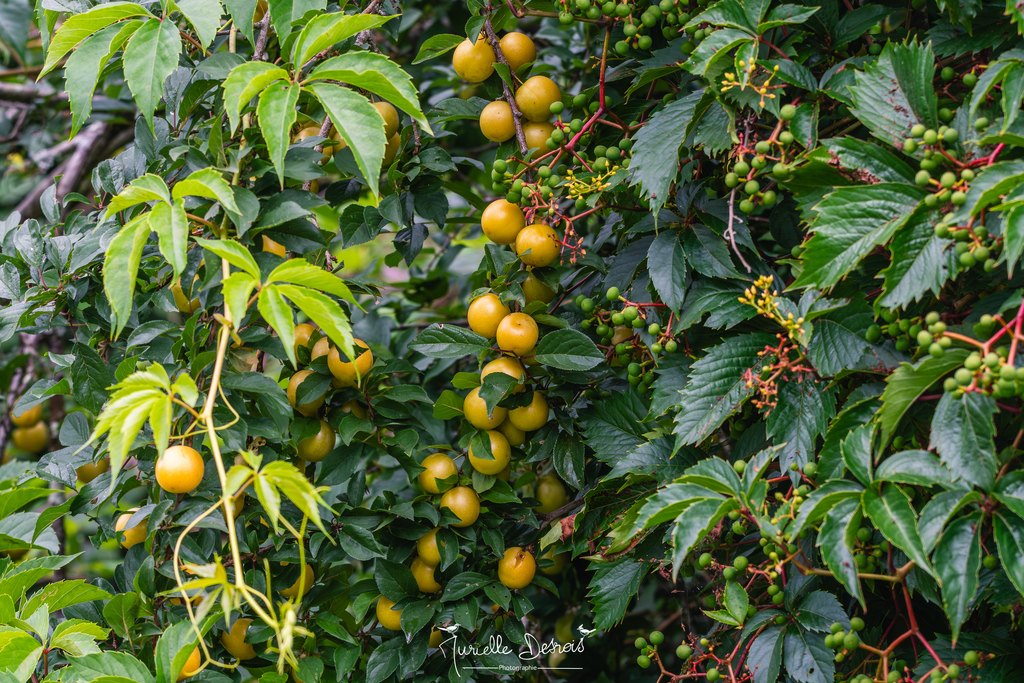
The flowers are white or pale pink, about 2 cm across, with five petals and a crowd of stamens, and they are the reason the purple-leaved forms are planted. The fruit is a round drupe 2 to 3 cm across, yellow or red, ripening from early July, with a small stone and a thin, tart skin.
It is native to south-eastern Europe and western Asia and naturalised in the British Isles, scattered parts of North America, and parts of south-eastern Australia, where it is a mild weed of bushland near towns. It spreads by seed and by sucker, and a hedge that is left alone will thicken into a thicket.
Science & Biotechnology
It is believed to be one of the parents of the cultivated plum, Prunus domestica, either crossed with the sloe, Prunus spinosa, or standing as the sole parent. If that is right, then most of the commercial plums of Europe, from Victoria to the greengages and the bullace, carry its genes. A hedgerow shrub is the grandmother of the dessert course.
It is self-fertile, so a single tree crops, though it sets better with another Prunus nearby; Victoria plum pollen will do. The flowering is early enough to miss most pollinators, and a cold snap in February can take the entire crop, so a cherry plum in a frost pocket fruits once in five years.
Its second career is as a rootstock. Because it roots easily, grows fast and takes a graft, it is the standard understock for other Prunus species and cultivars, and a great many garden plums are a named variety sitting on cherry plum roots. That also means a grafted tree will sucker, and the suckers are the rootstock, not the variety.
Uses & Benefits
The fruit is edible and sharply flavoured, better for jam, sauce and liqueur than for eating raw, though a ripe yellow one in a hot summer is pleasant enough. The purple-leaved forms have dark purple flesh and make a jam of a colour no other fruit achieves. In eastern Europe the unripe fruit is salted and used like an olive.
As an ornamental it is planted for the February flower and, in the purple forms, for the leaf. Nigra has near-black foliage and pink flowers and holds an Award of Garden Merit; Thundercloud opens bright red and darkens; Lindsayae keeps green leaves and is the one to choose if you want the flowers without the colour. Some are trained as bonsai.
It also makes a good hedge, quickly, and takes hard cutting. A cherry plum hedge in a suburban garden gives white blossom in February, edible fruit in July, and a dense screen within four years, which is more than most native hedging manages in twice the time. Elsewhere in Rosaceae, the list holds Prunus humilis, Prunus dulcis and Prunus salicina.
Growing from Seed
The stone needs cold. Sow in autumn, 2 cm deep, in a pot of gritty compost and leave it outside through winter; germination comes in spring, sometimes in the second spring. Artificial stratification at 4 °C for twelve weeks works as well, but the pots are easier and the mice will find the seed either way.
The seedlings are variable, which matters if you wanted a purple-leaf tree: leaf colour does not come true from seed, and most seedlings are green. Named forms are propagated by grafting or by cuttings, and the seed is for rootstocks and for hedges where uniformity does not matter.
Plant out at two years, in sun or half shade, in any reasonable soil. It is not fussy about pH and it tolerates drought once established. Prune in summer rather than winter to avoid silver leaf, and expect suckers if the tree is grafted; pull them, do not cut them, or they will multiply.
Our Take
It is a workhorse that has been dressed up as an ornamental, and it does both jobs well. The February flower is worth a place on its own, when nothing else is out, and the fruit is a bonus that most gardeners never pick.
Choose the green form if you want fruit and the purple form if you want colour, and do not expect both from one tree. For a hedge or a windy boundary it is faster and tougher than anything in the native hedge mix, and the jam is better than the reputation suggests.
Related Reading
If Cherry Plum appeals to you, these related plants are worth a look: