


Machilus gongshanensis Seeds | Gongshan Machilus
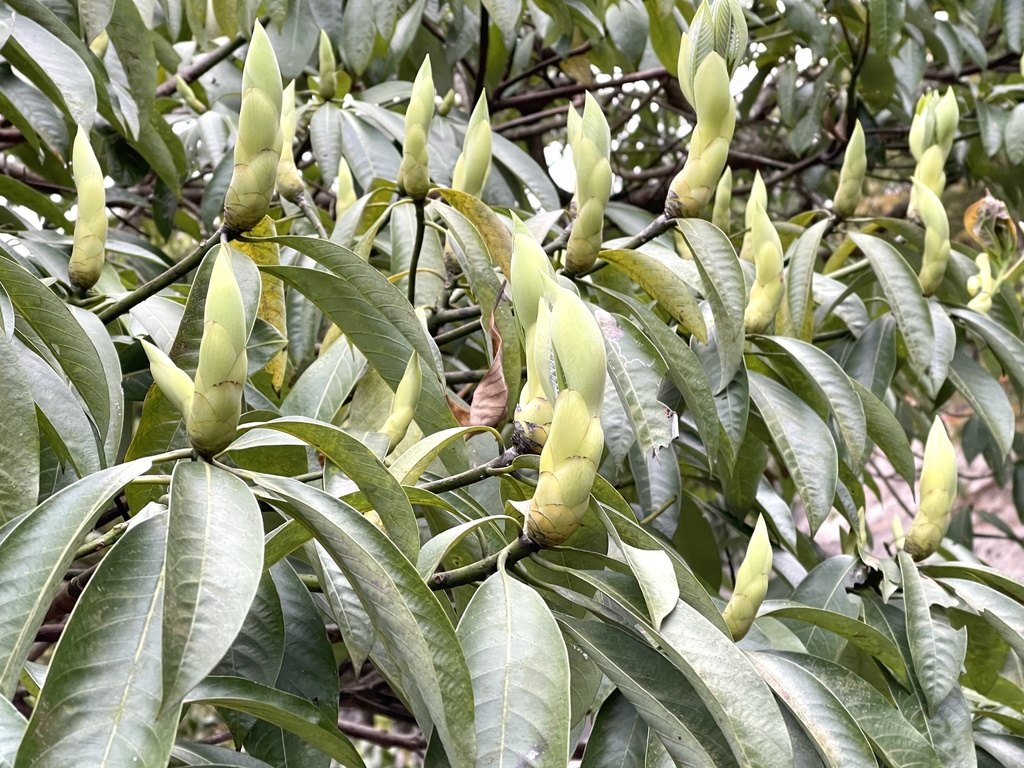
LATIN NAME: Machilus gongshanensis
COMMON NAME: Gongshan Machilus
Plant Profile
Machilus gongshanensis is an evergreen tree described from Gongshan, in the far northwest of Yunnan, where the Salween and the Irrawaddy rise within a hundred kilometres of each other and the mountains run from subtropical forest to permanent snow. It is a tree of the middle elevations, and it is known from very few collections.
It was described by Li Heng, the botanist who spent her career on the flora of Yunnan and who named a long list of species from the Gaoligong range. The epithet records the county, and the tree is one of a group of narrow endemics that the range holds.
The Gaoligong and the adjacent valleys are one of the richest temperate floras in the world, a corridor where Himalayan, Chinese and Indo-Malayan elements meet. The laurels are a large part of that richness, and the genus Machilus is represented there by a series of species that replace one another with altitude.
The tree has the usual laurel equipment: leathery, elliptic leaves with a waxy bloom beneath, small yellowish flowers in panicles, and a globose black fruit in a cup. What separates it from its relatives is a combination of leaf size, vein number and the shape of the perianth, and those characters are best seen on a herbarium sheet.
Science & Biotechnology
Laurel taxonomy rests on the flower, and the flower is small. Six tepals, nine fertile stamens in three whorls, a fourth whorl of staminodes, and paired glands at the base of the inner stamens: that is the ground plan, and the genera differ in how those parts are shaped and arranged.
The oil cells are the family’s chemical signature. Single large cells hold essential oils, and they are what makes a crushed leaf smell of laurel, camphor or resin. In the high-altitude species the oils are often simpler and less pungent, which is thought to be a response to the cooler, wetter climate.
The fruit is a berry with a single seed, seated in the cup formed by the enlarged perianth tube. Birds take it, and the seed is passed intact, which is how a tree with a narrow range can still move between forest fragments. The cup is the field character, and it is visible from August.
Uses & Benefits
There is no commercial use. The tree is too rare and too remote to be cut, and it has no place in the medicine trade. Its value is scientific, as a component of one of the most diverse temperate forests on earth, and as a record of how the genus has diversified along the eastern edge of the Himalaya.
For horticulture the interest is the possibility of a cool-climate Machilus, since the species grows at altitudes where frost is normal. Most cultivated laurels of the genus are subtropical, and a hardy one would be a genuine addition, though it has never been tried on any scale.
Its conservation position is uncertain rather than secure. A tree known from a handful of collections in a remote range is not necessarily rare, but it is unassessed, and the forests of the Gaoligong are under pressure from roads, mining and the collection of medicinal plants. Closest relatives on the list are Machilus thunbergii, Machilus wangchiana and Machilus chienkweiensis.
Growing from Seed
Seed should be sown fresh and kept moist, because laurel seed loses viability quickly. Germination is reliable at warm temperatures in a free-draining, humus-rich mix, and the seedlings are slow for the first year and steady after that, making a woody stem in their third season.
Young trees want light shade, shelter and a deep soil that holds moisture. Given the altitude of its home, the species is likely to take more frost than its subtropical relatives, but that is an inference rather than a tested fact, and it should be planted with that uncertainty in mind.
Beyond removing a rival leader and shortening the lowest limbs, the tree needs no pruning at all. The tree makes a dense crown on its own, and the best specimens are the ones that were left alone. Expect slow growth and a long wait for the first flowers, and do not judge it on the first three years.
Our Take
This is a tree that exists mostly in herbaria and in the pages of a flora, and that is a strange kind of existence. It is also a reminder that the laurel forests of Yunnan are still being inventoried, and that a species can be described and then wait decades for anyone to grow it.
Grow it if you can find it and if you have the climate, and treat it as an experiment. The result will be a data point either way, and the plant will be where it belongs: in a garden, rather than only on a sheet.
Related Reading
If Gongshan machilus appeals to you, these related plants are worth a look: