


Machilus wangchiana Seeds | Wang’s Machilus
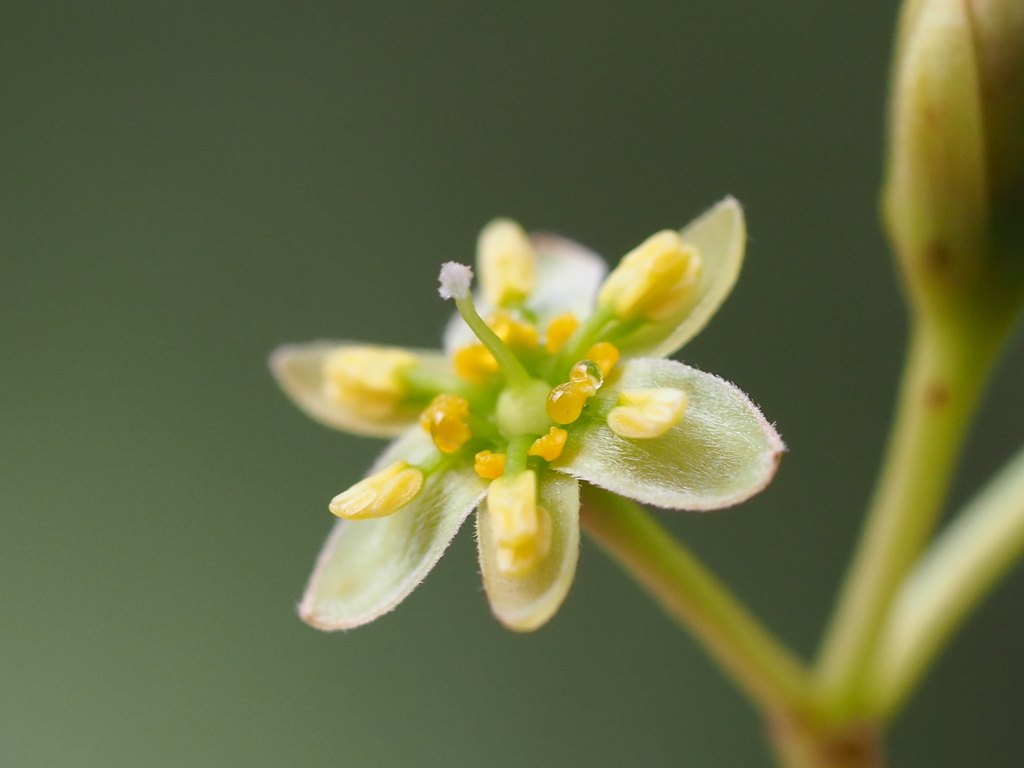
LATIN NAME: Machilus wangchiana
COMMON NAME: Wang’s Machilus
Plant Profile
Machilus wangchiana is an evergreen tree of the Lauraceae, described by Woon-Young Chun in 1953 in the Acta Phytotaxonomica Sinica from material collected in southern China. Chun founded the botanical garden at Sun Yat-sen University and described a great many Chinese laurels; this one is named for a collector called Wang. It is known from Guizhou, Guangxi and Guangdong, and from Hong Kong, where the few recorded localities are all inside remnants of the territory’s original forest.
It grows to about twenty metres, with a stout trunk, thick leathery leaves and a terminal bud wrapped in rusty, downy scales that are the best identification mark on the tree in winter. The new shoots are softly hairy, the panicles are terminal and downy, and the fruit is a rounded drupe that turns blackish when ripe. The bark is grey-brown and stays smooth for a long time.
The genus is essentially Asian, with about a hundred species from the Himalaya to Japan and Malesia. It was long sunk into Persea, the genus of the avocado, and separated again on the structure of the flower and the fruit. Most modern treatments accept the split, though the argument has been running for a century.
Science & Biotechnology
Machilus belongs to the Lauraceae, the family of laurel, cinnamon, camphor and avocado, and it shares the family’s oil cells. Crush a leaf and the smell is camphor and resin together. The family is an old one, among the first flowering plants to appear in the Cretaceous fossil record. The scent is the quickest way to know you are in the family, and in this genus it is strong enough to identify a crushed leaf in the dark.
The fruit sits on the persistent tepals, which stay and turn back under the drupe. That is a small structural point, but it separates Machilus from Cinnamomum, and it is worth learning if you are keying out trees in a Chinese forest where both genera are common.
The synonym Persea kadooriei, described by Kostermans in 1981, is the same tree. Molecular work has moved the genus around more than once, and the number of accepted species changes with each revision. That makes the literature harder to use than it should be, and it makes nursery names unreliable. Closest relatives on the list are Machilus thunbergii, Machilus multinervia and Machilus gongshanensis.
Uses & Benefits
The timber is worked locally for furniture, joinery and construction, and it ranks among the better hardwoods in a region where good timber is scarce. The bark and leaves have minor use in regional medicine, as with most of the genus. The wood is pale, fine-grained and works well, though the trees are too scattered to support a trade of their own.
For a grower outside China it is a collector’s tree: slow from seed, dense in habit, tolerant of the humid shade of a woodland garden, and worth having for the flush of rusty new growth in spring alone. Give it shelter from wind and a soil that never quite dries out.
That flush, before the leaves harden and darken, is the reason to grow it. The fruit is eaten by birds, and a fruiting tree in autumn is a loud place to stand under. Plant it where the droppings will not land on a path.
Growing from Seed
The seed is short-lived and must be sown fresh, within days of cleaning. It has no dormancy worth speaking of and germinates in a few weeks in warm, moist conditions; dried out, it simply dies. That is why seed is rarely offered by post and why the plants are usually raised by the people who collected the fruit.
Sow in a free-draining mix, keep it warm and shaded, and pot on before the taproot coils around the bottom of the pot. The seedling is slow for two years and then starts to move. Feed it lightly and never let it dry out completely. A deep pot suits it better than a wide one.
Plant out into sheltered, humid ground, out of cold wind. It takes light frost once established but not hard frost, and it wants the deep, acid, leafy soil of a woodland rather than an open border. In a cold climate it belongs in a conservatory, and it will resent the dry air there. Mulch it with leaf mould and keep the roots cool.
Our Take
This is a tree for the mild, wet garden and for the collector with room for something that will be a specimen in twenty years rather than five. It will not be hurried, and it does not transplant well once it has settled. Its value is in the foliage, the scent, and the fact that almost nobody else has one. Those are good reasons to grow a tree.
Related Reading
Continue exploring with these related plants: