


Poa pratensis Seeds | Kentucky Bluegrass
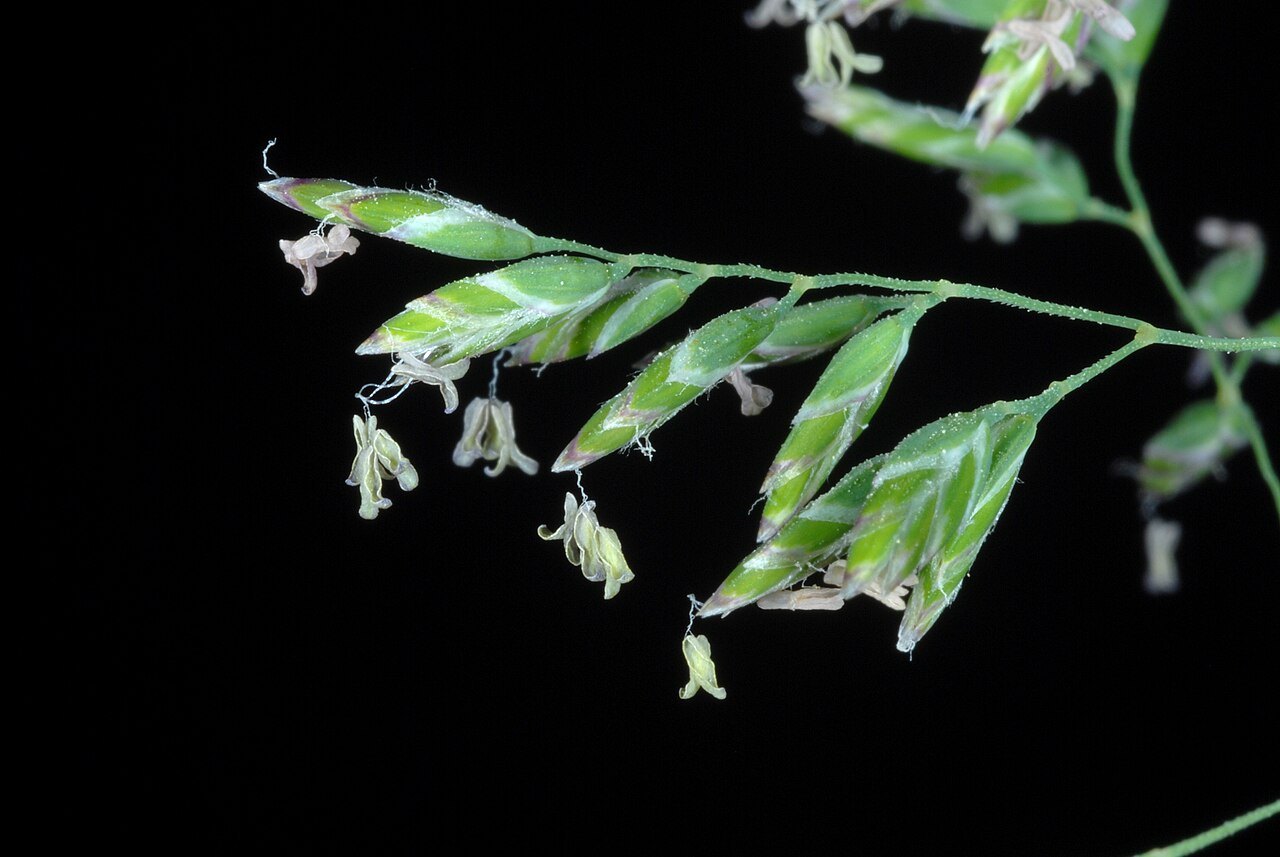
LATIN NAME: Poa pratensis
COMMON NAME: Kentucky Bluegrass
Plant Profile
Kentucky bluegrass is a perennial grass native to practically all of Europe, northern Asia, and the mountains of Algeria, Morocco and Tunisia. It is the standard lawn grass of cool, humid North America, and it is also a valuable pasture plant across its native range, characteristic of well-drained, fertile soil.
The name is a puzzle. There is real disagreement about whether it is native to North America: some sources treat it as native, others hold that the Spanish Empire brought the seed to the New World in mixtures with other grasses. What is not in dispute is that it spread across every cool, humid part of the United States within a few centuries.
It is a fine-bladed grass that spreads by underground rhizomes, forming a dense sward. The leaves are smooth and narrow, the panicle is open and pyramidal, and the whole plant greens up early in spring, which is much of its appeal for lawns and sports turf. The name is Greek and Latin stitched together: Poa is Greek for fodder, and pratensis comes from pratum, meadow.
The details are worth knowing if you are trying to identify it. Plants are 30 to 70 cm tall, with leaves up to 20 cm long and 3 to 5 mm wide, ending in a boat-shaped tip. The ligule is extremely short and square-ended, which separates it from annual meadowgrass and rough meadowgrass, both of which have a silvery pointed ligule.
Science & Biotechnology
The species reproduces largely by apomixis, a form of asexual seed production in which the embryo develops without fertilisation. That means a seedling is usually a genetic copy of its mother, so desirable types can be maintained from seed, which is unusual in a grass and one reason the species has been so intensively selected.
It is also the type species of the grass family, which is a roundabout way of saying that the name Poa pratensis is the reference point against which the whole family is defined. That matters more to taxonomists than to gardeners, but it explains why the name turns up in every flora.
The rhizomes are the reason it persists. They run through the topsoil, produce new shoots, and knit the sward together, and they also make the plant difficult to remove from a bed once it has arrived. Dig out a clump and any rhizome fragment left behind will regenerate.
It is also the reason the plant is a problem in conservation. In native grasslands in Canada it is treated as an unwelcome exotic, and its presence is read as a sign of disturbed and degraded ground. The same traits that make it a good lawn make it a poor neighbour for a prairie remnant.
Uses & Benefits
As a lawn grass it is the benchmark in cool climates: dense, dark green, tolerant of wear and able to recover from damage. It is the base of most seed mixtures for parks, gardens and playing fields, usually blended with fescue and ryegrass. As pasture it is highly valued, and in Europe it ranks among the most important forage grasses on well-drained fertile soil. It is palatable, digestible and responds well to grazing and to nitrogen.
For erosion control it is used on banks and verges, where the rhizome network holds soil through winter. It is also one of the grasses used in land restoration after disturbance, though its vigour can suppress the species you were trying to restore. It is also a larval food plant for the meadow brown butterfly, which is a point in its favour in a rough grass margin. For more of the Poaceae, the list offers Poa annua, Axonopus compressus and Panicum virgatum.
Growing from Seed
Sow in early autumn or early spring, when soil is between 15 and 25 °C. Surface-sow at 1 cm depth, keep the seedbed moist, and germination takes two to three weeks. Autumn sowing is usually better because the roots establish before winter and the grass competes with weeds from a stronger position.
It needs water. Unlike fescue, Kentucky bluegrass goes dormant and browns in a dry summer, and it will not recover until rain returns. If you are not prepared to irrigate, choose a different grass. Mow at 4 to 6 cm for a lawn, never taking more than a third of the leaf at once, and feed in autumn rather than spring. Overseed thin patches in early autumn, and keep the seedbed damp until the new grass is up.
Our Take
It is the default lawn grass for a reason, and it is also the reason so many lawns look tired in August. Kentucky bluegrass wants water, and a lawn built on it in a dry climate is a commitment rather than a planting. If you have irrigation and a cool summer, nothing beats it; if you do not, look at fescue or buffalograss instead.
Related Reading
More species in the same orbit as Kentucky Bluegrass: