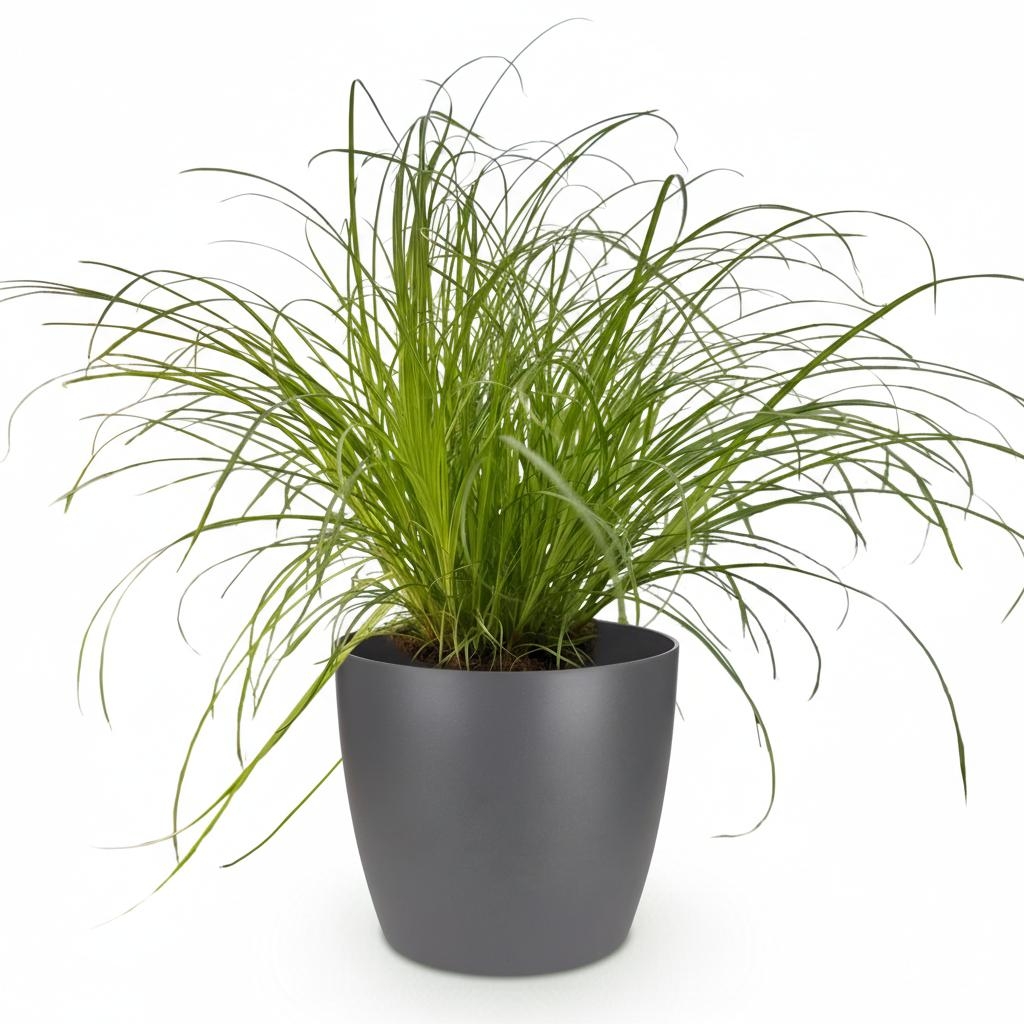
LATIN NAME: CYPERUS ALTERNIFOLIUS
COMMON NAME: Umbrella Papyrus, Umbrella Sedge, Zumula
The Cyperus alternifolius, or umbrella papyrus, is one of the most distinctive and graceful of the water plants, and its tall, upright stems topped with the whorls of the slender, leaf-like bracts have made it a favourite of the ponds and the water gardens across the warm and the temperate world. It grows as a tall, evergreen, grass-like perennial of the sedge family, reaching up to a metre and a half or more, with the tall, upright, smooth, triangular stems bearing at the top the whorls of the slender, leaf-like, bright-green bracts which radiate outwards like the ribs of an umbrella, and bearing, in the warm months, the small, brown, grass-like flower spikes among the bracts, followed by the small, brown seeds. It is a species of the flowering plant, native to the marshes and the streamsides of the Africa and the Madagascar, while it has been cultivated widely in the ponds and the water gardens, and it is known as the umbrella papyrus, the umbrella sedge or the Zumula.
Scientific Research & Plant Biotechnology
The umbrella papyrus has a real and distinguished place in research. It has been studied in the horticulture and the water-garden science, since the Cyperus alternifolius is a popular plant for the ponds and the water gardens, and the researchers have examined its cultivation, its propagation and its value in the landscape, while the study of the water plants has drawn attention in the international horticultural press. The plant has also been studied in the ecology and the wetland science, since the umbrella papyrus is a plant of the marshes and the streamsides, and the researchers have examined its role in the wetland ecosystems and its value in the water purification, while the study of the wetland plants has been of continuing interest. The species has also been studied in botany, since it is a member of the sedge family and a relative of the papyrus and the other cyperus, and its relationships, its distribution and its many forms have been examined, while the umbrella-like whorls of the bracts of the umbrella papyrus have been of interest to the botanists and the gardeners. For a plant of such grace, the Cyperus alternifolius has a rich and distinguished record of research.
Ecological & Economic Value & Wide Applications
To grow the Umbrella Papyrus from seed, the umbrella papyrus is a tall, evergreen perennial of the marshes and the streamsides, bearing the upright, triangular stems topped with the whorls of the slender, leaf-like bracts. Its dense growth gives a shelter and a spawning ground for the fish and the aquatic creatures, and its tall, graceful habit gives a fine presence in the pond and the water garden, while its tolerance of the wet conditions makes it a valuable plant for the water feature. Its economic value is real: the umbrella papyrus is prized as a graceful water-garden plant and a houseplant, and its value has drawn attention in the international horticultural press, while the umbrella-like bracts and the easy cultivation have made it a favourite of the ponds, the water gardens and the conservatories, and the plant is a fine addition to the pond, the water garden and the large container. To raise the umbrella papyrus, sow the seeds on the surface of pots of moist, wet soil in a warm, bright place, keep them standing in water, and grow the little plants on in the warmth.
sow the seeds on the surface of pots of moist, wet soil in a warm, bright place, keep the young papyrus standing in water, and grow the little plants on in the warmth.
Cyperus alternifolius ‘Zumula’: Uses, Benefits, and Practical Applications
Cyperus alternifolius ‘Zumula’, commonly called cat grass or dwarf umbrella plant, is a compact perennial cultivar in the Cyperaceae family, native to tropical African wetlands. Unlike its larger wild relative, this dwarf variety reaches just 25–30 cm in height, featuring slender, bright green stems topped with umbrella-like whorls of linear leaves. Valued for its hardiness, non-toxicity, and versatile functionality, ‘Zumula’ serves as a pet-friendly plant, ornamental greenery, and even a resource with medicinal and environmental applications.
1. Primary Use: Pet Health and Wellbeing
The most widespread application of ‘Zumula’ is as cat grass, a safe, edible plant for domestic cats and other small pets. Its tender, grass-like foliage provides essential nutrients, including vitamins, folic acid, and fiber, which complement a pet’s diet. For cats, the plant addresses a critical health need: chewing on ‘Zumula’ aids digestion and facilitates the regurgitation of hairballs, a common issue from grooming that can cause intestinal blockages if untreated.
Beyond digestive support, ‘Zumula’ redirects pets from chewing on toxic household plants, reducing the risk of poisoning. Its non-toxic nature (confirmed by horticultural studies) makes it suitable for cats, dogs, rabbits, and birds, making it a staple in pet-safe indoor gardens.
2. Ornamental and Landscape Value
‘Zumula’ is prized for its elegant, compact form, making it a versatile ornamental plant for indoor and outdoor settings. Indoors, its fountain-like foliage adds a fresh, tropical touch to tabletops, terrariums, or shaded corners, thriving in bright, indirect light and moist soil. Unlike larger umbrella plants, its small size suits apartments and limited spaces, requiring minimal maintenance—only regular watering and occasional trimming of yellowed stems.
Outdoors, ‘Zumula’ excels in moist environments such as pond edges, rain gardens, or shaded flower beds. Its dense root system stabilizes soil, preventing erosion in wet areas, while its lush green foliage provides contrast to water features or flowering plants. In temperate regions, it can be grown in containers and moved indoors during cold months, extending its ornamental use year-round.
3. Medicinal and Traditional Uses
While less documented than its pet and ornamental uses, Cyperus alternifolius (the parent species of ‘Zumula’) has a history of traditional medicinal applications, with ‘Zumula’ sharing similar properties due to genetic consistency. In traditional African
medicine, rhizomes of the plant are used to treat stomach aches in children, while extracts from rhizomes and aerial parts show anti-ulcer activity, reducing inflammation and ulcer formation in experimental models.
The plant’s ash has practical medicinal uses too: dried ash applied topically acts as a disinfectant for fresh wounds, and ash-infused water (filtered and evaporated) yields a salt used to treat minor skin irritations. Additionally, rhizomes are a natural source of potash, used in some cultures to season and preserve cooked
vegetables.
4. Environmental Benefits: Phytoremediation and Humidification
‘Zumula’ contributes to environmental health through phytoremediation, the process of absorbing and filtering contaminants from soil and water. Its roots efficiently accumulate heavy metals (cadmium, copper, lead, zinc) and excess nutrients from polluted water, making it ideal for constructed wetlands or water purification systems. Studies show it can remove up to 100% of certain heavy metals from contaminated water, supporting ecosystem restoration.
Indoors, ‘Zumula’ acts as a natural humidifier, releasing moisture into the air through its foliage. This improves air quality in dry, heated spaces, reducing respiratory irritation and benefiting plants, humans, and pets alike.
5. Culinary and Craft Applications
Though not a primary food crop, young stems of ‘Zumula’ are edible raw, with a mild, slightly peppery flavor that adds crunch to salads or garnishes. Rich in fiber and vitamins, it serves as a nutritious, low-calorie green for human consumption in some regions.
In traditional communities, the plant’s culms and leaves are harvested for crafting durable, lightweight items. Dried stems are woven into mats, baskets, fans, and paintbrushes, supporting local material economies and sustainable craft practices.
Conclusion
Cyperus alternifolius ‘Zumula’ is far more than a decorative houseplant—it is a multi-functional resource with profound benefits for pets, humans, and the environment. From supporting feline digestive health to purifying water, adding tropical charm to living spaces, and sustaining traditional crafts, its versatility and hardiness make it a valuable addition to homes, gardens, and ecological projects. As interest in pet-safe, low-maintenance, and sustainable plants grows, ‘Zumula’ remains a top choice for its unique blend of practicality and natural beauty.



