


Acacia redolens seed
LATIN NAME: ACACIA REDOLENS
COMMON NAME: Vanilla-scented Acacia, Prostrate Acacia
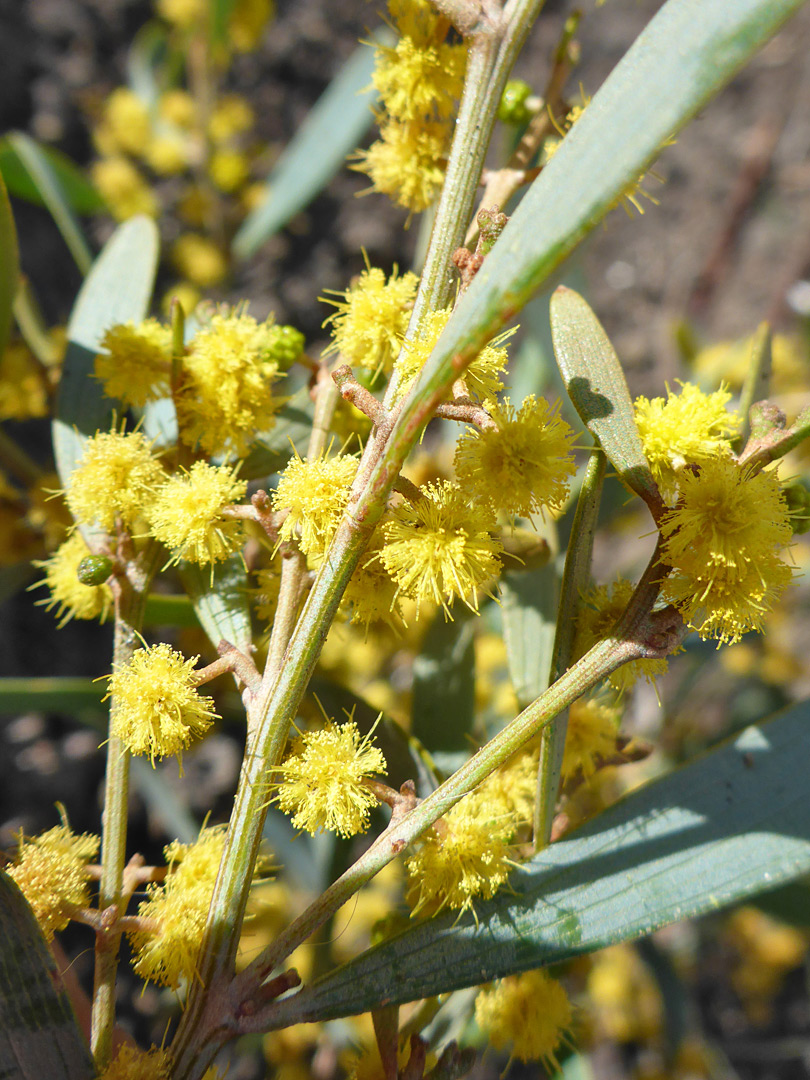
The Acacia redolens, or vanilla-scented acacia, is one of the most fragrant and useful of the low acacias, and its dense, spreading, grey-green growth and its bright-yellow, ball-shaped, vanilla-scented flowers have made it a favourite of the warm and the coastal gardens across the dry regions of the world. It grows as a low, spreading, evergreen shrub of the pea family, reaching up to a metre or two in height but spreading much wider, with the many branching, greyish stems bearing alternate, small, oval, grey-green phyllodes, and bearing, in the late winter and the early spring, the masses of the small, bright-yellow, ball-shaped, vanilla-scented flowers which cover the shrub, followed by the small, brown seed pods. It is a species of the flowering shrub, native to the dry regions of the southern Australia, while it has been cultivated widely as a ground cover and a fragrant shrub, and it is known as the vanilla-scented acacia or the prostrate acacia.
Scientific Research & Plant Biotechnology
The vanilla-scented acacia has a real and distinguished place in research. It has been studied in the horticulture and the ornamental-plant science, since the Acacia redolens is a popular, fragrant ground cover for the warm and the coastal garden, and the researchers have examined its cultivation, its propagation and its value in the landscape, while the study of the drought-tolerant shrubs has drawn attention in the international horticultural press. The plant has also been studied in the chemistry and the natural-products science, since the flowers of the acacia redolens have a distinctive vanilla scent, and the researchers have examined the fragrant compounds and their composition, while the study of the plant fragrances has been of continuing interest. The species has also been studied in the ecology and the restoration science, since it is a hardy shrub of the dry regions and a useful plant for the soil stabilization and the coastal restoration, and its role in the ecosystems has been examined, while the dense, spreading growth and the vanilla-scented flowers of the acacia redolens have been of interest to the botanists and the gardeners. For a shrub of such fragrance, the Acacia redolens has a rich and distinguished record of research.
Ecological & Economic Value & Wide Applications
To grow the Fragrant Desert Acacia from seed, the fragrant desert acacia is a low, spreading, evergreen shrub of the dry regions, bearing the small, oval, grey-green phyllodes and the masses of the bright-yellow, vanilla-scented flowers in the late winter. Its fragrant flowers are a magnet for the bees and the other pollinators, and its dense, spreading habit gives a fine ground cover in the warm and the coastal garden, while its tolerance of the drought, the salt and the poor soil makes it a valuable shrub for the coastal and the dry landscape. Its economic value is real: the vanilla-scented acacia is prized as a fragrant, drought-tolerant ground cover for the warm and the coastal garden, and its value has drawn attention in the international horticultural press, while the vanilla-scented flowers and the easy cultivation have made it a favourite of the dry gardens and the coastal landscapes, and the shrub is a fine addition to the dry garden, the coastal garden and the bank cover. To raise the vanilla-scented acacia, sow the fresh seeds in pots of moist, open soil in a warm, bright place, keep them gently watered, and grow the little shrubs on in the sun.
sow the fresh seeds in pots of moist, open soil in a warm, bright place, keep the young acacia gently watered, and grow the little shrubs on in the sun.
Acacia redolens, commonly known as prostrate acacia, bank catclaw, or spreading acacia, is a fast-growing, evergreen shrub in the Fabaceae (legume) family. Native to Western Australia, this hardy plant has been widely introduced to other dry and semi-arid regions, especially in California and the American Southwest, where it is valued for erosion control, landscaping, and its exceptional drought resistance. Botanical Description
- Growth Form: A dense, spreading or prostrate shrub typically growing 0.5 to 2 meters tall and up to 3–5 meters wide.
- Leaves: Like many acacias, it has phyllodes (flattened leaf-like stems) instead of true leaves—these are gray-green and slightly fragrant.
- Flowers: Small, golden-yellow, globular flowers bloom in late winter to spring, often with a sweet or musky scent.
- Seed Pods: Flat, brown pods follow the flowers and contain several hard seeds.
- Aroma: The term “redolens” refers to its fragrant foliage, which releases a noticeable scent, especially in warm weather.
Primary Uses and Benefits
- Erosion Control and Soil Stabilization
- Acacia redolens is widely planted along roadsides, embankments, and slopes to combat soil erosion.
- Its extensive root system holds soil in place, making it an ideal plant for land reclamation and stabilizing disturbed landscapes.
- Drought-Tolerant Landscaping (Xeriscaping)
- Due to its low water requirements, it is a popular choice in water-wise gardens and public landscapes in dry regions.
- It forms an attractive, low-maintenance ground cover that suppresses weeds and withstands harsh conditions, including poor soils and extreme temperatures.
- Ornamental Use
- The plants soft, silvery-green foliage and bright yellow flowers provide year-round color and texture.
- It is used in medians, parks, commercial landscapes, and large-scale planting projects where a rugged, low-growing plant is desired.
- Nitrogen Fixation
- Like other legumes, Acacia redolens hosts nitrogen-fixing bacteria in its root nodules, enriching the soil and benefiting surrounding vegetation.
Ecological and Environmental Value
- Pollinator Support: The flowers attract bees and other pollinators, providing early-season nectar.
- Habitat Creation: Provides cover and nesting material for birds and small animals.
- Tolerant of Salinity: Can be used in areas with saline or alkaline soils, which are typically challenging for plant growth.
Invasiveness and Management
- In some introduced regions (e.g., California and parts of the Mediterranean), Acacia redolens has shown invasive tendencies, spreading into natural habitats and displacing native plants.
- It is important to monitor its spread and manage seed dispersal, especially in sensitive ecosystems.
- Pruning or mowing can help maintain its size and prevent unwanted spread.
Safety and Toxicity
- Generally considered non-toxic to humans and animals.
- However, as with many acacias, seeds and pods are not recommended for consumption, and ingestion in large quantities may be harmful.
Conclusion Acacia redolens is a versatile and resilient shrub with many applications in landscaping, erosion control, and ecological restoration. Its drought tolerance, nitrogen-fixing ability, and attractive foliage make it an ideal choice for sustainable gardening in arid regions. However, care must be taken to manage its growth in non-native environments due to its potential invasiveness. Overall, it is a valuable species for both functional and ornamental purposes in the right settings. Acacia redolens: Uses, Applications, and Environmental Importance