


Salvia officinalis Seeds | English Sage
LATIN NAME: Salvia officinalis
COMMON NAME: Common Sage
Plant Profile
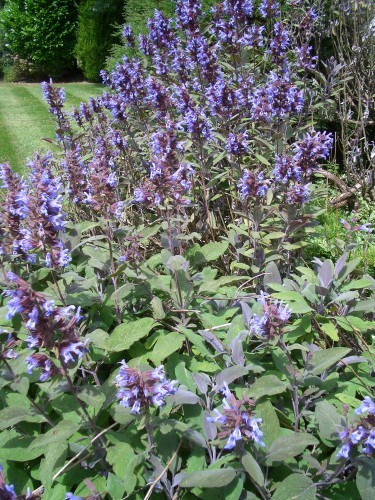
Sage is an evergreen subshrub of the dry Mediterranean hills, and it looks it. The leaves are oblong, 5-8 cm long, coated in fine hairs and covered with a network of ridges that catches the light and gives the whole plant a silvery bloom. Crush one and the oil that comes off is camphoraceous and slightly bitter, which is the flavour that makes sage indispensable in some dishes and unwelcome in others.
Plants settle at 40-70 cm, with a woody base that spreads into a loose, open shrub rather than a tight dome. The violet-blue flowers appear in early summer and are large enough for bumblebees to work properly. Left alone, a sage plant becomes leggy in three or four years and flowers less each season; pruned properly it stays productive for a decade.
Science & Biotechnology
Sage sits at the centre of one of the more interesting threads in herbal research, which is the effect of Salvia species on memory. A series of small trials at British universities tested standardized sage extracts in healthy adults and in people with mild cognitive complaints, and reported improvements in word recall and in the ability to sustain attention. The numbers were modest and the trials small, but the direction has been consistent enough to attract follow-up work rather than fading out.
The compounds behind the effect are not settled. Thujone, the monoterpene that gives absinthe its reputation, is present in sage oil and is neuroactive, but at doses far below anything a cup of sage tea delivers. Acetylcholinesterase inhibition by sage diterpenes has been demonstrated in vitro and offers a cleaner explanation, since it parallels the mechanism of Alzheimer’s drugs. What is not in doubt is the antimicrobial strength of the oil, which is why sage appears in mouthwashes and gargles across Europe.
Uses & Benefits
Sage and fat are the pairing that made the herb famous: pork, duck, goose, butter, and the sage-and-onion stuffing that accompanies a roast bird across Britain. The flavour is strong enough that a few leaves go a long way, and it survives long cooking better than most soft herbs.
Medicinally, sage tea is the traditional gargle for a sore throat, and the EMA monograph supports sage leaf for dyspepsia and for excessive sweating, a use that goes back to the salvia-salvare wordplay. In the garden the plant works as a low grey shrub at the front of a dry border, where its foliage contrasts sharply with the greens around it, and its flowers are among the best early-summer bee plants in a herb garden.
Growing from Seed
Sow sage on the surface of a gritty, free-draining mix and press the seed in without covering it, since it needs light. Germination at 15-20°C takes two to three weeks and is often patchy, so sow more than you need. The seedlings start slowly and look weak for a month before they suddenly put on real growth.
Pot them on into a mix with plenty of grit, and do not feed them; rich compost produces soft, floppy plants that winter badly. Plant out in late spring or early summer into full sun. Cut back after flowering to keep the bush compact, but never prune into bare old wood in autumn. In cold, wet climates sage survives better with a gravel mulch at the crown and a little fleece in an exceptional winter.
Our Take
Sage is worth growing even if you never cook with it, because it is one of the few herbs that looks good in January. The purple and tricolour forms are less hardy than the plain grey one, so start with the species if your winters are wet and cold.
Related Reading
Readers interested in Common Sage frequently explore these as well: