


Oenothera biennis Seeds | Evening Primrose
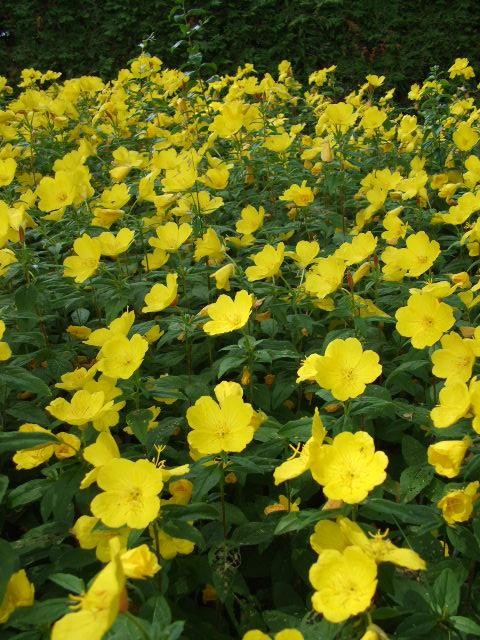
LATIN NAME: Oenothera biennis
COMMON NAME: Evening Primrose
Plant Profile
The plant spends its first year as a flat rosette of softly hairy, lance-shaped leaves, then bolts in the second year to a wand of four-petalled, cup-shaped flowers. Each flower lasts a single night, opening in the cool evening and closing by the next midday, which is why moths, especially hawkmoths, are the chief pollinators, with bees taking the leftovers in the morning. The floral tube is slender and the nectar sits deep, a shape built for a long-tongued visitor working after dark, and the pale colour shows up where a white or yellow bloom would be lost against green.
The seed is a tiny, angular achene packed in a slender capsule; a single stalk can shed thousands. It is this seed, not the showy flower, that carries the commercial oil, and the achene’s hard coat is what lets it lie dormant in soil until conditions suit. A ripe capsule splits from the top, and the light seed spills out a little at a time across the season, which is why a single plant can found a whole colony on a sunny bank.
Historically the young roots were eaten like salsify, the leaves cooked as a potherb, and a tea made from the aerial parts. Today the plant is grown mostly for the oil and for the evening border, where its night-opening habit and moth traffic are the draw. It also naturalises on disturbed ground and roadside verges across cool Europe, and a single plant left to seed will spread along a sunny bank within a couple of seasons. The dried seed heads are sometimes used in winter flower arrangements for their slender form.
Science & Biotechnology
Evening primrose is a cottage-garden favourite for its pale-yellow, fragrant blooms that open at dusk, but its real claim to fame is inside the cell. The genus Oenothera became the model that taught geneticists about reciprocal chromosomal translocations, through the work of Otto Renner in the 1920s. Many species, including the biennis group, are permanent translocation heterozygotes: their chromosome ends are swapped between non-homologous pairs, so a normal meiosis would make unbalanced, lethal gametes. The plant solves this with a mechanical trick, alternate segregation, that sorts the translocated sets as intact units called Renner complexes. The result is a lineage that stays heterozygous generation after generation and, in effect, breeds as a clone through seed.
Uses & Benefits
Evening primrose oil is pressed from the seed and valued for gamma-linolenic acid, typically around eight to ten percent of the fatty acids, together with a high linoleic acid background. Gamma-linolenic acid is the same omega-6 that makes borage oil sought after, just at a lower level, which is why evening primrose became the original commercial source of that supplement crop before borage scaled up. The oil is recovered by cold pressing or solvent extraction and sold as a capsule and cosmetic ingredient, with the defatted meal left as a byproduct.
The chemistry of interest is locked in the lipid of the embryo, so the plant is farmed as an oilseed: fields are grown, the seed is combined, and the meal left behind is a distinct product. This is a different use entirely from the flower’s ornamental one, and the two markets rarely overlap. Growers select for seed weight and oil content rather than for the size of the bloom, and a good strain can double the oil per hectare of a poor one.
Growing from Seed
Sow the fine seed across the top of a firm, moist seedbed in late spring, or start modules and transplant once the seedlings carry two true leaves; the rosette establishment year matters more than speed. Choose an open, sunny site with light, well-drained soil and thin the rosettes to roughly thirty centimetres apart so the second-year stems have air. Water only in prolonged drought; rich, damp ground favours leafy rosettes over flowering. Allow the capsules to ripen and turn brown before collecting, then thresh and clean the seed. Because the plant is biennial, plan for a flowering crop in the second season after sowing, and keep a fresh sowing going each spring for continuity so you always have a rosette year and a bloom year in progress.
Our Take
Evening primrose is the gentler gamma-linolenic cousin of borage, and a night-flowering companion to calendula. For more medicinal-leaf herbs see clary sage and common sage.
Treat the oil as a raw botanical ingredient rather than as a ready-made medicine. Seed lots can differ in fatty-acid profile, so record provenance, pressing conditions, and storage temperature when comparing material for food or cosmetic research.
Related Reading
Readers interested in Evening Primrose frequently explore these as well: