


Calendula officinalis Seeds | Pot Marigold
LATIN NAME: Calendula officinalis
COMMON NAME: Pot Marigold
Plant Profile
Pot marigold is the easiest serious herb to grow, and it is easy in a way that hides how useful it is. Calendula officinalis is an annual of the daisy family, probably native to the eastern Mediterranean, and it has been in cultivation so long that no certain wild population remains. Plants make a bushy mound of soft, pale-green leaves 30-60 cm high, slightly sticky to the touch, and then flower almost continuously from early summer until hard frost.
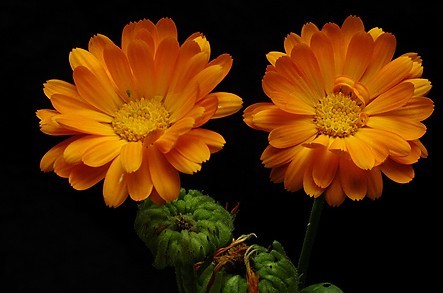
The flower heads are the point. They open flat and stay open in dull weather, unlike many daisies, and they range from pale lemon through orange to a deep coppery tone that the seed trade calls touchstone. Single-flowered forms are better for bees and for drying; the doubles look impressive in a border and produce less pollen.
Science & Biotechnology
Calendula has a regulatory footprint that surprises people who think of it as a cottage-garden plant. The German Commission E approved calendula flower for healing wounds and inflammation, and the EMA lists it for minor skin inflammation, with the flower preparations among the most widely used topical botanicals in Europe.
The chemistry behind that use is dominated by triterpenoid saponins and triterpene alcohols, particularly the faradiol esters, which inhibit inflammatory mediators in skin models. Flavonoids and carotenoids contribute antioxidant activity, and the carotenoid content is also why the petals were used as a cheap substitute for saffron in soups and rice across medieval Europe. Recent work has moved toward wound-healing dressings and hydrogel formulations rather than the salves that made the plant famous, which suggests the traditional use is being taken seriously by materials science.
Uses & Benefits
In the kitchen the petals are a colouring and a mild flavour rather than a spice: scattered over rice, into scrambled eggs, or infused in oil for a golden, faintly peppery dressing. They add more colour than taste, and the green base of the petal is bitter, so pull the ray florets off rather than chopping whole heads.
The main harvest is medicinal and ornamental. Flower heads picked in dry weather and dried fast in a warm, dark place keep their colour for a year and go into oils, salves and balms. In the garden, calendula is one of the best plants for filling the gap between the spring bedding and the late-summer perennials, and it self-seeds so reliably that once planted it tends to stay.
Growing from Seed
Calendula germinates in cool soil, which makes it one of the few annuals that can be direct-sown in early spring. Sow 1 cm deep in a prepared bed at 15-20°C; germination takes seven to fourteen days, and the seedlings are robust enough to thin rather than transplant. It also transplants well if you raise it in modules, which is worth doing where slugs are a problem.
Space plants 25-30 cm apart in full sun; they tolerate poor soil and actually flower more freely without much feeding. Deadhead twice a week to keep production up, and stop deadheading in late summer if you want seedlings for next year. The seed is large and easy to save, and it stays viable for three to four years.
Our Take
Calendula is the plant I would give to someone who has never grown anything from seed, because failure is almost impossible and the reward arrives in ten weeks. It is also the one herb worth growing at scale: a two-metre row supplies enough flowers for a year of salve-making.
Related Reading
Gardeners who grow Pot Marigold often pair it with these related subjects: