


Ocimum americanum Seeds | Lime Basil
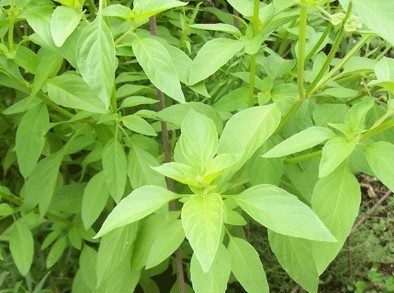
LATIN NAME: Ocimum americanum
COMMON NAME: Lime Basil
Plant Profile
Lime basil earns its name from a leaf oil that reads as citrus rather than clove. The plant is an annual or short-lived perennial with the square stem and opposite leaves of its genus, but the foliage is narrower, paler, and finely hairy, often with a hoary sheen that gives one of its old names, hoary basil. Crushed, the leaves release a bright, lime-like scent quite unlike the sweet linalool of Genovese basil, and the small white or pale-lilac two-lipped flowers sit in slender terminal spikes through the warm months. It is a hotter-climate, faster, leaner plant than the Mediterranean sweet basils, and in mild gardens it is grown as a tender annual.
Science & Biotechnology
The lime scent comes from the monoterpene aldehydes citral (a mix of the geometric isomers geranial and neral) and supporting limonene, with linalool present in much smaller amounts than in sweet basil. This citral-dominant oil is the chemical reason lime basil pairs with fish, fruit, and Southeast Asian dishes rather than with Italian tomato. Steam distillation of the aerial parts recovers the oil, and the same volatiles are what give the herb its noted activity against a range of food-spoilage microorganisms in laboratory screening.
In breeding and biotechnology, Ocimum americanum features in studies of essential-oil yield under water stress and in crossing work aimed at moving the citrus chemotype into larger-leaved backgrounds. Shoot culture and in-vitro conservation of basil germplasm routinely include this species because it is a useful donor of the lime signal, and because its rapid tropical growth makes it a convenient experimental subject for oil-work.
Uses & Benefits
Botanically it has been shuffled: what gardeners call lime basil is usually O. americanum, while the closely scented O. citriodorum (often sold as lemon basil) is sometimes kept apart and sometimes folded in. The two share the citrus chemotype and are easily confused, which is why seed lists vary in the name they print, and why a smell test beats a label when you want a true lime note in the kitchen.
Use lime basil fresh, finely shredded, over grilled fish, into a coconut-milk curry at the end of cooking, or torn through a mango and chilli salad where its acidity-like lift stands in for a squeeze of citrus. The flowers are edible and make a pretty garnish for a summer drink. As with all basils, drying dulls the citral, so the herb is at its best cut straight from the pot; a few leaves muddled into iced tea or a gin-free cooler give a convincing lime note without the fruit, and the flavour survives a brief wilt far better than it survives drying.
In Indonesia and Vietnam the citrus basil appears as kemangi, tossed raw through sambal and rice dishes or laid over grilled foods just before serving, where the heat releases the citral rather than cooking it off. That raw, last-minute use is the rule for any citral-rich herb: the volatile aldehydes fade with heat, so the leaf belongs at the table, not in the pot for long.
Growing from Seed
Sow the seed shallow, barely covered with 2 to 3 mm of fine compost, into warmth, and keep the medium lightly moist. Transplant or thin seedlings once they hold four to six true leaves, spacing plants about 20 cm apart in a row after all risk of cold nights has passed. Lime basil wants full sun and a light, well-drained soil; it is more tolerant of heat and lean ground than sweet basil but still resents wet feet, so water at the base and let the surface dry between drinks. Pinch the growing tip and later flower spikes to keep the plant leafy and compact, and feed lightly every few weeks. In cool districts grow it in a pot that moves under cover at the first chill. Watch for spider mite in hot dry air and for downy mildew in humid spells, and give the foliage morning sun to dry so the lower leaves stay clean.
Our Take
Lime basil is my warm-weather switch from pesto to curry; the citral hit is unmistakable. For the rest of the basil bench compare Sweet Basil, Dark Opal Basil, and Ocimum tenuiflorum.
Related Reading
Readers interested in Lime Basil frequently explore these as well: