


Combretum indicum Seeds | Quisqualis Indica
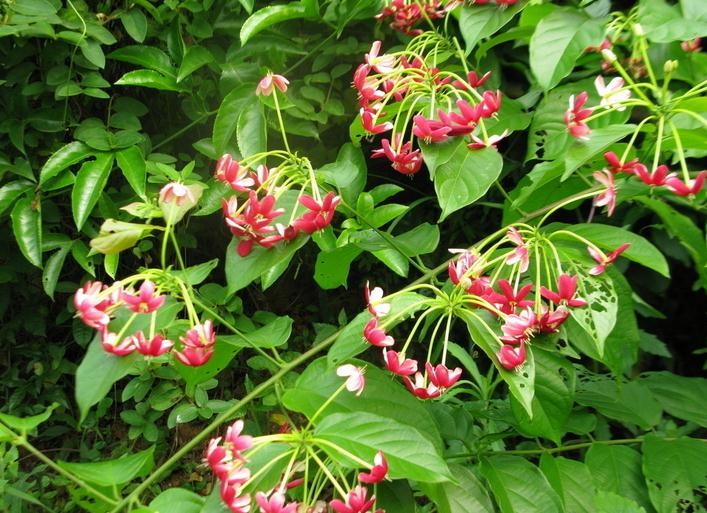
LATIN NAME: Combretum indicum
COMMON NAME: Rangoon Creeper
Plant Profile
The Rangoon creeper is a twining climber that turns a plain fence into a slow fireworks show. Its long hanging clusters of tubular flowers open white in the evening, slide through pink as they age, and settle into deep red, so a single mature plant carries three colours at once along the same stem. Add the sweet scent that strengthens after dark, and you have one of the most theatrical plants a warm garden can grow.
Older books call this plant Quisqualis indica, a name that has moved into synonymy as taxonomy caught up with the flower structure. Today it sits as Combretum indicum, a change worth knowing because seed lists and garden tags still use the old name side by side with the new. The plant has not changed; only its drawer in the botanical cabinet has, which is a small lesson in how genera get revised.
In the garden the Rangoon creeper is a feature for the warm wall, the pergola, or the post by the door where its scent can be enjoyed at the end of the day. It flowers through the warm season and the clusters keep coming, so the three-colour effect is not a one-week event but a running display that carries the border through the hottest months.
Plant it where people sit in the evening, because that is when the scent is strongest and the colour change is easiest to watch. A creeper over a patio bench turns a quiet corner into the best seat in the garden after sunset, and the moths it draws are a show in themselves for anyone who likes night life in the border.
The plant has a long record in tropical and subtropical gardens as an ornamental with a story, the kind of climber that gets passed from one gardener to the next because the cuttings root and the flowers never fail to impress a first-time visitor. That word-of-mouth history is why it shows up in so many old warm-climate garden lists.
Science & Biotechnology
The colour slide is the same chemistry seen in other age-changing flowers: as the bloom ages it builds anthocyanin in the petal, moving from unpigmented white to full red over its life. The evening scent is a separate story, a volatile release that ramps up after sunset and draws night-flying pollinators to a flower that would be invisible by day if not for the white of youth. Together the two traits make the creeper a moth magnet.
The stem twines as it grows and will coil around a wire, a post, or a neighbour if you let it, so training is mostly a matter of pointing it the right way and tying the early wood. Left alone it covers a wall in a season of warm weather and asks only for sun and something to hold. That eager habit is a virtue on a bare fence and a nuisance on a fragile plant, so direct it with intent.
Uses & Benefits
Beyond the show the plant carries the tannins and flavonoids typical of the Combretaceae, and extracts of the flower and leaf have been screened in the usual way for antioxidant and mild antimicrobial activity. None of this turns the creeper into a medicine for the home gardener, but it explains why the genus keeps appearing in phytochemistry surveys of tropical ornamental climbers.
Growing from Seed
The plant is evergreen or semi-evergreen in frost-free ground, with oval pointed leaves on a woody twining stem. The flowers are carried in loose drooping clusters, each bloom a narrow tube that flares at the mouth, built to suit a moth or a long-tongued bee working after sunset. The leaf shape and the trailing flower spike are the marks that place it among the combretums rather than the true jasmines it is sometimes confused with.
From seed the creeper needs a warm start, sown shallow in a free-draining mix and kept bright until the seedling climbs. The seed coat is firm, so a brief warm soak before sowing helps it along, and the young plant should stay under cover until the air outside is reliably warm.
For a plant that shows the full white-to-red shift, take a cutting from a known creeper and root it in a humid corner out of full sun. A cutting flowers true and soon, while seed can drift in colour timing, so cuttings are the steady route to the look you saw and liked.
Feed the climber lightly through the warm months and water it well while it is in flower, then ease off as the weather cools. In a frost-free site it becomes a permanent woody climber; where winters bite it is a summer subject grown in a pot and brought under cover when the temperature drops.
Our Take
The Rangoon creeper is the climber I point people to when they want a fence with a story, because white-to-red in one evening is a hard trick to beat. Train it with the Chinese wisteria, the Japanese honeysuckle, and the passion fruit, and let the morning glory fill the gaps below. Give it a wall, give it sun, and watch the colours change while you eat dinner outside.
Related Reading
Continue exploring with these related plants: