


Idesia polycarpa Seeds | Mountain Kiriko
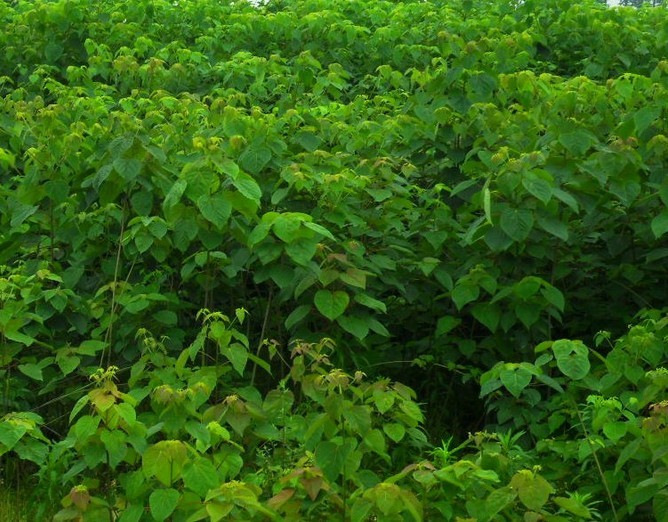
LATIN NAME: Idesia polycarpa
COMMON NAME: Wonder Tree
Plant Profile
Stand under a female wonder tree in late spring and the whole crown hums: long, drooping chains of small, honey-scented flowers hang from every branch, and the bees find them before you do. Few hardy trees perfume and curtain themselves at once. The genus carries an odder story still — it was named in honour of E. Ysbrants Ides, a seventeenth-century traveller who rode overland from Moscow to China and brought its seeds to European attention.
The foliage is the second performance: leaves are large, softly downy when young, distinctly heart-shaped with a long, drawn tip, and they rattle pleasantly in wind. Spring growth emerges bronzed, summer matures to deep green, and autumn turns the whole crown butter-yellow before the berries take over the stage. The tree grows quickly into a broad, rounded crown of ten to fifteen metres, with grey bark that stays smooth for years. Botanically the tell is in the flowers and fruit — the panicles arise from the leaf axils of the new shoots, and the berries hold many tiny, flattened seeds in soft flesh.
In Japanese towns and Chinese campus plantings, idesia is a shade tree of long standing, valued for surviving cold that stops most elegant aliens. Its winter berries make it a first-rate wildlife tree: thrushes, waxwings and other wintering birds strip the fruit through the cold months, turning a park tree into a feeding station. Municipal foresters like its tolerance of ordinary urban soil and its refusal to break apart in wind.
Science & Biotechnology
The wonder tree earns its scientific keep quietly. Its seeds carry a light, unsaturated oil that has drawn attention in fatty-acid and biofuel screening studies across East Asia, and the tree’s sheer productivity — hundreds of berries on a single female crown — makes it a natural candidate for marginal-land biomass work. The genus also interests botanists for its position within the Salicaceae, a family rebuilt around willows and the old flacourtian line, so every idesia collected in Yunnan or Taiwan sharpens the map of how that group moved around the Northern Hemisphere. Horticulturally, selections are made for berry colour, chain length and cold tolerance rather than any formal cultivar trade.
Give it room and moist, deep soil; it will pay you back with the fastest growth of any ornamental tree its size in a cold climate. Planted beside water it doubles its reflection with its hanging chains, and as a specimen on lawn it shapes itself with almost no pruning.
Uses & Benefits
Idesia is strictly dioecious: every tree is male or female, and only the females carry the fruit show. Male flower chains are the longer and more fragrant, built for attracting pollinators; female chains shorten and thicken into summer as the flowers set hundreds of small, round berries that shift from yellow-orange to brilliant red-brown and hang on the bare twigs into winter. If you plant one tree, plant a male for perfume; if you plant a grove, add a male so the females can fruit. Sex cannot be told from foliage, so nursery buyers plan for the surprise.
Growing from Seed
The berries carry the seed, so clean the flesh away in a sieve and sow fresh in autumn, or dry-store the seed cold and sow in spring. Use a loose, humus-rich medium and barely cover the seed — a few millimetres of sifted leaf mould is enough. Keep it moist and cool; the seed is happiest with a natural winter chill. Prick seedlings out once they show two or three true leaves, pot them on steadily, and set them out when they stand twenty to thirty centimetres tall, spacing trees eight to ten metres apart. Young idesia resents drought more than cold, so water through the first two summers, stake only loosely, and let the leader run — the tree builds its own balanced crown.
Hardy as the mature tree is, first-year seedlings in containers appreciate a sheltered cold frame. Watch for nothing much in the way of pests; the species is notably clean, its worst trouble being root rot in waterlogged pots — a hint that the field site should drain, even while the soil holds moisture.
Our Take
If the idea of a fast, cold-hardy, bird-feeding shade tree appeals, idesia has few rivals and fewer imitators. For other big-leaved rapid growers of East Asian origin, compare royal empress tree, whose foxglove flowers fill the same fast shade role, or the golden rain tree with its lantern-like seed pods. Chinese parasol tree rounds out the set with the classic parasol-shaped street tree of old Chinese towns.
Related Reading
Continue exploring with these related plants: