


Koelreuteria paniculata Seeds | Golden Rain Tree
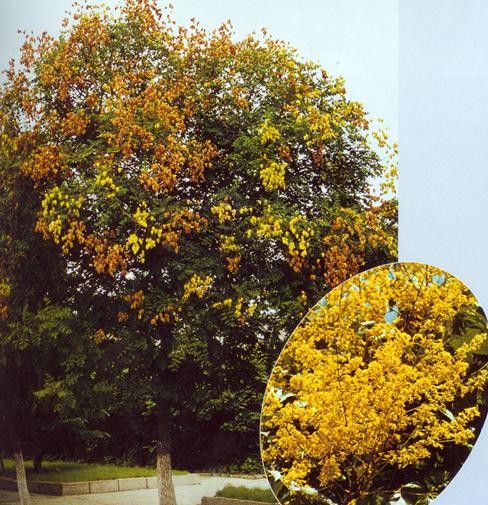
LATIN NAME: Koelreuteria paniculata
COMMON NAME: Golden Rain Tree, Pride of India
Plant Profile
Koelreuteria paniculata is the street tree that turns a whole avenue gold in mid-summer, when it raises huge upright panicles of small four-petalled yellow flowers above the leaves. The common name golden rain comes from the way the fallen petals sheet the ground beneath the canopy, and pride of India is a leftover name from an old confusion with a different tree. It is a tough, tolerant urban subject, able to stand heat, smoke, and poor soil where more delicate ornamentals fail.
The leaves are the first puzzle: on one tree they range from simply pinnate, with oval toothed leaflets, to deeply cut and even bipinnate, the blades divided twice. The variation is normal for the genus and helps tell it from the look-alike soapberries. In autumn the lobed leaves colour yellow to brown, and the whole tree reads as a soft, rounded crown on a grey-brown trunk.
After the flower comes the tree’s best-known feature: a papery, inflated capsule, pale green turning pink then brown, that looks like a tiny lantern and stays on the branch into winter. Inside sits a single round black seed, and the lantern shape is the surest mark of the genus, separating it at a glance from every other yellow-flowered summer tree.
The lantern pod is also the tree’s best ornamental feature after the flower, so many growers leave it on the branch for winter display and only harvest the seed that falls. If you want a uniform golden street, take cuttings or buy cloned stock, because seed always varies in flower colour and pod shape; but for a mixed garden row the surprises are part of the pleasure, and a self-sown golden rain tree under a wall is a small event each summer when it lights up. The species also feeds bees well, so pair it with a legume hedge if you want the understory to work harder, and thin the seedlings while small so the strongest stand.
Science & Biotechnology
The flower and leaf carry flavonoids such as kaempferol and quercetin glycosides, and the seed and root hold triterpene saponins that foam in water, the compounds behind traditional use as a mild soap and the subject of pharmacological screening. The seed is also oily, with a fat profile studied for a small industrial oil rather than for the table.
Labs multiply selected golden-flowered and upright forms by shoot culture to keep a named avenue tree true, since a seed row varies in flower colour, pod shape, and crown width. The work lets a city plant a uniform golden rain street without waiting for seedlings to show their form by chance.
Uses & Benefits
The tree’s main use is ornamental avenue and park planting, where the summer gold and the winter lantern pod both earn their space. It is also a dependable honey plant, the flowers feeding bees in the warm months when little else blooms heavily.
Because it shrugs off pollution and compacted soil, it is planted where many trees yellow and drop, and its light shade suits grass beneath. The lantern pods are ornamental only, not a food, so the tree stays in the landscape lane.
Growing from Seed
The round seed has a hard coat, so scarify it by rubbing or nicking, then soak it in warm water until it swells before sowing on a deep, free-draining bed and covering it lightly. The seedling pushes a taproot, so move it to its own pot before that root curls, once it stands a few centimetres tall. A cold, moist chilling helps an even stand if the seed is fresh-cured.
Give the tree full sun and any well-drained soil; it tolerates drought once established but dislikes standing water on the seedbed. Trim to a single leader while young for a clean avenue trunk, and protect the seedling from hard frost through its first cool season. Once set, it grows quickly and needs little.
The papery capsule is the easiest way to get seed, because each lantern holds a single round seed that rattles when the pod is dry, and a branch carried indoors in winter becomes a natural rattle of future trees. Collect the pods as they turn brown and crisp, then split them and pick out the seed, which keeps best if dried slowly and stored cool rather than baked. The seed coat is hard, so the scarify-and-soak routine before sowing is what turns a drawer of lanterns into a row of seedlings, and a fresh batch sprouts more evenly than one kept for several seasons. In cold zones start the seed in a pot under cover and move it out once the stem has hardened, since a late frost on a young seedling sets it back a full season. The lantern also makes a good dried arrangement, so do not rush to strip every pod.
Our Take
I value the golden rain tree for flowering when the border is quiet. A close genus relative is the Koelreuteria bipinnata, and good street-tree neighbours include the pagoda tree and the tiered Cornus controversa.
Related Reading
If Golden Rain Tree appeals to you, these related plants are worth a look: