


Sassafras tzumu Seeds | Tzumu
LATIN NAME: Sassafras tzumu
COMMON NAME: Tzumu
Plant Profile
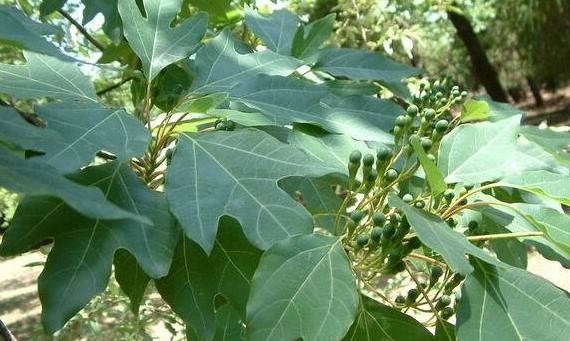
Sassafras tzumu is the tree that baffles beginners because a single branch can carry three different leaves: a plain oval, a two-lobed mitten, and a three-lobed hand, all on the same shoot. The trick is a tropical holdover, and it means you identify the tree by the mix, not by one leaf. In early spring, before the leaves, the bare branches open small yellow-green flowers in short clusters, and the whole tree smells faintly of root beer when the bark is bruised, which is the family signature of the Lauraceae.
The species is dioecious, so only some trees carry the fruit: a small dark-blue drupe on a stout red stalk, like a miniature of the dogwood berry but from a different family. The red-stalked blue fruit and the three-shaped leaf separate tzumu from the many single-shape trees of the warm valley, and they explain why a grower needs both a male and a female plant if fruit is the aim.
The wood is pale, straight, and fragrant, and it has been cut for furniture, boat planking, and carving where a sweet-smelling, workable board is wanted. The same scent in the root and bark is what gave sassafras its old fame in food and drink, a story now complicated by the chemistry below.
Researchers multiply selected fragrant, straight-stemmed trees by seed and by tissue culture to hold good timber form, and they map the oil profile to understand which chemotypes run high or low in safrole. The goal is a tree valued for wood and shade without encouraging the root trade that damaged wild stands.
Science & Biotechnology
The volatile oil from root and wood is led by safrole, with camphor, eugenol, and smaller phenols behind it, and that safrole is the problem: it is the precursor to MDMA and is flagged as a carcinogen in concentrated form, so the old use of sassafras root in food and soda is now restricted or banned in many places. The tree is therefore studied more for the ecology and the timber than for a kitchen extract, and any grower should treat the root and oil as off-limits for consumption.
Uses & Benefits
In its native range tzumu is planted for a fast, straight timber trunk and for shade along fields, and the fall colour of the lobed leaves adds a yellow to the valley. The tree is also useful as a pioneer on disturbed ground, where its quick growth covers a bare slope.
Birds spread the blue fruit and the tree establishes on open sites, so it is used in reforestation mixes where a fragrant, nitrogen-light pioneer is wanted. It is not a fixer, but it is tough and quick, which is enough for the first canopy.
Growing from Seed
The drupe carries a hard coat and a rest, so scarify it lightly and give it a cold, moist chilling before sowing on a shaded, free-draining bed in spring, covering it lightly. The seedling emerges with a pair of plain leaves first, then begins to show the lobed forms as it grows; move it to its own pot once it stands a few centimetres tall.
Give tzumu sun and a deep, moist soil, and shelter young plants from hard frost in the first cool season. Trim to a single leader for a timber trunk, and keep the base clear of grass so the slender stem does not fork. Once established it grows fast and asks little.
Tzumu is not a solitary specimen tree in its home range; it belongs in a mixed hillside wood with other Lauraceae and with broadleaf companions, where its quick growth fills the first canopy and its fragrant wood is a bonus later. Plant it among camphor, litsea, and machilus for a fragrant eastern grove, or mix it with pine on a dry slope where the pine gives the early shelter and the sassafras fills in beneath. The lobed leaves feed earthworms and the blue fruit feeds birds, so the tree pays its way in the ecology as well as the timber yard. Because the species is dioecious, a single tree will never fruit, so set at least one male and one female if you want the blue drupe, and space them within bee range of each other.
For the grower the practical note is patience and placement: the three-shaped leaf is a talking point, but the tree wants sun and a deep soil to show its best autumn colour, and it resents a waterlogged flat. Set it where you can watch the bark bruise and smell the root-beer note in spring, and keep the root and oil strictly out of the kitchen so the plant stays a garden and forest subject rather than a regulated extract. A windbreak of mixed broadleaves suits it better than a lone park tree, and the pioneer habit means it establishes where slower woods hang back.
Our Take
I grow tzumu for the three-shaped leaf and the scent of the bark, never the root. If you like fragrant Lauraceae, the camphor tree, the Litsea cubeba, and the Machilus yunnanensis are close family neighbours.
Related Reading
Continue exploring with these related plants: