


Levisticum officinale Seeds | Lovage
LATIN NAME: Levisticum officinale
COMMON NAME: Lovage
Plant Profile
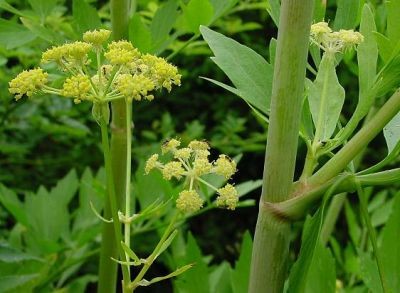
Levisticum officinale, better known as Lovage, is a perennial in the carrot family. Lovage raises its tall, hollow stems and flat, yellow umbels, and large, dark-green, celery-like leaves fill base of the plant. It is a plant of open, sunny to lightly shaded, deep, rich, moist ground. When it flowers, local bees and other insects make good use of it. For the gardener, the sum of these traits is a plant that is easy to live with.
Science & Biotechnology
Research touching on Levisticum officinale ranges from the botany of the carrot family to practical horticulture, including seed handling, propagation and the selection of superior forms. In the laboratory and trial ground alike, it serves as workable material for propagation research and line selection.
Uses & Benefits
Lovage works well in borders, containers and dedicated beds. Lovage is a fine, generous herb of herb garden and kitchen patch. It is a fine, generous herb of open, sunny to lightly shaded, deep, rich, moist garden. Give young plants deep, rich bed, and tall stems will rise over the years. Once it has settled, the workload drops to almost nothing.
Lovage is the Maggi plant of European soups, a strongly savory perennial vegetable, and its root is a traditional European diuretic herb for urinary teas.
Growing from Seed
Seed is the natural starting point for Lovage, and the process is uncomplicated. Scatter the seed evenly over a loose seed compost, cover to no more than its own depth, and keep the pot moist and bright. Transplant the sturdiest seedlings to their permanent spots and let them develop without disturbance.
Our Take
Lovage settles in quickly once it finds its footing. Even moisture while the seed is chitting is the main thing; afterwards it largely looks after itself.
Related Reading
Continue exploring with these related plants: