Rare plant seeds, roots, stems, leaves flowers scientific research, biotechnology,

Chives Allium schoenoprasum

Chives Allium schoenoprasum

LATIN NAME: Allium schoenoprasum

COMMON NAME: Chives

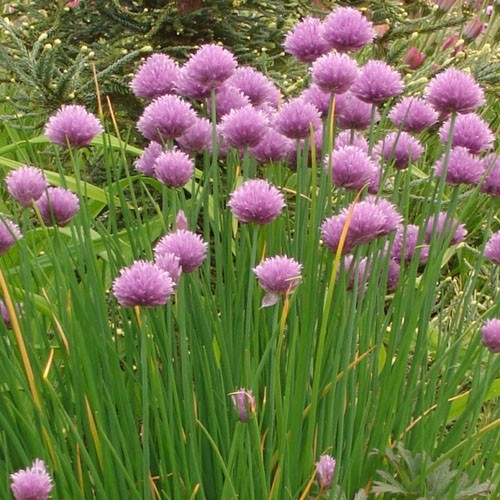
The chives raise their small, rounded heads of the pale-purple flowers above the thin, hollow leaves, and the whole plant stands in the neat, dense clumps. The clump-forming, hardy, perennial herb carries the many thin, cylindrical, hollow, grass-like, bright-green leaves and the small, rounded heads of the many tiny, pale-purple or pink, star-shaped flowers on the upright, leafless stems through the early summer, one of the fine, bright sights of the herb garden, drawing the bees. The leaves have a very long record as the fine, mild, onion-flavoured greens of the old kitchens, and the plant is a fine, historic presence of the herb garden. It is a plant of the open, sunny, deep, rich, moist, well-drained ground.

Scientific Research & Plant Biotechnology

The chives are a historic subject of the plant science, and the rounded heads keep showing up in the work on the onion herbs. The chemistry of the thin, cylindrical, hollow leaves, which carry the fine, mild, onion-flavoured oils of the old kitchens, has been studied steadily, and it keeps appearing in the studies of the onion herbs, the edible greens and the members of the amaryllis family. The rounded heads and the clump-forming habit have also made them a fine study plant, and the chives are a regular subject of the work on the rounded heads of the cool world.

Ecological & Economic Value & Wide Applications

The chives are a fine, bright herb of the herb garden and the study collection. The thin, cylindrical, hollow, grass-like leaves have a very long record as the fine, mild, onion-flavoured greens of the old kitchens, the snipped leaves coming to the salads, the soups, the eggs, the dips and the potatoes of the old tables, while the small, rounded heads of the many tiny, pale-purple or pink, star-shaped flowers open through the early summer, drawing the bees. It is one of the fine choices for the herb garden, the edging and the study collection, and it has been written up in the culinary and the botanical papers for the mild leaves and the very long history. It is a fine, bright herb of the open, sunny, deep, rich, moist, well-drained garden.

Give the young plants the deep, rich, moist bed, and the rounded heads will rise in the first season.

To grow the chives from seed, sow the small, black seeds a centimetre down in the deep tray of fine, sandy soil, keep the tray in a bright, open spot and water gently, then set the young plants out in the open ground. The seedlings show themselves within a couple of weeks and grow on steadily. With the sun and the deep, rich, moist, well-drained ground, the rounded heads will rise through the early summer.


Chives are hardy perennial allium herbs producing fine hollow tubular green leaves and rounded soft‑lavender flower clusters. Widely grown in home herb gardens, raised beds and market vegetable plots, their mild onion‑flavoured foliage is regularly harvested for garnishes, salads and everyday culinary use. Flower heads draw abundant pollinator insects, adding extra ecological benefit to herb planting spaces. Seed‑raised material supplies large volumes of clumping plants for herb production and mixed pollinator‑friendly garden arrangements.
Growing chives from seed brings practical horticultural value. Seed‑originated plants form dense fibrous root mats that thrive in ordinary garden loam. Sowing multiple seeds together builds up full clumps quickly. As an open‑pollinated herb, viable seed can be saved from mature flower heads, keeping the plant’s desirable leaf characteristics for subsequent growing seasons. Direct sowing or tray starting both work well, suiting different grower workflows.
Seed heads ripen once blossoms fade and small seed capsules dry on the stems. Collect mature seed clusters, then thresh and sift to separate tiny dark seeds from floral chaff. No cold stratification is mandatory, though brief cool dry conditioning supports steady even sprouting performance. Clean dried seed retains good vigour when kept in cool dry storage.
Sow seeds onto fine, well‑drained herb‑starting substrate. Only a light dusting of soil covers the seed, since light supports positive seed activation. Moderate warmth and consistent gentle surface moisture encourage active seed development; avoid waterlogged conditions. Bright indirect light suits early seedling growth. Under suitable conditions, slender grass‑like seedlings emerge.
Young chive seedlings grow slowly at first and benefit from careful thinning. Over time they develop into dense clumping bunches. Regular partial leaf harvesting encourages fresh leaf regrowth. These seed‑raised clumps produce repeat harvests across multiple growing seasons. When flowering occurs, the rounded lavender blooms attract local bees. Left undisturbed, mature seed heads disperse seed naturally, creating gentle self‑sowing to refresh plant populations across suitable garden sites.

Regular onion chives. Besides using the leaves, try the pretty purple flowers, separated into florets, in salads for colour and flavour

Prev:
Next: