


Apium graveolens Seeds | Chinese Celery Japanese Parsley
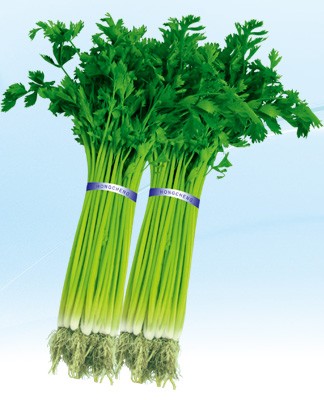
LATIN NAME: Apium graveolens
COMMON NAME: Leaf Celery
Plant Profile
The leaf is deeply divided into narrow segments, almost thread-like, and the whole plant carries the sharp, green celery smell at several times the strength of the trench type. The thin stems stay crisp and are eaten along with the leaf, not discarded, which is what makes the whole top a usable cut.
Botanically this is Apium graveolens, the wild marsh celery, selected for leaf rather than petiole into the variety secalinum. It is the link between the wild, stringy ancestor and the fat, pale celery of the veg plot, and it keeps more of the wild pungency.
The trench celery (var. dulce) is grown for a blanched, swollen stalk and is mild; the leaf form is grown for the leafy top and is pungent, and it is shorter and more branching. Both bolt the same way when the weather turns long and warm, which is why both are cool-season crops managed for a long leafy window.
In Chinese and Japanese kitchens the leafy tops go into soups, stir-fries and dumpling fillings, and the thin stems are chopped with them. Because the plant regrows after cutting, a few pots supply a household for months.
Add the cut leaf and stem at the end of cooking so the scent stays bright, and pair it with pork, egg or tofu where its pungency lifts a mild base. A spoonful of the fresh top also finishes a clear soup without needing salt, and the chopped leaf folds into a dumpling filling where its strong note carries through the steam.
Science & Biotechnology
The scent and the action come from a volatile oil in the leaf, built around apiol and a group of compounds called phthalides, the same family of molecules that gives celery and lovage their unmistakable note. The oil is why a small amount flavours a whole dish.
The phthalide sedanenolide is one of the markers chemists use to confirm a celery-leaf sample, and the seed oil of the species is the traditional source of apiol used in old herbal practice. The leaf holds less than the seed but enough to taste, and the volatile oil is what rises from a pan the moment the cut leaf hits the hot fat.
Like several Apiaceae herbs, the leaf carries furancoumarins such as psoralen that can make the skin react to sunlight, so the plant is a kitchen herb, not a large daily dose. The amounts in a normal cooking pinch are far below any concern, but the caution is worth knowing for anyone who handles a lot of the cut leaf in strong sun.
Uses & Benefits
Chinese celery is the same species as the blanched celery on a Western grocer’s shelf, bred down a different path. Instead of a fat petiole it grows a tangle of thin stems and finely divided, strongly scented leaves, and cooks use it the way they use parsley, snipping the leafy tops into a stir-fry by the handful. The flavour is louder than stalk celery and the plant is cut all season rather than lifted once.
The seed of Apium graveolens yields the most concentrated oil of the plant, and the apiol-rich seed oil was a standard item in old herbal pharmacy before pure isolates took over. Today the leaf is the kitchen part, but the seed line still shows the same chemistry at higher strength, which is why seed is sold for flavour extraction rather than the plate.
Growing from Seed
Leaf celery likes cool air and steady moisture and resents heat, so it is a spring and autumn crop in most gardens and a winter crop in mild ones. Sow in trays and thin rather than fight the fine seed in the open ground.
Once seedlings show three true leaves, thin to one sturdy plant every few centimetres, or pot the spares on, because the leafy form branches from the base and needs room to make a full bunch. Keep the roots cool with a mulch as the weather warms, since a hot root is what pushes the plant to flower early.
As the light stretches and the warmth rises the plant runs up a flowering stem and the leaf turns bitter, so cut hard and resow for a fresh flush. A bit of afternoon shade pushes the usable season a little longer, and a second sowing six weeks after the first keeps the kitchen supplied through the change of season.
Our Take
I keep a trough of leaf celery by the kitchen door and snip it into almost everything I stir-fry; the regrowth is generous and the scent beats any dried substitute. It sits naturally with other leafy Apiaceae herbs such as the curly parsley and the curled chervil, and the garland chrysanthemum makes a good cutting-green neighbour.
Related Reading
If Leaf Celery appeals to you, these related plants are worth a look: