


Coffea arabica Seeds | Coffee Aromatic
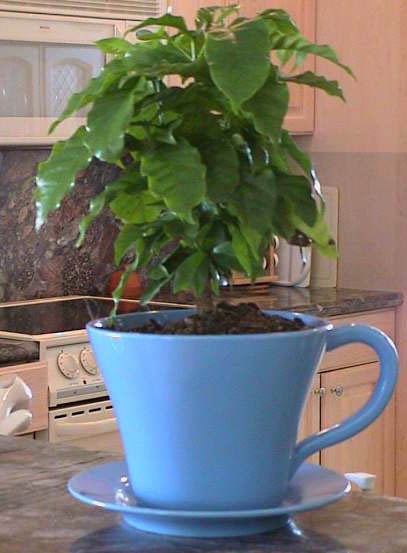
LATIN NAME: Coffea arabica
COMMON NAME: Arabica Coffee
Plant Profile
Coffee is a shrubby tree of the Ethiopian highlands, and in a pot it stays manageable for years. Coffea arabica grows with opposite, glossy, dark-green leaves up to 15 cm long, and produces clusters of white, jasmine-scented flowers at the leaf axils that open in the morning and are finished within a day or two. The fruit that follows is a drupe, green turning red, with two seeds pressed together inside.
In the wild it is an understorey plant of montane forest, which explains what it needs in cultivation: bright but filtered light, steady warmth around 18-24°C, high humidity and a soil that stays moist without being wet. It is not a houseplant that tolerates a dry, dim corner, and most failures come from those two conditions.
Science & Biotechnology
Arabica is a tetraploid, with 44 chromosomes rather than the 22 of most coffee species, and it is largely self-fertile. That combination is a consequence of its history: the species arose from a hybridization between two diploid ancestors, and the doubling of the genome that followed gave it both its cup quality and its narrow genetic base. Commercial arabica descends from a small number of plants moved out of Ethiopia, which is why the crop is unusually vulnerable to disease.
The chemistry that matters is chlorogenic acid and caffeine. Chlorogenic acids make up 5-8 per cent of the green bean and are the substrate for the browning reactions of roasting; caffeine, a purine alkaloid, is a defensive compound in the plant and a stimulant in the cup. Moderate consumption is associated in large cohort studies with lower risk of type 2 diabetes and several other chronic conditions, though the effect size is small and confounded by lifestyle. For growers, the practical point is that the plant synthesizes caffeine in young leaves and in the fruit, not in the roots, so a plant grown from seed starts producing it within months.
Uses & Benefits
The obvious use is the drink, and the plant will produce a small crop of cherries from a three- or four-year-old specimen grown in a conservatory. The cherries ripen unevenly, so harvesting is a matter of picking a few at a time across several weeks, and the home process of pulping, fermenting and drying is more work than the yield justifies.
As an ornamental it is better than its reputation: a well-grown coffee plant is glossy, architectural and tolerant of indoor conditions if given light. The flowers are strongly scented and the red cherries are decorative for months. In the greenhouse it also makes a useful shade plant for other tropical crops.
Growing from Seed
Coffee seed loses viability quickly, so sow it fresh, within a few weeks of harvest. Clean the parchment off, sow 1 cm deep in a moist, free-draining mix and keep at 25-30°C. Germination is slow and uneven, typically thirty to sixty days, and the seedlings emerge with the seed still attached to the cotyledons.
Grow the seedlings on in bright, filtered light at 20-25°C with high humidity. Pot on as the roots fill the container, using a slightly acid mix with good drainage. Water with rainwater where possible, since coffee dislikes the alkalinity of hard tap water, and feed lightly through the growing season. Plants tolerate pruning well and can be kept at 1-1.5 m indoors.
Our Take
Grow coffee for the leaves and the flowers, and treat the cherries as a bonus. It is a genuinely handsome foliage plant that happens to produce one of the world’s great crops, and it asks for less than most people expect as long as the water is soft and the light is bright.
Related Reading
Continue exploring with these related plants: