


Ammi majus Seeds | Laceflower
LATIN NAME: Ammi majus
COMMON NAME: Laceflower
Plant Profile
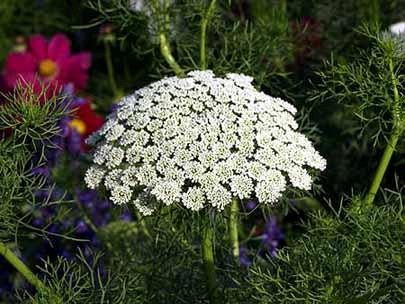
The defining feature of Ammi majus is its flower head: a broad, flat, finely divided white umbel that looks like a piece of lace suspended on a tall stem, and it is one of the most effective insect draws in the whole border. The open structure lets a hundred small visitors land at once, which is why it earns a permanent place in any beneficial-insect planting.
Each head is a compound umbel, a umbrella of umbrellas, made of hundreds of minute five-petalled white flowers arranged in a flat plate. The shape is classic Apiaceae and it maximises the landing space for pollinators and predatory wasps alike, turning a single stem into a feeding station.
The leaves are finely divided and feathery, a fresh green that reads almost like carrot or parsley foliage, and they give the plant a light, airy base beneath the white plates. The segmentation is so fine that the leaf looks like a soft green mist from a distance.
Ammi majus is native to Egypt and the eastern Mediterranean and has followed human cultivation across the Middle East and into warmer regions where it now grows as a casual. It is at home on disturbed, open, sunny ground.
In the garden it behaves as a fast annual that, once established, drops seed and returns, threading itself through the border. A warm, open bed with moist but free-draining soil gives the tallest, most floriferous stems.
Science & Biotechnology
The plant is chemically famous for furanocoumarins, especially bergapten, also called 5-methoxypsoralen, which has been extracted from Ammi majus for use in skin treatment under controlled light therapy. This is the compound that links a humble laceflower to a serious pharmaceutical story.
Bergapten and its relatives, including xanthotoxin and imperatorin, make the sap photosensitising, so handling the cut stems in strong sun can provoke a skin reaction in sensitive people. The same chemistry is the source of the plant’s value and its caution, and it warrants gloves when working with a large cut crop.
Commercially the dried fruit is the part gathered for extraction, since the furanocoumarin concentration builds as the seed ripens, and controlled cultivation in Egypt and India supplies the pharmaceutical trade. The ornamental gardener need not engage with any of this, but it explains why a common white flower carries a name in the pharmacopoeia.
Uses & Benefits
As a cut flower, Ammi majus is the classic airy filler that lifts a heavy bouquet, and in the garden it is a reliable way to pull hoverflies and parasitic wasps onto the vegetable plot. Few plants bridge the flower vase and the pest-control border so neatly.
Cut the stems when the outer flowers of the umbel have opened and they last well in water, lending a frothy lightness that rounds off bolder blooms. In the border the same stems work as a see-through layer in front of taller subjects.
In a mixed border the white plates act as a visual pause between hot colours, and because the stems are tall and slender they never block the plants behind them. Growers sometimes cut the crop in the cool of the morning and condition the stems in deep water before arranging, which lengthens the vase life considerably.
Growing from Seed
Because it self-sows so readily, a single spring sowing often establishes a recurring colony that reappears along the same bed year after year, which makes it a low-input subject for the informal or cottage-style border. Thin the volunteers early if you want fewer, taller stems, or leave them dense for a frothy, meadow-like drift.
Raise the plant from the fine seed sown cool, because it prefers to start in lower temperatures and then grow on as the season warms. A moist, open seedbed gives the best stand.
Press the slender seed onto the surface of a moist, free-draining mix and keep it bright, since deep covering reduces the stand. Thin the seedlings once they are established so the airy plants have the room their height demands.
Thin the young plants so the strongest stand with space to branch, and water through dry spells to keep the stems tall and the umbels full. Good companions from the carrot family include dill, cilantro, and the closely matched Graceland laceflower.
Our Take
I would not run a beneficial-insect border without Ammi majus, because the white lace plates pull in the helpful insects while looking effortless. Sow it cool, thin it well, and wear gloves if you cut a lot in bright sun.
Related Reading
Readers interested in Laceflower frequently explore these as well: