


Stellaria media Seeds | Chickweed
LATIN NAME: Stellaria media
COMMON NAME: Chickweed
Plant Profile
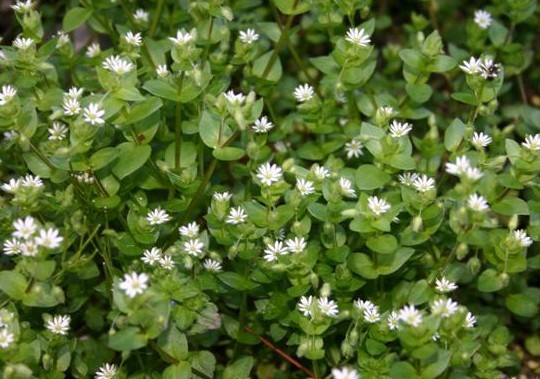
The most useful thing to know about chickweed is that the little white flower is a perfect star: five petals, each so deeply notched that it looks like ten, set above a sprawl of slender green stems that root wherever they touch the ground. That star shape gives the genus its name, Stellaria, and it is the quickest way to tell the plant from any look-alike.
Botanically the corolla is five-petalled, but every petal is split nearly to its base, so the eye counts ten bright points. Behind them sits a calyx of five sepals, and the whole flower is only a few millimetres across, which is why the plant reads as a dusting of stars across the soil.
The stems are weak and prostrate, spreading across the ground and putting down roots at the nodes, which lets a single plant cover a surprising area. A single line of hairs running down the stem is a classic field mark that separates common chickweed from the many smooth-stemmed look-alikes.
The plant thrives where the soil stays cool and damp and the light is soft, which is why it appears on shaded borders, along paths, and in the leafier parts of the vegetable garden. Give it those conditions on purpose and it becomes a tidy, productive little crop instead of a nuisance.
Left unmanaged the plant will flower and scatter seed prolifically, which is exactly why it is classed as a weed, but managed as a cut-and-come-again leaf it stays in a useful, non-seeding state for weeks. The trick is to keep cutting the tips so the energy goes into tender growth rather than into the small starry seed heads.
Science & Biotechnology
Like many of its family, chickweed carries triterpene saponins, the compounds that give the close relative soapwort its lather, along with a soothing mucilage and a range of flavonoids. These constituents are the reason herbal traditions reached for the green as a mild external application.
The young shoots have a long record in herbal practice as a cooling external application for itchy or troubled skin, valued for the mucilage that softens and the saponins that cleanse. The plant is used gently and externally, and its tender top growth is the part gathered.
Taken as a mild cooked green, the shoots lose any stringency and supply a gentle dose of vitamins and minerals, which is why the plant appears in spring tonics and wild-food menus alike. The key is to gather only the youngest growth and to cook or wilt it lightly rather than eat vast quantities raw.
Uses & Benefits
Stellaria media began as a Eurasian native and has travelled with people to nearly every temperate corner of the globe. Gardeners once fought it as a weed, but its mild, nutritious young shoots have earned it a deliberate place in the salad and pot-herb garden.
In the kitchen the mild, faintly sweet shoots are eaten raw in salad or cooked like spinach, and in the garden the open flowers are a small but steady source of pollen for early bees. The plant is therefore both a food and a tiny wildlife asset.
Harvest by snipping the top few centimetres repeatedly, because regular cutting keeps the growth tender and stops the plant from flowering and running to seed too soon. A cut-and-come-again patch yields far better than a single large pulling.
Growing from Seed
Grow chickweed as you would a cut-and-come-again leaf crop: in cool, moist, lightly shaded ground where it will not bolt. Rich, even moisture gives the best, mildest shoots.
Sow the minute seed in shallow drills and press it into the surface of moist soil, keeping the bed shaded and damp until the seedlings establish. Successive small sowings through the cool months give a steady supply rather than one flush.
Because the plant is short-lived and sprawling, renew the patch with fresh sowings before the old growth loses quality, and thin the seedlings so the remaining ones have room to branch. Good neighbours in the same family include snow-in-summer, soapwort, and sweet william.
Our Take
I keep a small chickweed patch in the shady corner where little else is happy, and I snip it into salads all cool season long. Treat it as a managed crop rather than a weed and it repays you with tender green; just keep it cut so it never takes over.
Related Reading
Gardeners who grow Chickweed often pair it with these related subjects: