


Alopecurus japonicus Seeds | Japanese Foxtail
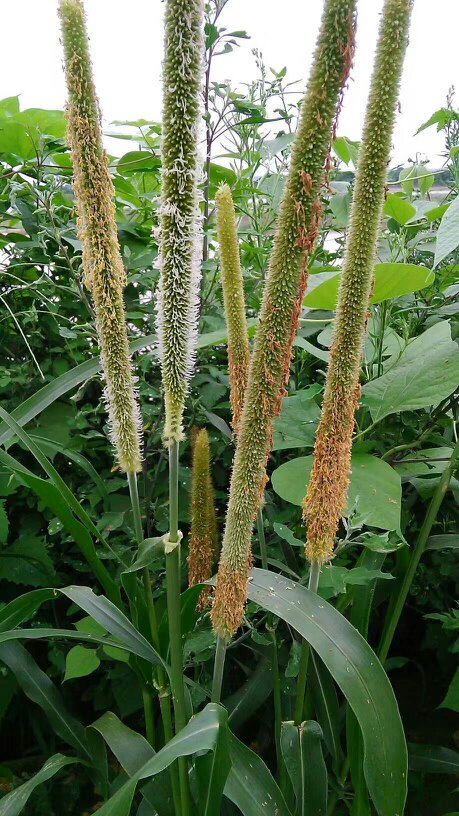
LATIN NAME: Alopecurus japonicus
COMMON NAME: Japanese Foxtail
Plant Profile
Japanese foxtail is an annual grass of East Asian fields and waste ground, with a bristly seed head and a long awn on every single spikelet. It grows in China, Japan and Korea, in cultivated ground, roadsides, ditches and waste places, and it has been carried with grain seed to other parts of the world, where it appears as a weed of winter cereals. The plant forms a tuft of flat, bright green leaves and sends up slender stems to 80 cm, each ending in a dense, cylindrical head of spikelets, each with an awn four to eight millimetres long. It flowers in late spring and sets seed quickly, and the seed sheds as soon as it ripens, which makes it hard to collect and hard to control. It is one of a group of foxtails that look alike, and it is distinguished from the others by the length of the awn and the size of the spikelet. In arable land it is a serious competitor in wheat and oilseed rape.
Science & Biotechnology
Alopecurus japonicus is a diploid annual of the grass family, and like its relatives it is wind-pollinated and self-incompatible, so populations mix genes freely across a field. The awn on each spikelet is an extension of the lemma, and it is thought to help the seed work its way into the soil and to deter grazing. The species germinates in autumn and overwinters as a small rosette, then grows rapidly in spring and sets seed before the crop is harvested, which is why it fits so neatly into a cereal rotation. It has evolved resistance to ACCase-inhibiting herbicides in China, where it is one of the target weeds of wheat and rapeseed, and the resistance is spreading. The seed is small and can persist in the soil for several years, so a single season of seed set can infest a field for a decade. It is also a host for insects and for grass viruses.
Uses & Benefits
The plant is a weed rather than a crop, and it has no significant food or fodder use, though it is grazed by livestock when young and cut with hay in some areas. The seed has been eaten in times of scarcity in East Asia, mixed with other grains, but the quantity is small and the awns make it difficult to clean. In traditional medicine it is used as a diuretic and for fever, and the root is applied to swellings. For a gardener it is a weed of lawns and beds, and the practical response is to remove it before the heads mature, since the seed sheds early. In arable farming it is managed by rotation, delayed sowing, stale seedbeds and the rotation of herbicide groups. Its main importance is as an example of how quickly a grass can adapt to the herbicides used against it.
Growing from Seed
Sow in autumn on the surface of a firm seedbed at 10 to 15 degrees, covering lightly, and keep it moist; germination is rapid and the seedlings overwinter as small plants. It needs full sun and fertile soil, and it responds to nitrogen. For study, grow it in a pot and watch the head develop: the awns become visible as the spikelets separate. To control it, prevent seed set by cutting or pulling plants before the heads turn yellow, and use a stale seedbed to reduce the seed bank. Rotate herbicides and include a spring crop in the rotation to break its life cycle. Do not compost plants in seed, and clean machinery between fields.
Our Take
An East Asian foxtail with a long awn on every spikelet, a fit for winter cereals, and a growing resistance problem.
Related Reading
If Japanese Foxtail appeals to you, these related plants are worth a look: