


Lolium rigidum Seeds | Rigid Ryegrass
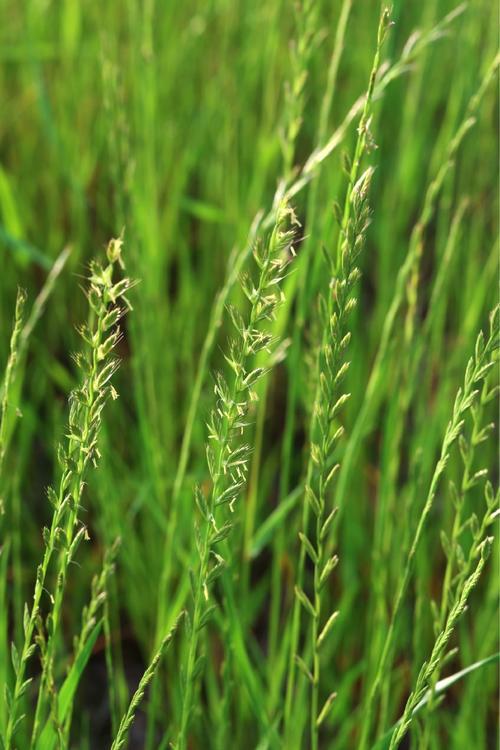
LATIN NAME: Lolium rigidum
COMMON NAME: Rigid Ryegrass
Plant Profile
Rigid ryegrass is the annual grass that has become the textbook example of herbicide resistance, and a serious weed of Australian crops. It is native to the Mediterranean and has spread with agriculture to every temperate region, where it grows in fields, roadsides, vineyards and pastures, and it is also sown as a pasture grass in Australia and South Africa. The plant forms a tuft of flat, dark green leaves and sends up slender stems to a metre, with a long, flattened spike of spikelets set edge-on to the stem. It is a rapid grower and a heavy seeder, and it competes with cereals for water and nitrogen in the first weeks of the season. In Australia it is the most important weed of winter crops, and in the 1980s it became the first grass to show widespread resistance to the selective herbicides that had been used against it. It is also the cause of annual ryegrass toxicity in livestock.
Science & Biotechnology
Lolium rigidum is a diploid annual with 14 chromosomes, wind-pollinated and largely cross-fertilised, which gives it the genetic mixing that resistance evolution needs. The species has evolved resistance to almost every herbicide group used against it, through target-site mutations, enhanced metabolism and reduced translocation, and in some populations several mechanisms operate at once. Because it is a pasture grass as well as a weed, the same species is selected in different directions in different fields, and pollen moves between them. Its seed bank is short lived, lasting three or four years, which is the basis of the cultural controls that Australian growers rely on: crop rotation, delayed sowing, harvest weed seed control and pasture phases. The species is also the host of a bacterium that lives in nematode galls on the seed head and produces corynetoxins, which cause annual ryegrass toxicity, a fatal neurological disease of sheep and cattle.
Uses & Benefits
The plant is sown as a pasture and forage grass in Australia, South Africa and parts of the Mediterranean, where it establishes quickly and provides winter feed, and it is used in lawns in some warm regions. It is also a useful cover crop and a nurse for establishing legumes. As a weed it costs grain growers enormous sums, and it is the target of the harvest weed seed control systems developed in Australia, which collect and destroy the chaff at harvest. The seed is eaten by birds, and the plant is grazed by livestock before it heads. In a garden it is a weed of lawns and beds rather than a plant to grow, though it can be used in a meadow mix. Its main claim on attention is scientific: it is the best-documented case of herbicide resistance in a grass, and it has changed the way resistance is managed worldwide.
Growing from Seed
Sow in autumn at 15 to 20 degrees on the surface of a firm seedbed, covering lightly, and keep it moist; germination is fast and the seedlings grow away quickly. It needs full sun and fertile soil, and it responds to nitrogen with rapid growth. For a pasture, sow at 15 to 25 kg per hectare with a legume, and graze it before it heads to keep it leafy. For seed, let a strip run to maturity and collect the spikes when they turn straw-coloured. In a garden, control means preventing seed set: remove plants before the spikes emerge, and never let them shed. Rotate herbicides between groups and use cultural controls, since resistance is common. Do not feed hay containing ryegrass seed to livestock in areas where annual ryegrass toxicity occurs.
Our Take
The annual ryegrass that feeds sheep and defeats herbicides, and the best-studied weed in the world. Useful, and very hard to manage.
Related Reading
Continue exploring with these related plants: