


Lolium perenne Seeds | Perennial Ryegrass
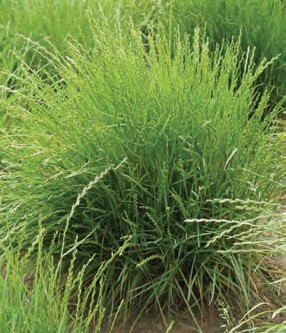
LATIN NAME: Lolium perenne
COMMON NAME: Perennial Ryegrass
Plant Profile
The plant is a tufted, short-lived perennial with narrow, bright-green, folded blades and a distinctive flower head: a flat spike with the spikelets set in two opposite rows along the rachis, like a flattened comb. Each spikelet carries several florets, and the whole head stands proud of the leaf in early summer. It is diploid or tetraploid, and the chromosome sets shape both vigour and forage quality.
The folded, not rolled, young leaf is a clean field mark against the rolled leaves of fescues and the rolled-and-twisted leaves of some other grasses. The two-rowed spike is unique enough in the pasture that even a novice can learn the genus from it alone. Plants form dense tufts rather than running stolons, so a ryegrass lawn thickens by tillering, not by creeping.
On the home lawn it is the overseeding grass that fills bare spots fast; in agriculture it is the productive half of a grass-clover ley cut for silage or grazed. As a winter cover it protects soil and makes a dense green carpet where a permanent pasture is wanted.
Because it establishes quickly, a thin spread of seed over a tired lawn revives the sward within a season of growth. Kept mown it stays fine and tight; left long it forms the flowering spikes that feed late spring bees, and an old turf can be renovated simply by scarifying and overseeding rather than lifted and relaid.
Mixed with an annual ryegrass for a harder component or with clover for nitrogen, it becomes a working field crop. For a longer-lived permanent sward, pairing with meadow fescue and annual meadow grass broadens the seasonal green and spreads the risk of a single pest taking the whole stand.
Science & Biotechnology
The quiet biotech story is the endophyte, a fungus (Neotyphodium, now Epichloe) that lives inside the leaf without harming the plant and pumps out alkaloids that deter insects and mammals. Infected turf resists chinch bug and sod webworm; the same compounds, though, can cause ryegrass staggers in grazing animals, so forage types are often endophyte-free or carry a novel, animal-safe strain that keeps the pest defence without the toxicity.
This is a symbiosis chosen by selection rather than by the gardener: a grass with the right endophyte stands up to pests that would strip a clean one, and the animal-safe strains let a pasture have both defence and safe grazing. Molecular markers now track the fungal strain through seed production so buyers know what they are sowing, and the relationship is studied as a model of balanced mutualism.
Uses & Benefits
Diploid types tiller more and suit tight turf; tetraploid types have broader cells, higher sugar, and better intake for livestock but a looser sward. Breeding programmes keep both lines alive because the lawn market and the dairy market want different things from the same species, and the two respond differently to stress.
Beyond the endophyte, breeders select for crown rust resistance, drought patience, and a deep uniform green that holds through heat, because a faded sward is the first complaint of a turf manager. Tissue culture and doubled-haploid techniques have been used to fix elite turf lines, and the resulting cultivars are sold by named variety rather than as a loose species, with wear tolerance tested on real pitches.
Growing from Seed
Sow into a firm, moist, cool seedbed; the seed is fine and wants only a light covering. Rake it in shallow, roll to close the surface, and keep it damp until the blades appear. For a lawn, sow denser than you would for a field, and keep traffic off the new sward until it is knit.
Good seed-to-soil contact is the single biggest factor in an even emergence, so roll rather than bury. A crusted surface after heavy rain should be gently broken so the tiny seedlings are not trapped beneath it, and the new sward benefits from a light top-dressing once it is established.
If you start in trays, move the young grass to the field or lawn once it stands several centimetres tall and shows two or three true leaves, not on any fixed date. Thin or overseed so the tufts are close enough to knit but not so crowded they thin out later. Rust and dollar spot are the diseases to scout for in humid weather, and grubs will cut the roots of a mature sward if left unchecked.
Our Take
Reach for this grass when speed matters more than permanence; the closely related Lolium rigidum seed brings an annual hardiness to a mix, while Festuca perennis seed and Poa annua seed round out a cool-season blend.
Related Reading
Readers interested in Perennial Ryegrass frequently explore these as well: