


Acer pseudowilsonii Seeds | Wilson’s Maple
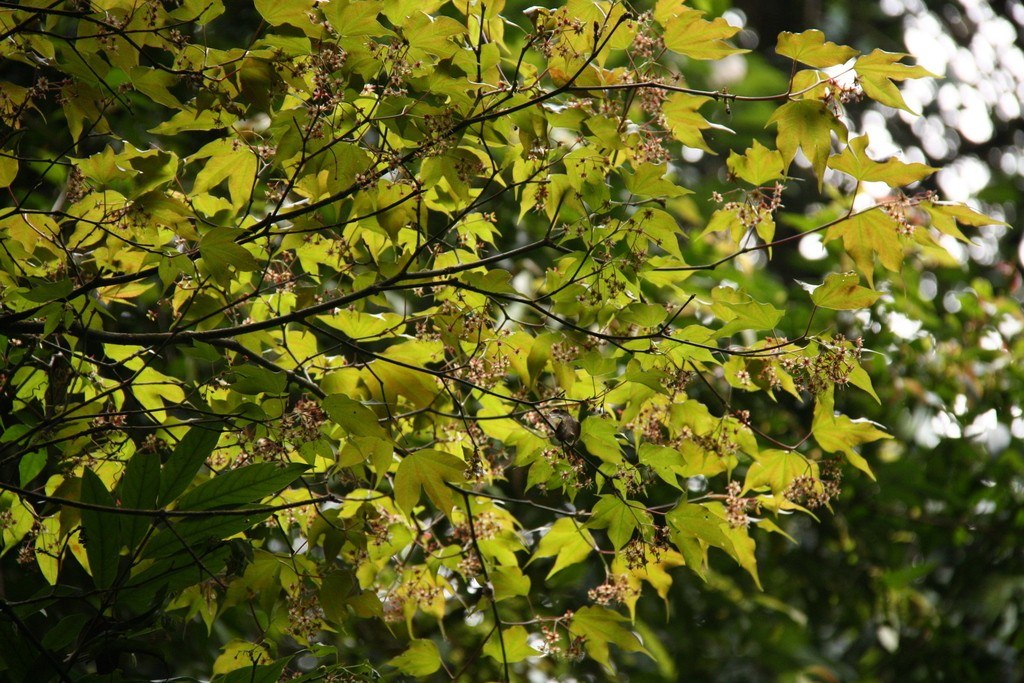
LATIN NAME: Acer pseudowilsonii
COMMON NAME: Wilson’s Maple
Plant Profile
Acer pseudowilsonii is a small maple described only in 2010 from material collected in northern Thailand, in Doi Phu Kha National Park, and it ranks among the least known trees in a genus that most people think they know. It is listed as endangered, and the total known population is tiny. For a maple, that is a remarkable situation: a new species in a familiar genus, from a country with a well-worked flora.
The tree is deciduous and small, with five-lobed leaves that resemble those of Acer wilsonii, the Chinese species collected by E. H. Wilson and named for him. The similarity is the reason for the prefix, and the differences are in the depth of the lobing, the hair on the leaf underside and the angle of the samara wings.
Doi Phu Kha is a mountain of sandstone and limestone in the north of Thailand, rising to about two thousand metres, and it holds a flora that mixes Himalayan, Chinese and Malesian elements. The maple grows in cool, moist forest on the upper slopes, in a climate with a distinct dry season and occasional frost at the summit.
The discovery is part of a pattern. Northern Thailand and adjacent Laos and Vietnam have produced a steady trickle of new maples in the last three decades, as botanists have worked the high ground more thoroughly. Several are narrow endemics, and several are threatened by the same pressures: clearing, logging and the small size of the populations.
Science & Biotechnology
The genus Acer is divided into sections, and this species sits with the snakeskin-barked maples of section Macrantha, a group of small trees with striped bark, horizontal branching and leaves that are often lobed rather than fully divided. The section is centred on China and Japan, with outliers in Southeast Asia. The Thai species are the southern edge of that distribution, and they are relicts of a cooler past.
Maples are wind-pollinated and insect-visited in roughly equal measure, and the flowers of this species are small, greenish and borne in corymbs in early spring before the leaves. The samaras that follow are the diagnostic feature: two winged seeds joined at the base, with a spur at the point of union. That spur is what the epithet of the related Acer calcaratum refers to, and it is present here in a milder form.
The tree’s rarity is not obviously explained by its biology. It is an ordinary-looking maple of ordinary requirements, and its range is a single mountain group; the likeliest explanation is a relict distribution, a population left behind when the climate cooled and the forest belt moved south, and then isolated as the lowlands warmed again.
Uses & Benefits
There is no economic use. The wood is small and soft, the tree is too rare to cut, and it has no medicinal or ornamental trade. Its value is scientific and, in the narrow sense, aesthetic: a maple is a good thing to have on a mountain, and this one is found nowhere else.
Its conservation status is the practical issue. A tree known from a handful of collections on one mountain is vulnerable to a single fire, a road, or a change in land use, and the Thai protected-area system is the only thing standing between it and loss. Seed has been collected for ex situ storage, and that is the usual response.
For the collector, it is a plant of the future rather than the present. A few botanic gardens hold it, propagation has been slow, and it is not in the nursery trade. If it arrives, it will be as a curiosity from a specialist, and it will need the cool, moist, sheltered conditions of its mountain home.
Growing from Seed
The seed of maples of this group is short-lived and needs cold, moist storage. Sow fresh in autumn, leave the pots outside through winter, and expect germination in spring; if the seed has been dried, a cold stratification of eight to twelve weeks is the minimum. Germination is often uneven. Keep the pots shaded and never let them dry out completely during the stratification period.
Seedlings grow slowly and resent both drought and waterlogging, and they do best in a humus-rich, well-drained soil in light shade. Protect them from late frost, which cuts back the new growth, and from strong sun, which scorches the leaves in their first summer.
Plant out in a sheltered site when the tree is at least a metre tall, in soil that holds moisture without staying wet. Mulch annually, water in dry spells, and leave the crown alone; this is a tree that resents pruning and makes its best shape without help. Expect slow growth and a long wait for flowers.
Our Take
It is hard to recommend a tree that almost nobody can buy, and easy to admire one. This is a maple known from one mountain in Thailand, described a little over a decade ago, and already endangered, and its existence is a reminder of how much is still being found and how quickly it can be lost.
For a gardener the lesson is about provenance. A plant like this is not a commodity, and treating it as one is how the wild populations disappear. Grow it if you can get it legitimately, and be content to know it exists. That is a strange kind of garden pleasure, and it is one worth cultivating.
Related Reading
Readers interested in Wilson’s Maple frequently explore these as well: