


Prunus salicina Seeds | Japanese Plum
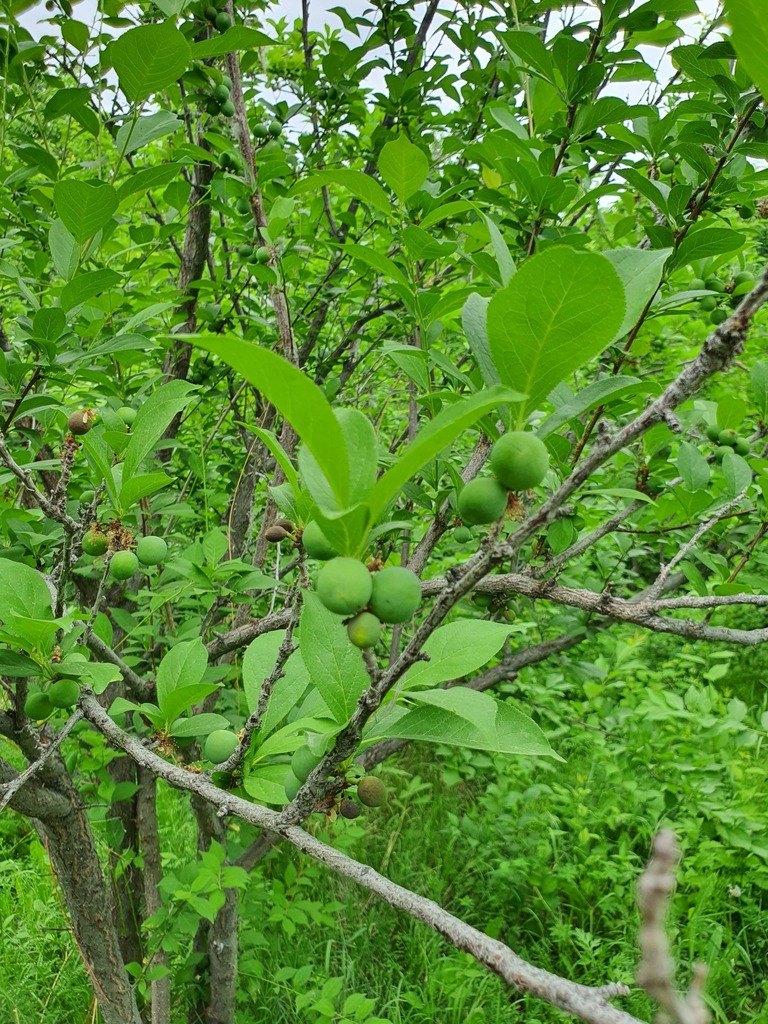
LATIN NAME: Prunus salicina
COMMON NAME: Japanese Plum
Plant Profile
Prunus salicina is the Chinese plum, a small deciduous tree of the Rosaceae native to China and long cultivated in Japan, Korea and the warm parts of Southeast Asia. It grows five to ten metres, with upright growth, serrated leaves and round fruit four to eight centimetres across, much larger than the European plum and usually eaten fresh rather than dried.
The fruit runs from yellow through red to purple and near-black, with a bloom on the skin, a clingstone pit and flesh that is firm when ripe and does not soften into jam. The skin is tart, the flesh sweet, and the two together are the reason the fruit is eaten out of hand in a way that the European plum rarely is.
Despite the common name the species is Chinese. It was carried to Japan early, bred intensively there through the nineteenth century, and exported to the world as the Japanese plum, which is the name that stuck in the trade and the one that still confuses everyone who looks it up.
Science & Biotechnology
Prunus salicina is diploid with 16 chromosomes, like most of the genus, and it crosses readily with the other stone fruits. Most modern cultivars descend from it, often with P. simonii or P. americana in the pedigree, and the boundary between the species and its hybrids is not always clear in a nursery catalogue.
Its commercial value rests on low winter chill. Where a European plum needs a thousand hours below 7 °C to break dormancy, many Japanese plums need three to five hundred, which puts the crop into the subtropics: southern China, Taiwan, northern India, California, South Africa, Australia and the southern states of Brazil.
In the twentieth century the California breeder Luther Burbank raised a series of cultivars from Japanese material, and two of them, Satsuma and Santa Rosa, are still grown a hundred years later. Santa Rosa in particular became the benchmark by which every later low-chill plum has been judged, and it is still the one most often recommended to a home grower.
The crop’s serious problem is sharka, the plum pox virus, spread by aphids and by infected budwood. It marks the fruit, drops it early and cannot be cured, and the only defence is clean planting material and the removal of infected trees, so nursery stock is certified in most producing countries. The Rosaceae thread continues with Prunus humilis, Prunus cerasifera and Prunus dulcis.
Uses & Benefits
It is the fresh-market plum of the subtropics and the warm temperate zone, valued for low chill, early bearing and large fruit. In China it is also the rootstock of choice for the crop on the ground where the species is native, and seedlings are raised by the thousand for that purpose.
The fruit does not ripen off the tree in the way a pear does, so timing is everything in the harvest: pick a day early and it is acid, a day late and it is on the ground. Commercial growers pick firm and ship cool, so a shop plum so often tastes of nothing.
In a garden the tree earns its place for the blossom as much as the fruit. It flowers early, on bare wood, white to pale pink, and a single frosty night at that moment can cost the whole crop, which is the risk you take for the first colour of the orchard year.
Growing from Seed
A stone from a bought plum will germinate, but the fruit it gives will not be the fruit you ate. Clean the stone, stratify it in damp sand for eight to twelve weeks at about 4 °C, and sow in spring. Seedlings fruit in three to four years and are variable, which is the whole argument for grafting.
If you want a named cultivar, buy it on a rootstock suited to your soil. Plant bare-root in winter, at the same depth it grew in the nursery, and cut the leader back by a third to balance the top against the roots you have disturbed.
Prune in summer rather than winter where silver leaf is a problem, thin the fruit to one every ten centimetres, and net the tree if you want any of it. Birds take the fruit at the moment it colours, and they take it earlier than you think.
Our Take
The Japanese plum is the most useful stone fruit for a warm climate and the least useful for a cold one. Planting it where it will not get its chill is the commonest mistake, and the tree will sulk for years before it tells you. Grow it for the fruit if you have the climate, and for the blossom if you do not mind the risk.
Related Reading
Readers interested in Japanese Plum frequently explore these as well: