


Phleum pratense Seeds | Timothy
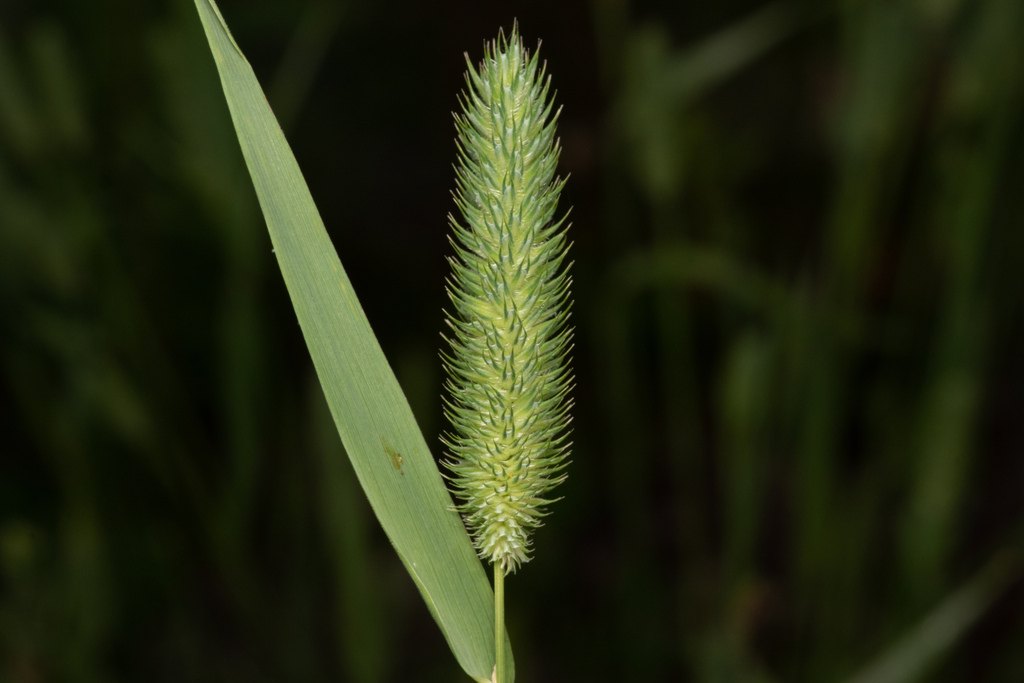
LATIN NAME: Phleum pratense
COMMON NAME: Timothy
Plant Profile
Timothy is a tufted perennial grass, 60 cm to 1.5 m tall, with leaves up to 50 cm long and 8 mm wide. It has neither stolons nor rhizomes, so it stays where it is sown and spreads only by seed. The leaves are hairless and rolled in the bud rather than folded, and the lower sheaths turn dark brown as the season goes on.
The flowerhead is a dense cylinder, 6 to 15 cm long and about 1 cm wide, with the spikelets packed so tightly that the whole thing looks machined. The glumes carry a short awn of 1 to 2 mm, and the anthers are purple, which is the colour you notice when the head is in flower in June and July.
The ligule, the small membrane where the leaf blade meets the sheath, is short and blunt. That single feature separates it from smaller cat’s-tail, Phleum bertolonii, whose ligule is acute. Meadow foxtail and purple-stem cat’s-tail are the other two grasses it is routinely confused with in a hay meadow.
Science & Biotechnology
It was first described in 1711 by John Hurd, from plants growing in New Hampshire, and he called it hurd grass. A farmer named Timothy Hanson began promoting it as a hay crop around 1720 and carried it from New England to the southern states, and the common name stuck to him rather than to the botanist.
Two subspecies have been recognised, P. pratense subsp. pratense and subsp. bertolonii on chalk grassland, but the second is now treated as a separate species. The distinction matters in a seed mixture, because the smaller plant yields less and is sold under a name that sounds like the big one.
It is a food plant for the caterpillars of the Essex skipper and the marbled white, both of which are grasses specialists of unimproved grassland. It grows on roadsides and in abandoned fields, but it needs reasonable fertility; on poor acid ground it is outcompeted within a couple of seasons and disappears from the sward.
Uses & Benefits
Timothy is hay. It is the standard component of grass hay for horses, relatively high in fibre, and best cut late rather than early: cut early it is a harsh, coarse grass that stock do not relish, and cut at flowering it makes the hay that the trade actually wants. The fibre is the product, not the protein.
It is also the staple diet of domestic rabbits, guinea pigs, chinchillas and degus, and for the same reason. The long fibres and the abrasive silica in the leaf epidermis grind the teeth down as they are chewed, which is what keeps a rabbit’s molars from overgrowing. A rabbit fed on soft hay has dental problems within two years.
In a garden it functions as a meadow grass and a cut-flower filler rather than a lawn grass. It clumps, it goes brown at the base in summer, and it will not tolerate close mowing; a timothy lawn is a hayfield that has been misused. Use it where the seed heads can stand through July. Fellow Poaceae members here: Lagurus, Agrostis nebulosa and Koeleria.
Growing from Seed
Sow in spring or late summer, 5 mm deep, at 15 to 20 °C. Germination takes a week to a fortnight and is reliable. For a hay crop, drill in rows 15 cm apart; for a meadow, broadcast and roll. It needs moisture to establish and will not germinate on a dry surface in a hot June.
It is not a strong competitor. In pasture it is overwhelmed by ryegrass and cocksfoot, so it is usually sown in a mixture and why it declines after the second year. After cutting it regrows slowly, which is the main complaint from anyone who has tried to take two cuts from it in a season.
Leave a few heads to ripen if you want seed; they shatter readily, so cut the stems when the seed is at the dough stage and finish them under cover. The seed keeps for several years in a dry jar, and it is cheap enough that most people buy it rather than save it. Sow 10 to 15 kg per hectare for a pure stand.
Our Take
Grow it if you keep rabbits or guinea pigs, in which case a small patch will supply better hay than anything in a bag, or if you are making a meadow and want an early grass that heads before the fescues. It is not a plant for a lawn, a border edge or a pot, and no amount of clever planting will make it one.
Its virtues are honest ones: cold-hardy, drought-tolerant, productive on heavy soil, and reliable in a mixture. Its faults are equally honest. It is slow after cutting, it does not persist under grazing, and it looks like what it is, which is a farm grass that happens to have a very good name.
Related Reading
Readers interested in Timothy frequently explore these as well: