


Primula alpicola Seeds | Moonlight Primula
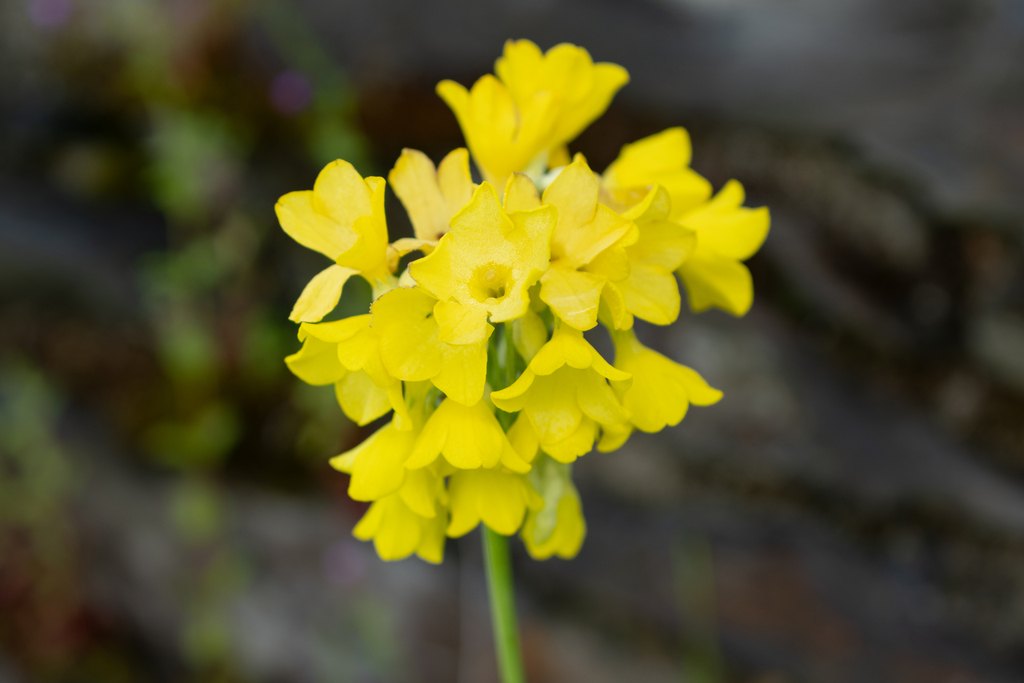
LATIN NAME: Primula alpicola
COMMON NAME: Moonlight Primula
Plant Profile
Primula alpicola comes from Tibet and Bhutan, where it grows in wet alpine meadow and along streams at 3,000 to 4,500 m. It is a rosette-forming perennial 30 to 60 cm tall, with pale green, spoon-shaped leaves and whorls of hanging, bell-shaped flowers on a tall stem.
The flowers are 2 to 3 cm long, in yellow, purple or white, and they hang downwards, which gives the plant a candelabra look. The scent is strong and sweet, strongest in the evening, and it ranks among the reasons the plant is grown.
The species is one of the candelabra primulas, a group of Asian species with whorled flowers on tall stems, and it ranks among the easiest to grow in a garden. It is also one of the most fragrant, and a clump in flower will scent a whole border.
The three colour forms are usually sold separately, since they come reasonably true from seed, and the yellow form is the most vigorous. The purple and white forms are slower and smaller, and they are best grown in a separate bed where they are not crowded by the yellow.
Science & Biotechnology
The genus holds some five hundred species, nearly all from the northern temperate zone, and it is the classic case of heterostyly: two flower forms in one species, with styles of different lengths. Darwin worked the system out in Primula in the 1860s, and it remains the standard example of a floral mechanism that prevents self-pollination.
The candelabra group is a section of the genus centred on the Himalayas, and it is characterised by whorled flowers on tall stems and by a preference for wet ground. P. alpicola is one of the most widely grown, along with P. pulverulenta and P. bulleyana.
The genus has a base chromosome number of x = 11, and the species vary in ploidy, with diploid and tetraploid forms in the same group. That variation is one reason the genus is so diverse, and one reason it has been studied so extensively.
The hanging flowers are an adaptation to pollination by bees, which hang from the flower and reach up into the bell. The scent is strongest in the evening, which suggests that moths may also be involved, though the main pollinators are bumblebees.
Uses & Benefits
It is used at the edge of a pond, in a bog garden, in a damp woodland border and in a stream-side planting, where its love of wet ground and its tall stems are assets. It is also a good cut flower, though the stems are hollow and need a deep vase.
The flowers are visited by bees and by butterflies, and the plant is a good source of early-summer nectar. The leaves are not edible, and the plant is not used medicinally, unlike some other primulas. In a garden it needs a spot that stays wet, which is the main limitation. It is not a plant for a dry border, and it will sulk and disappear if the soil dries out in summer. Given the right conditions it is long-lived and increases slowly into a large clump.
It combines well with other moisture-loving plants, including hostas, astilbes, rodgersias and iris, and it is one of the best plants for the edge of a pond where the soil is permanently damp. The flower spikes rise well above the leaves, which keeps the flowers clear of mud and slugs. It shares the family with Primula vulgaris, Primula malacoides and Primula elatior.
Growing from Seed
Sow in late winter or early spring at 12 to 15 °C, on the surface and only just covered, since the seed needs light. Germination is slow and uneven, three to four weeks, and a month in the refrigerator before sowing makes a real difference. Prick out into small pots and grow on at 12 °C in bright, indirect light. Plant out in spring or early autumn, 30 cm apart, in damp soil in partial shade.
Keep the soil wet at all times, and mulch with leaf mould in spring. The plant tolerates full sun if the ground is wet, but it prefers dappled shade. Divide clumps every three or four years in early spring, and replant the young outer pieces.
In a container, stand the pot in a saucer of water during summer, and use a compost that holds moisture. In a dry garden, grow it in a bog garden or at the edge of a pond, where it will get the water it needs.
Our Take
Primula alpicola is one of the best primulas for a wet garden, and one of the most fragrant. It is easy to grow if it has water, and it is long-lived and generous in the right place. Plant it at the edge of a pond or in a damp border, let it seed, and enjoy the scent in the evening. It is a plant that rewards the gardener who has a wet corner and knows what to do with it.
Related Reading
Continue exploring with these related plants: