


Lupinus pubescens Seeds | Andean Lupine
LATIN NAME: Lupinus pubescens
COMMON NAME: Andean Lupine
Plant Profile
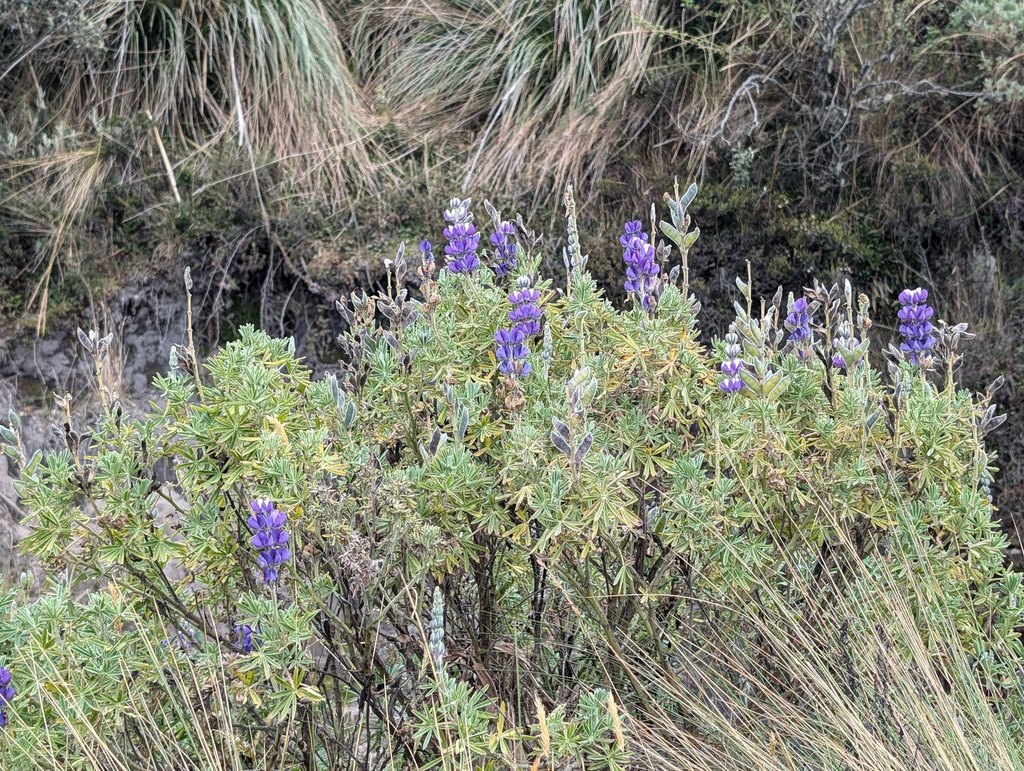
High on the equatorial Andes, where nights are cold every day of the year, lupines take the place the lowlands give to clover. Lupinus pubescens, a perennial of one to one and a half metres from Venezuela to Bolivia, carries palmate leaves in soft grey-green and dense whorls of blue and violet flowers up a stout, hairy stem.
The flowers run the classic lupine script: pea-shaped blooms in tight rings up the flower spike, opening progressively from the bottom, each with a pale banner streaked darker. The plant is woolly all over, the trait behind its name, an adaptation to the thin, dry air and hard ultraviolet of altitudes from two to four thousand metres.
Bentham described it in the 1830s. Its native range covers the high Andes of Venezuela, Colombia, Ecuador and Bolivia, in paramo and puna grassland, field edges and roadsides. From there it jumped continents: highland Rwanda, Uganda and the eastern Congo now record established populations, a straightforward case of a mountain plant travelling with agriculture to matching mountain climates.
Field records around the equator show flowering through much of the year with a tilt toward the drier months, and in its African colonies the pattern repeats. It grows among and alongside the region’s wild bean relatives, sharing the same herbivores and the same pollinators.
Science & Biotechnology
Its scientific weight comes from its family ties. The Andes produced the New World’s only domesticated lupine, the tarwi or Andean lupine, a grain legume cultivated since Inca times, and Lupinus pubescens stands among its wild relatives in the same montane gene pool. Crop researchers mine this circle for alkaloid traits, drought tolerance and disease resistance, which makes an ordinary roadside flower a living crop library.
That alkaloid chemistry is the genus’s signature and its defence. Quinolizidine alkaloids concentrate in the seed, making it bitter and toxic raw, so Andean tarwi grain must be washed for days before eating. In pubescens the seeds are small and no one processes them, but the rule stands: a lupine seed is a chemical packet, not a snack, and livestock losses are recorded wherever the two meet carelessly.
Like every lupine it pays its own rent. Root nodules with Bradyrhizobium bacteria fix atmospheric nitrogen, improving the thin mountain soils it colonises, and its deep taproot breaks compacted ground. In its African colonies it behaves as a pioneer on eroded slopes, holding soil and feeding it at once, which is exactly how it was probably carried there in the first place. Other Fabaceae on the list: Lupinus luteus, Lupinus bicolor and Senna sulfurea.
Uses & Benefits
In gardens at altitude, or anywhere with cool summers, it is a robust and striking perennial: tall, long-flowering and tolerant of poor acid soils that stop conventional perennials. The blue-violet spikes carry for weeks and cut well, and plants bloom in their second year from seed and keep improving for several more.
For soil builders it is an asset in the classic legume role: windbreak nursery rows, slope stabilisation and green manure rotations in cool regions, returning nitrogen and organic matter. Beekeepers value the long flowering season. There is no culinary use for this species and no tradition to rescue; its value is structure, colour and soil.
The honest limitations: it dislikes heat, hates transplanting for its taproot, and seeds about generously where happy, though in cool climates it is a mannerly self-seeder rather than a takeover. In hot lowland gardens it simply fades, and no amount of water substitutes for cool nights.
Growing from Seed
Sow in deep cells or in place, spring or autumn in mild climates. Seed is hard-coated: nick it with a file or soak overnight in warm water to speed germination, which otherwise takes two to four weeks at eighteen degrees. The taproot decides the timing; anything root-bound at transplant stays stunted for life.
Grow in full sun and ordinary to poor, slightly acid soil, spacing forty-five centimetres. Water the first season, then only in drought. Tall plants in wind take a light stake. Aphids colonise the flower spikes occasionally; a strong jet of water or a pinch-out of the worst tips settles it.
For seed, let the pods dry on the plant until they grey and rattle; harvest before they twist open and fling seed, which happens in an afternoon of full sun. Store cool and dry for several years. Plants self-sow thinly where pods drop on bare ground.
Our Take
Our take: this is the lupine for gardens the catalogues forget, the cool summer, the poor acid soil, the high altitude plot where the fancy hybrids sulk. It is not large-flowered, but it is permanent, and permanence is rarer in this family than colour.
The honest framing is that it is a working plant wearing wild clothes: nitrogen fixer, slope holder, bee forage, and a beautiful flower in passing. Sow it where the soil needs help and let the second year argue the case. The seed coat nicking is the only barrier between you and a decade of blue.
Related Reading
Continue exploring with these related plants: