


Solanum pseudocapsicum Seeds | Jerusalem Cherry
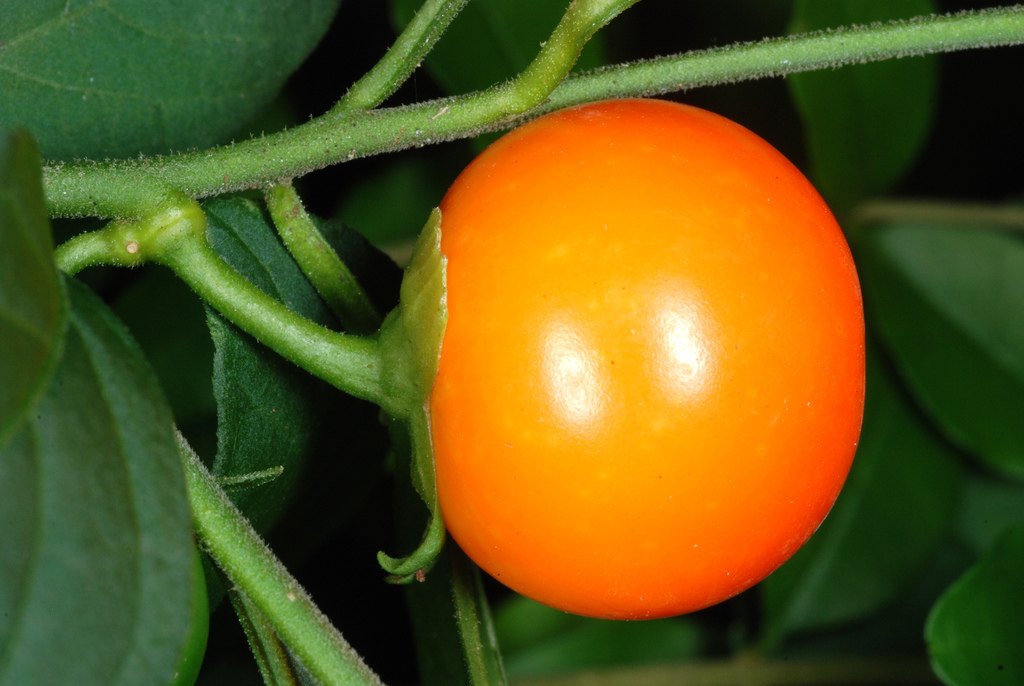
LATIN NAME: Solanum pseudocapsicum
COMMON NAME: Jerusalem Cherry
Plant Profile
Jerusalem cherry is a small evergreen shrub, 40 cm to a metre in a pot and twice that in the ground where it is hardy. It comes from the eastern Andes of Peru and Ecuador, and it has followed the pot plant trade into every temperate country on earth. The name is wrong twice over: it is not from Jerusalem, and it is not a cherry.
The leaves are lance-shaped, glossy and hairless, up to 10 cm long, on green stems that thicken and go woody with age. The flowers are white stars a centimetre across, five-lobed, with a yellow cone of anthers in the middle, and they appear through summer without any ceremony at all. Nobody grows it for the flowers.
The berries are the point. They start green, turn orange, then scarlet, and hang on the bush for months, so the plant is sold in December. Each is 1.5 to 2 cm across, round, and looks exactly like a cherry tomato. The plant lives about ten years and starts fruiting in its second or third.
Science & Biotechnology
The fruit contains solanocapsine, a steroidal alkaloid related to solanine, and it is the reason the plant carries a warning in every plant encyclopedia. The toxin is not usually lethal to adults; it causes vomiting, stomach pain and gastroenteritis. The obsolete name Solanum ipecacuanha was given for exactly that effect, ipecac being the old emetic of choice.
The real hazard is the resemblance. The berries taste and feel like cherry tomatoes, which is what the literature says and what makes them dangerous to a child who has been helping in the greenhouse. They are also toxic to cats and to most cage birds, though wild birds eat them and pass the seed intact.
In Australia the pied currawong is one of the birds that carries it, and the plant has naturalised along the eastern seaboard as a result. It is listed as a weed in parts of South Africa, India, Australia and New Zealand. The 1552 Badianus manuscript records an Aztec poultice of the plant applied to the forehead and neck for fever. The rest of the Solanaceae here runs to Solanum deflexicarpum, Solanum texanum and Solanum mammosum.
Uses & Benefits
It is a houseplant, and a good one for a cool, bright room: it flowers and fruits in a pot, it takes hard pruning, and it will live for a decade. The fruit lasts for weeks on the plant, which is more than can be said for most Christmas colour. Keep it away from toddlers and from parrots, and it is trouble-free.
The trade sells two names. Solanum capsicastrum, the false Jerusalem cherry, is supposed to have greyer foliage, yellower unripe fruit and more frost hardiness. No modern botanical treatment separates the two, and the differences given in old catalogues contradict each other from one page to the next.
What is sold as capsicastrum is, at best, a chemotype or a mixed bag of cultivars. That matters if you are trying to buy the hardier one, because you cannot. Buy the plant in front of you, look at the leaf colour, and ignore the label. It is the same species either way.
Growing from Seed
Seed comes out of ripe fruit. Squeeze the berries into water, rub off the pulp, and dry the seed on paper; it keeps for several years in a cool jar. Sow in spring at 20 to 22 °C, barely covered, and germination takes three to four weeks. Sow in February for fruit the following winter.
Pot culture suits it. Use a free-draining compost, water freely in summer and sparingly in winter, and give it a cool, light winter at 10 to 13 °C, which is what keeps the fruit on the plant instead of dropping it green. In summer it will take full sun outdoors once hardened off, and the berries colour better for it.
Cut the plant back by half in early spring, before growth starts. Old specimens go leggy and bare at the base, and hard pruning forces new shoots from low down. Repot every second year. Watch for whitefly and red spider mite in a warm, dry room, which is where most of them end up living.
Our Take
It is a plant sold for six weeks and then forgotten, which is a waste, because it is easy and long-lived. Grown cool and pruned hard it makes a respectable small shrub, and the winter fruit is genuinely good. The poison is real but modest; the resemblance to a tomato is the part to take seriously.
If there are small children in the house, or a parrot, grow something else in December and do not apologise for it. If not, this is one of the few houseplants that earns its space in the darkest fortnight of the year, and it costs about the price of a bunch of cut flowers.
Related Reading
Gardeners who grow Jerusalem Cherry often pair it with these related subjects: