


Calocephalus brownii Seeds | Cushion Bush
LATIN NAME: Calocephalus brownii
COMMON NAME: Cushion Bush
Plant Profile
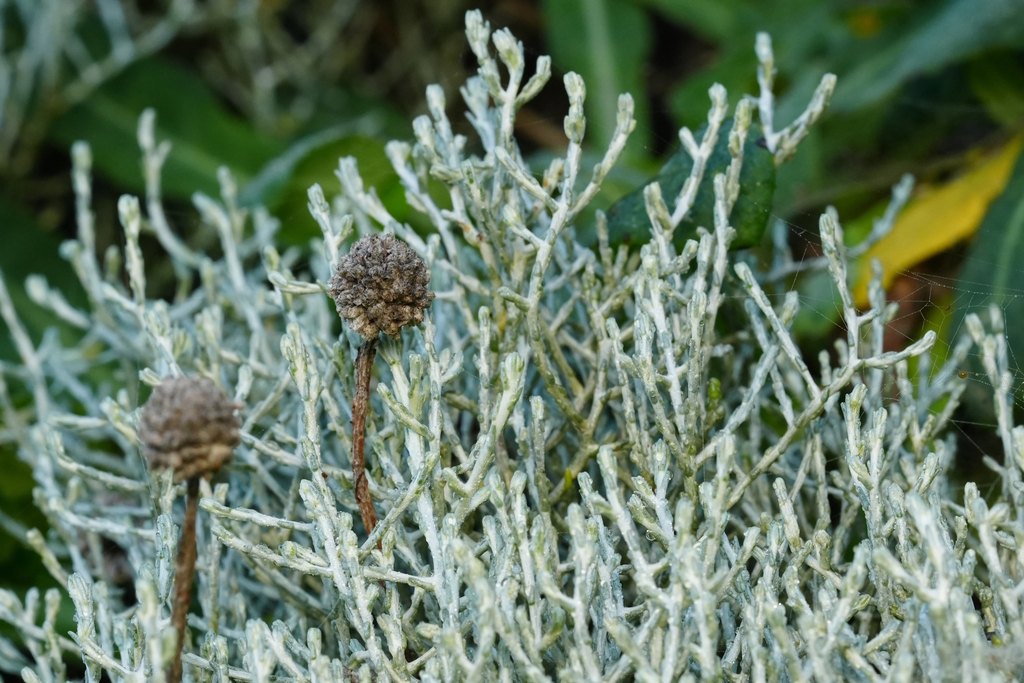
Cushion bush is a small, rounded shrub whose entire appearance comes from tangled, tomentose branchlets, densely felted with white hairs, giving the whole plant a silvery, sculptural look. Although it can reach a metre, it is more usually 0.2 to 0.7 metres high, and it reads in the landscape as a cushion of grey wire wool.
The species is endemic to Australia and holds a genus almost to itself: Leucophyta was first formally described by botanist Robert Brown in 1818, and its sole species is Leucophyta brownii, sold in the trade under the older name Calocephalus brownii. Otto Kuntze assigned other species here in 1891, but none of his combinations stuck; they now sit in Balladonia, Blennospora, Calocephalus and Gnephosis.
The flowers are easy to miss and worth finding: white-yellow globular heads about 1 cm across, produced in the Australian summer, December to February. They stud the silvery branchlets like pale beads and add nothing to the colour scheme, which is precisely the point of the plant.
Its home is the coast: the exposed faces of cliffs and dunes on the south coast of Australia, from Western Australia and South Australia through Victoria to Tasmania. The soil is predominantly sand or sandstone-derived, sometimes highly alkaline where the sand is calcium carbonate, and the plant grows most successfully in full sun.
Science & Biotechnology
The silver is engineering, not ornament. The tomentose felt of branched hairs traps a boundary layer of still air over each branchlet, cutting water loss and salt deposition in the same stroke, which is how a shrub survives on cliff faces that receive wind, spray and drought simultaneously.
Its tolerance list is the summary of that design: highly tolerant of prevailing winds, sea spray, drought and frost. Few ornamentals combine all four, and the combination explains why the species is common in cultivation in Australia, where coastal gardens treat it as a structural default rather than a novelty.
The taxonomy is a small lesson in Australian botany: a genus reduced to one species, ringed by relatives that were once piled into it and later distributed across four genera. The horticultural trade kept the old Calocephalus name, so the plant on the packet and the plant in the flora carry different labels for the same silver shrub. Asteraceae is well covered here, with Ismelia carinata, Craspedia globosa and Chrysanthemum paludosum alongside.
Uses & Benefits
In the garden its use is form and contrast: the mounded silver skeleton against dark foliage or gravel, in the hottest, driest, most exposed spot available. It suits coastal gardens outright, and inland it does the same job wherever the summer is dry and the drainage is absolute.
A selected dwarf form from Tasmania, known by the cultivar name Silver Nugget, is also grown, and it brings the same wire-wool texture to pots and small borders where the full-sized form would eventually crowd. Container culture suits the species well, given sharp drainage and no summer fuss.
Its ecological argument is the habitat it comes from: a plant of exposed dunes and cliffs that needs no irrigation, no feeding and no protection once established, and holds a rounded shape without shearing. For low-input gardens by the sea, it is close to a self-managing shrub.
Growing from Seed
Sow in spring on the surface of a gritty, free-draining mix, covering with the thinnest layer of sand, and keep just moist rather than wet. Germination is irregular and improved by a period of cool stratification, so a late-winter sowing left outdoors works as well as anything indoors.
Grow the seedlings hard from the start: full sun, lean potting mix, water only when the surface dries. Coddling produces soft growth that collapses later. Plant out into full sun and sharply drained ground, ideally sandy or alkaline, spacing them to let each become its own cushion.
Once established it needs nothing: no feeding, no watering in coastal climates, no pruning beyond an occasional light trim to keep the dome tight. Wet clay in a humid summer is the one reliable way to lose it, and the loss is usually traceable to the planting hole rather than the weather.
Our Take
Cushion bush is the plant for gardeners who want something that looks designed without being designed: a silver dome of felted twigs that shrugs off salt, drought and frost, and needs nothing but drainage and sun to look after itself.
Sow it, plant it in the poorest sandy spot you have, and stop touching it. Its beauty is architectural, and like all good architecture it does not require your approval once the plans are approved. The only promise you must keep is drainage, and the only argument you must win is with the neighbours who will ask what it is.
Related Reading
If Cushion Bush appeals to you, these related plants are worth a look: