


Trachelium Seeds | Throatwort
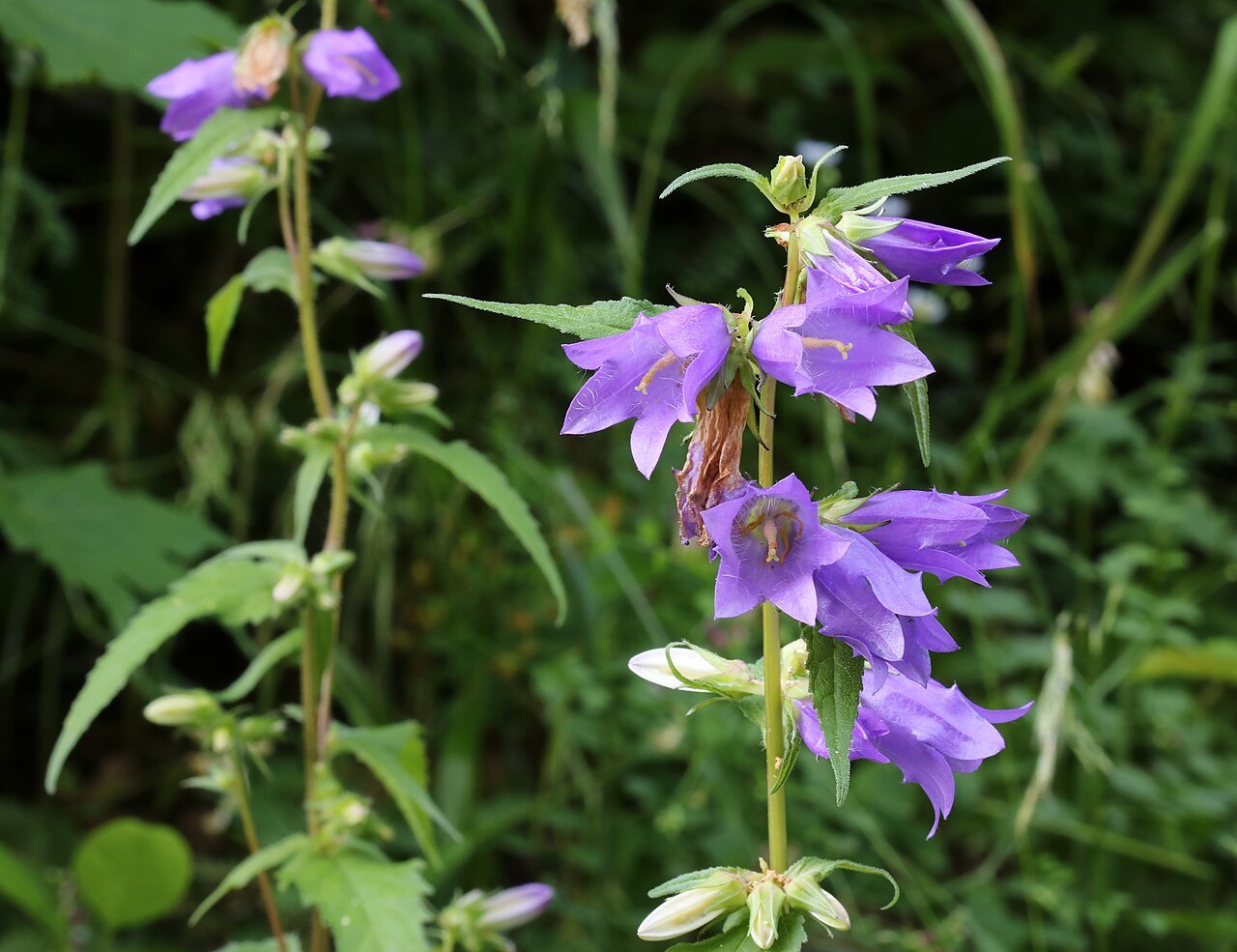
LATIN NAME: Trachelium
COMMON NAME: Throatwort
Plant Profile
Trachelium caeruleum is a herbaceous perennial of the bellflower family, native to the western Mediterranean, from Spain and Portugal through southern France and Italy to North Africa, where it grows on cliffs, walls and rocky ground in full sun. It is grown as an annual or a half-hardy perennial, and it reaches 60 to 90 cm in a season.
The plant makes a clump of toothed, nettle-like leaves and stiff, upright stems that carry flat heads of tiny star-shaped flowers in blue, violet or white. Each flower is only a few millimetres across, but there are hundreds in a head, and the effect is a haze of colour rather than a solid mass, which is where the name blue lace flower comes from.
The cultivar sold as Devotion is a seed strain selected for uniform height, strong stems and a good blue, and it has become the standard form in the cut flower trade. Other selections include white and a deep violet that is almost purple, and all of them flower from midsummer until frost.
Science & Biotechnology
Trachelium is a small genus of about 20 species in the Campanulaceae, the bellflower family, and it ranks among the few members of the family that is grown as a cut flower. The family is characterised by flowers with five petals and by a fruit that opens by pores or by valves.
The blue colour is a delphinidin-based anthocyanin, and it is sensitive to soil pH in the same way as a hydrangea: acid soil gives a deeper blue, alkaline soil a more violet tone. That is why the same cultivar can look different in two gardens, and why growers adjust the pH of the compost to hit a particular shade.
The tiny flowers are pollinated by small bees and hoverflies, which can reach the nectar in the shallow corolla. The plant produces a great deal of seed, and the seed is so fine that it is difficult to sow evenly, so the seed trade sells it pelleted. Allied plants on the list: Isotoma axillaris, Melampodium divaricatum and Taraxacum laevigatum.
Uses & Benefits
It is grown primarily as a cut flower, and it ranks among the best blue fillers available. The stems are long and straight, the heads are broad enough to fill space in a mixed bunch, and the flowers last a week or more in water without dropping. Florists use it where they would once have used statice or sea lavender, and it has the advantage of being fresh rather than dried.
In the garden it works at the middle or back of a border, where its height and its mass of small flowers give a soft texture that contrasts with bolder plants. It is also good in a wilder planting, where it will self-sow and return, and it is tolerant of drought once established.
Nothing about it is edible, and it has no place in the herb cabinet. Its value is ornamental and commercial: it ranks among the few blue flowers that can be produced cheaply from seed and sold by the bunch, so it appears in almost every market bouquet in late summer.
Growing from Seed
Under cover eight to ten weeks before the last frost, at 18 to 21 °C, on the surface and only just covered, because the seed needs light. Germination takes 14 to 21 days and can be uneven. The seed is almost dust, so mix it with fine sand to sow it evenly.
Prick out into small pots when the seedlings are large enough to handle, and grow on at 15 °C in bright light. Set them out 30 cm apart once the frost has gone, in full sun and sharp drainage. The plant tolerates poor ground and needs little feeding; rich soil produces soft stems that need staking.
About fourteen weeks from sowing to the first flower, and then a run to the frost. Cut the stems when half the flowers in a head are open, and they will last a week in water. In a mild climate the plant self-sows and returns; in a cold one it must be resown each spring, or the plants lifted and overwintered under glass.
Our Take
Trachelium is a florist’s plant that earns its place in the garden. It is easy from seed, generous with its flowers, and it fills the late-summer gap when the first flush of perennials is over and the autumn plants have not started.
Grow it in a cutting garden or at the back of a border, and cut it hard. The more you cut, the more it produces, and a row of ten plants will keep a household in blue flowers for two months.
Related Reading
Gardeners who grow Throatwort often pair it with these related subjects: