


Achillea ptarmica Seeds | Sneezewort
LATIN NAME: Achillea ptarmica
COMMON NAME: Sneezewort
Plant Profile
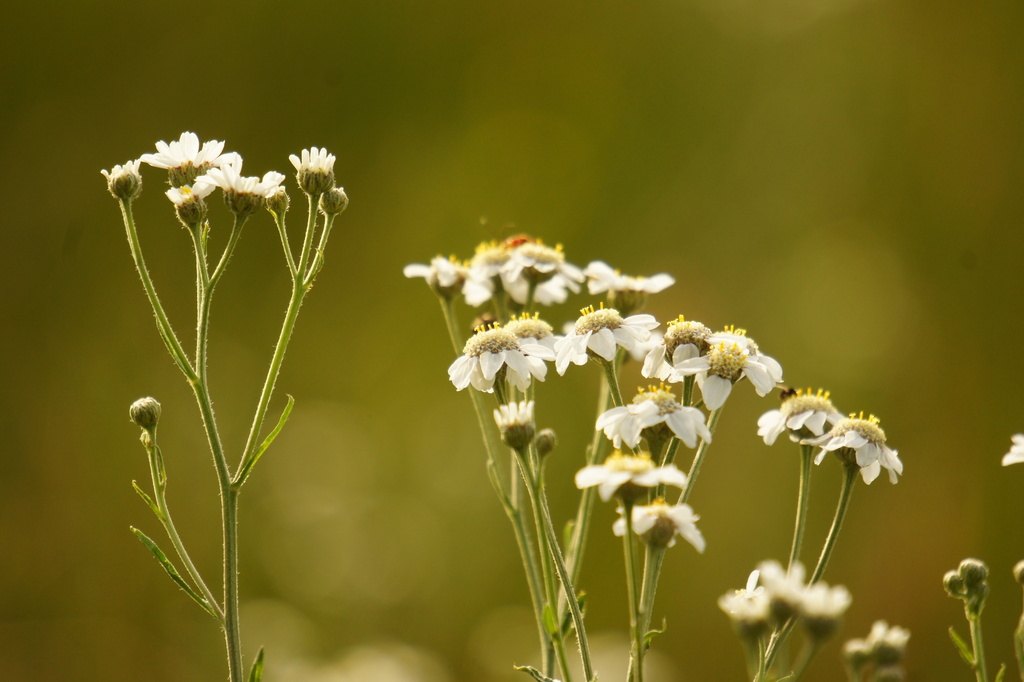
Sneezewort is the yarrow that broke the family mould: instead of the flat plate of the common yarrow it carries loose clusters of round, button-like white heads from June into August, above dark green leaves with finely toothed margins. The long list of country names, from fair-maid-of-France to goose tongue and bastard pellitory, records how familiar it once was.
The plant is a hardy Eurasian perennial of damp ground, at home in wet meadows, marshes and along streams across most of Europe, thinning out toward the Mediterranean and running east to Siberia and western Asia. Scattered naturalised colonies in North America trace back to gardens and ballast, and it settles into new ground without fuss.
The name ptarmica comes from the Greek ptairo, to sneeze, and means simply causes sneezing. Powdered the plant once served as sneezing snuff, a fashionable torment in earlier centuries, and the same pungency made it a standing remedy for blocked heads of every alleged origin.
In outline it is an upright plant of perhaps sixty centimetres, unbranched for most of its height and leafy to the base, with the flower clusters opening in a loose corymb at the top. Unlike its silver-leaved relatives it stays a deep, healthy green through the season, which makes the white buttons read all the brighter.
Science & Biotechnology
Botany teachers like this species for a quiet reason: like many members of its family it lays out its parts in the Fibonacci sequence, the leaf and branch arrangements following the familiar spiral arithmetic. It ranks among the cleaner wild examples for demonstrating phyllotaxis, and the pattern is visible on an ordinary plant without instruments.
The chemistry is pungent and practical. The plant yields an essential oil long used in herbal medicine, and the foliage has served as an insect repellent in farm kitchens for generations. The same volatile punch that repels insects is what makes the leaves memorable in the mouth, a fact that links the garden and the medicine cabinet in one species.
That mouth effect is the strangest entry in its file: chewed, the leaves produce a numbing, tingling sensation comparable to Sichuan pepper, and the plant has accordingly been used against toothache and mouth ulcers. The tingle is real chemistry rather than folklore, and herbalists who knew it used the plant sparingly, as the effect deserves. Three more Asteraceae sit in the same catalogue: Achillea filipendulina, Chrysanthemum lavandulifolium and Layia platyglossa.
Uses & Benefits
The leaves are edible raw or cooked and have a place in the herbal kitchen, though the numbing quality sets a natural limit on enthusiasm. A few young leaves sharpen a salad; older ones can be cooked with other greens. As with most strong-flavoured herbs, the cook’s judgement matters more than any rule.
In the border it earns its keep as the yarrow for moisture: a hardy, drought-tolerant perennial that nevertheless prefers full sun and moist but well-drained soil, and that will tolerate hot, humid summers better than most of its dry-prairie relatives. Hardy to zone 3, it is among the most forgiving perennials in cold gardens.
For wildlife the button heads serve a crowd of small pollinators that cannot work the deep flowers of other summer perennials, and the clumps shelter ground fauna in damp corners. In a naturalistic moist meadow it holds its place for years without becoming a bully, which is rarer in the family than the catalogues suggest.
Growing from Seed
Sow in spring, either under cover in modules or directly in prepared ground, pressing the seed into the surface with the lightest covering. Germination is steady rather than fast, and a fortnight of patience is normal. The seed prefers cool conditions, so there is no advantage in heating the tray beyond ordinary spring warmth.
Seedlings transplant cleanly and grow away quickly once settled. Space them thirty centimetres apart, keep the bed moist through the first summer, and expect a scattering of flowers late in the first season with the full button clusters from the second year onward. Division in spring is the alternative route for faster clumps.
Maintenance is minimal: cut the spent stems to the base after flowering to keep the foliage tidy, and lift and divide every three or four years when the centre thins. On dry sites the plant stays smaller but holds on; on moist ground in full sun it does the best work of its career.
Our Take
Sneezewort is the thoughtful gardener’s yarrow: less gaudy than the coloured cultivars, more useful in damp ground, and carrying a history that runs from Greek pharmacy to kitchen gardens. Its white buttons suit a naturalistic planting better than any hybrid flattery.
Sow it where the ground stays reliably moist and the sun is honest, and let a child chew one leaf under supervision, as a lesson in how chemistry and folklore meet in a wayside plant. The species has survived centuries of fashion by being useful, and it has lost none of the knack.
Related Reading
More species in the same orbit as Sneezewort: