


Primula elatior Seeds | Oxlip
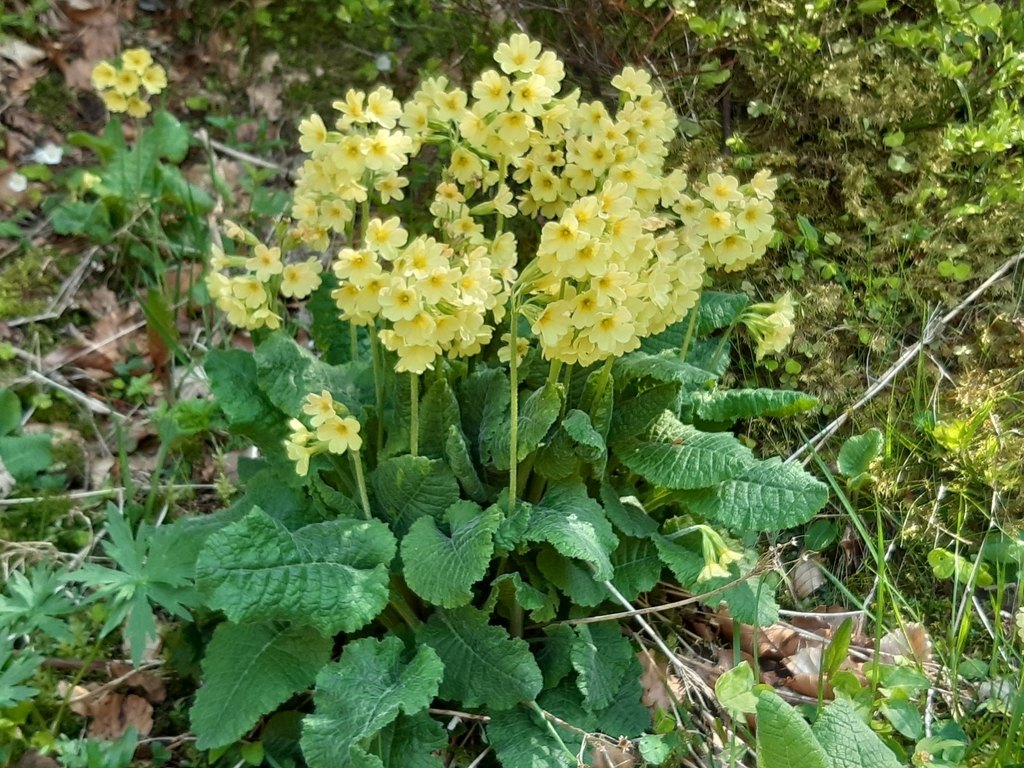
LATIN NAME: Primula elatior
COMMON NAME: Oxlip
Plant Profile
The oxlip is a herbaceous or semi-evergreen perennial, 30 cm tall and 25 cm across, with a rosette of leaves 5 to 15 cm long and 2 to 6 cm broad, wrinkled and finely toothed. In spring it carries a cluster of 10 to 30 pale yellow flowers on a single stem 10 to 30 cm tall, each flower 9 to 15 mm across and nodding to one side.
It is a woodlander. It grows in nutrient-poor, lime-rich damp woods and meadows across Europe, with its northern edge in Denmark and southern Sweden, running east to the Altai Mountains and the Kola Peninsula, and west into the British Isles. In England it is strongly associated with old woods on boulder clay in East Anglia.
The epithet means “taller”, and the common name is old and uncertain: “ox” plus “slip”, probably for a buttercup-like flower of boggy cattle pastures. Since 2002 it has been the county flower of Suffolk, chosen in a poll by the charity Plantlife, which tells you where its stronghold is.
Science & Biotechnology
The flowers are dimorphic, and the dimorphism is famous. Each plant bears either pin-eyed flowers, with the style long and the stamens low, or thrum-eyed flowers, with the stamens high and the style low. A bee working both types carries pollen from the high anthers of one to the high stigma of the other, which enforces crossing between plants.
Darwin worked this system out and devoted much of a book to it, showing that legitimate pollination between the two forms sets far more seed than illegitimate selfing. The oxlip’s split into two forms is therefore not a curiosity but a mechanism, one of the cleanest examples of a breeding system built into flower shape.
It is routinely confused with two relatives. The cowslip, Primula veris, has smaller, bell-shaped, deep yellow flowers with red dots inside and a corolla tube without folds. The “false oxlip” sold in gardens is the hybrid between cowslip and primrose, P. × polyantha, which is a bigger, tougher garden plant and not a wild species at all. The Primulaceae list also carries Primula vulgaris, Primula denticulata and Primula malacoides.
Uses & Benefits
Its use is the damp, semi-shaded corner: under deciduous trees, beside a pond, in a wildflower meadow that is cut after July. A colony of oxlips in April is one of the quiet sights of gardening, and it is achieved by patience rather than planting density.
It has the Royal Horticultural Society’s Award of Garden Merit, and it can be used as bedding, raised from seed as a biennial and discarded after flowering, which is how parks handle it. That is a wasteful way to treat a plant that will live for years in the right spot, but it is an option where a one-season display is wanted.
It prefers a sheltered position with moist soil, and full sun only if the soil never dries. In a dry border it shrinks year by year; under a tree with leaf litter it does everything itself, which is the honest recommendation.
Growing from Seed
Primula seed loses viability fast and often needs a cold period, so the reliable routine is to sow fresh on the surface of a moist, gritty mix in winter, leave the tray outdoors or in a cold frame, and wait. Germination comes in spring as light and temperature rise, sometimes over several weeks.
Do not discard the tray in June. Prick out the seedlings when they are big enough to handle, growing them on in shade, and keep them moist and cool through the first summer; a primula seedling cooked in a sunny frame is dead in an afternoon. Pot on into a mix with plenty of leaf mould or coir.
Plant out in autumn or the following spring, 25 cm apart, into soil that holds moisture. Both flower forms are needed for good seed set, so raise plants from a mixed packet rather than a single clone, and let the colony sort itself out. Division of old clumps works after flowering but is rarely necessary.
Our Take
This is a plant for a specific condition, and it is honest about it: damp, limey, semi-shaded, undisturbed. Where those conditions exist it is one of the best spring perennials, and where they do not it is a slow disappointment.
Buy seed, sow it in winter, forget the tray until March, and plant the results in a damp corner that is already semi-wild. Ten years later you will have a colony that looks as if it had always been there, which is the only real test of a woodlander. The seed is cheap and the patience is the expensive part.
Related Reading
More species in the same orbit as Oxlip: