


Glandularia tenera Seeds | Moss Verbena
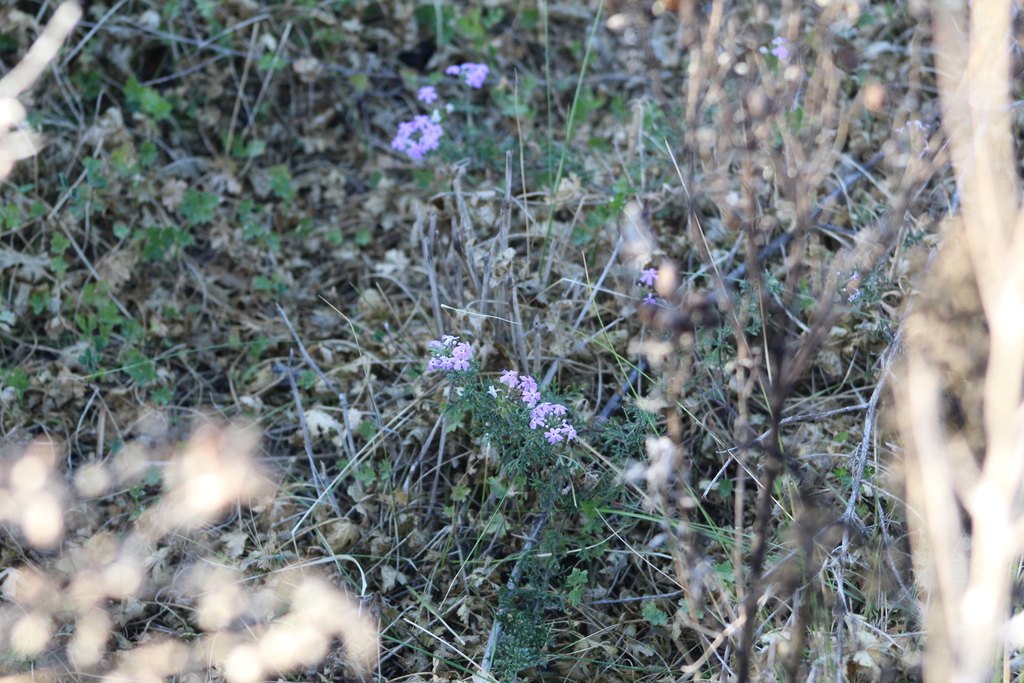
LATIN NAME: Glandularia tenera
COMMON NAME: Moss Verbena
Plant Profile
Mock vervain is an honest name for a plant that resembles the European verbena closely enough to be confused with it and belongs to a different genus. Glandularia tenera comes from Brazil, Argentina and Uruguay, and it has followed roads and gardens into California, southern Europe and Australia, where it behaves as a weed rather than a treasure.
The habit is variable, which is part of the problem with identifying it. Stems can lie almost flat or stand upright, and the whole plant can be softly hairy or nearly smooth. The leaves are rough to the touch, deeply cut into lobes, and arranged in opposite pairs up the stem.
Flowers are borne in a dense head-like spike up to a centimetre and a half wide, with individual corollas reaching fourteen millimetres across. Colours run from white through pink to a strong purple, and the throat is usually paler, which gives the head a soft, luminous centre from a few metres away.
The genus was named for its glands, and the name is not decoration: the stems and calyces carry stalked glands that give the plant a faint resinous smell when handled and leave a mark on the fingers, much like the related lantanas and the true verbenas. Nearby in the classification: Glandularia canadensis, Glandularia hybrida and Radermachera sinica.
Science & Biotechnology
Glandularia was separated from Verbena on characters that are easy to see once someone points them out: the flowers are gathered into a head rather than a lengthening spike, the corolla tube is longer and narrower, and the fruit splits into four nutlets rather than two. The split has been accepted, reversed and accepted again over a century.
The head-like inflorescence is a device for display rather than for seed set. A single head presents a flat target of small flowers at one plane, and it opens from the outside inward over several weeks, so the same head is attractive to visitors for a long time while the oldest flowers set fruit in the centre.
In California the plant is recorded as an introduced roadside weed in the Jepson Manual, which is a precise way of saying that it escapes without spreading far. It needs disturbance and dry ground, and it does not compete in closed vegetation, so its weed status is a matter of edges rather than of fields.
Uses & Benefits
Its garden use is ground cover in hot, dry places: a car park edge, a gravel bank, the strip between a wall and a path where watering is impossible. It flowers from spring into autumn in mild climates, and even in cold ones it gives a long season before the first frost ends it.
The plant roots where stems touch the ground, which is how it makes a patch rather than a clump. That habit is an advantage on a bank and a nuisance in a border, where it will walk into neighbouring plants and take the space before anyone notices it has arrived.
It is not edible, has no medicinal use in European or American practice, and is not listed as toxic. The related verbenas have a long folk history in South America, but none of it transfers to this species in any way a gardener needs to know about.
Growing from Seed
Sow in late winter at twenty to twenty-two degrees, on the surface and barely covered, because the seed is small and light helps. Germination is erratic, ten days to three weeks, and a proportion of any packet will not come up at all; sow the whole packet rather than half of it.
Prick out when the seedlings can be handled and grow them on cool and bright, not warm, or they will stretch into thin stems that never recover their shape. Plant out after the last frost at thirty centimetres, in the poorest, sharpest ground you have, and water only until they are established.
Shear the plants back by a third in midsummer if flowering slows, and they will come again into autumn. Cuttings taken in late summer root in three weeks in damp grit and are the only way to hold a particularly good colour, since seed from a mixed batch will give you the whole range.
Our Take
The plant’s weakness is its own vigour. It does exactly what a ground cover is supposed to do, and then it keeps doing it, walking over the front of a border and rooting into the lawn. Gardeners who love it have learned to plant it where that behaviour is wanted, at the edge of hard surfaces.
Judged that way it is excellent: months of colour, no watering, no pests worth naming, and a habit that fills a difficult gap. The name mock vervain is a fair warning that it is a substitute rather than the real thing, but on a hot bank the substitute is the one that lives.
Related Reading
More species in the same orbit as Moss Verbena: