


Hibiscus sabdariffa Seeds | Roselle
LATIN NAME: Hibiscus sabdariffa
COMMON NAME: Roselle
Plant Profile
Roselle is the plant behind hibiscus tea, and the part used is not a flower or a fruit but the calyx: the fleshy red cup that sits at the base of the flower and swells around the developing seed pod. It is likely native to parts of Africa, and it was carried to Asia and the West Indies in the sixteenth and early seventeenth centuries, where it has naturalised in many places.
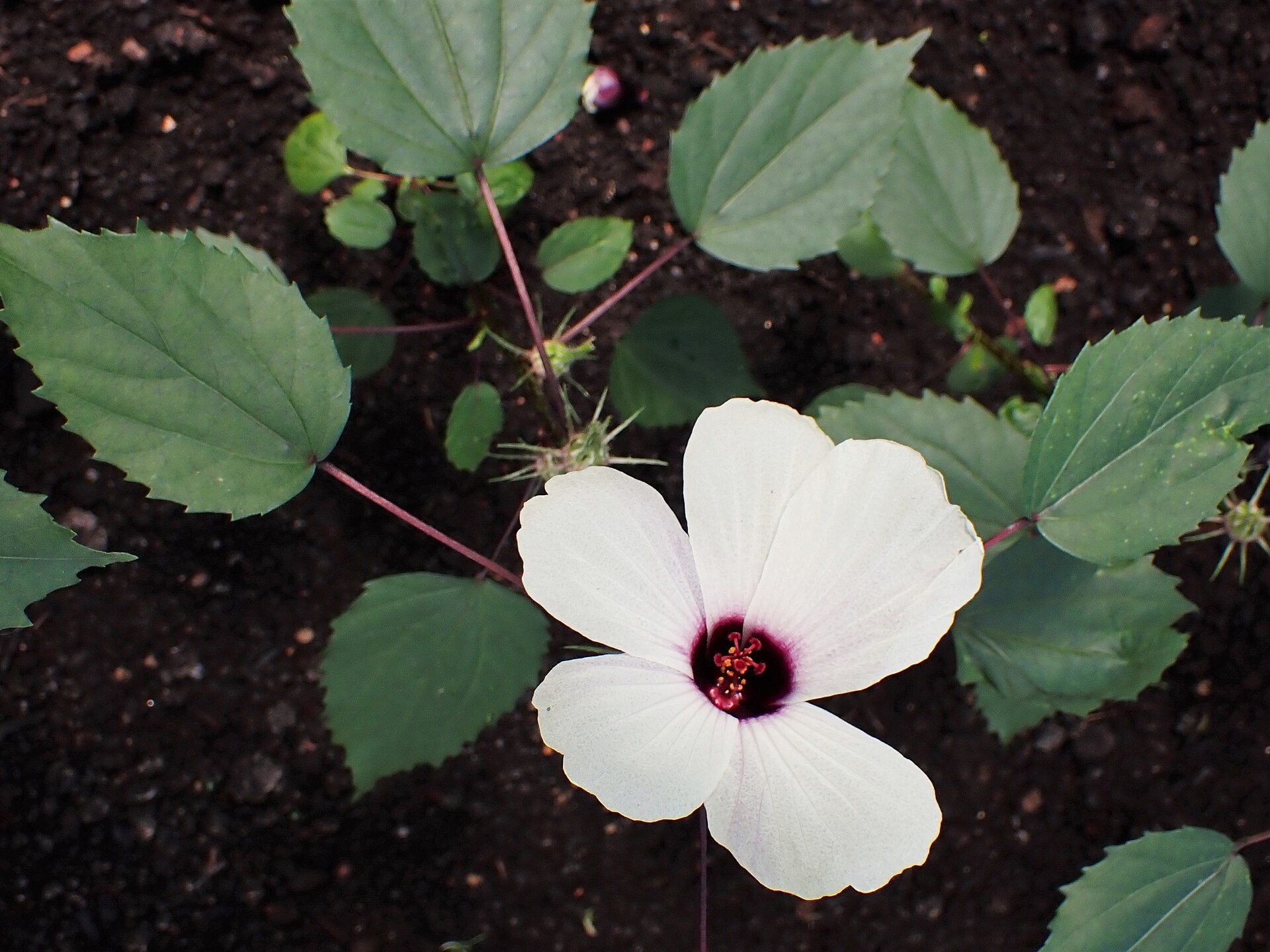
The plant is an annual, or a woody-based subshrub in frost-free climates, growing 2 to 2.5 m tall. Leaves are deeply three- to five-lobed, 8 to 15 cm long, and arranged alternately on reddish stems. Flowers are 8 to 10 cm across, white to pale yellow with a dark red blotch at the base of each petal.
The calyx starts at 1 to 2 cm wide and enlarges to 3 to 3.5 cm as the fruit matures, becoming fleshy and deep crimson. That process takes about six months from sowing, which is the single most important fact for anyone gardening in a short season.
Science & Biotechnology
The red colour comes from anthocyanins, chiefly delphinidin-3-sambubioside and cyanidin-3-sambubioside, and the concentration rises as the calyx matures. The sourness is a separate matter: organic acids, including hibiscus acid and several others, give the infusion its sharpness without any help from citrus.
The plant has attracted clinical interest for blood pressure, and there are trials showing modest reductions with regular consumption of the infusion. The evidence is not strong enough to treat it as a medicine, and it should not be used instead of prescribed treatment, but the effect is consistent enough that researchers keep returning to it.
Taxonomically the plant has just been moved. Long known as Hibiscus sabdariffa, it has been placed in a segregate genus as Sabdariffa gossypiifolia following a revision of the hibiscus group. Seed catalogues, food regulations and most of the scientific literature still use the old name, and the two refer to the same crop.
Uses & Benefits
The calyces are steeped fresh or dried to make a drink that goes by a different name in every country that grows it: karkade in Egypt and Sudan, agua de jamaica in Mexico, bissap in Senegal, sorrel in the Caribbean, rosella in Australia.
Served hot or iced, sweetened or not, it ranks among the most widely consumed plant infusions in the world. In Egypt it is served cold with pine nuts and mint; in Mexico it is sweetened hard and drunk over ice; in Senegal it is flavoured with vanilla and ginger. Three more Malvaceae sit in the same catalogue: Hibiscus tiliaceus, Hibiscus aculeatus and Abelmoschus sagittifolius.
The same calyces make jam, syrup and a sour sauce that works with fatty meat. In West Africa the leaves are used as a green vegetable, and the seed is pressed for oil in some regions. The seed oil is pressed for cooking in parts of West Africa, though the yield is small. The stems give a bast fibre, used locally for cordage and coarse cloth. It is not a major commercial fibre, but it ranks among the reasons the plant was carried so widely in the first place.
Growing from Seed
Roselle needs heat and a long season. Sow under glass at 20 to 25 °C in early spring, six to eight weeks before the last frost, and do not plant out until nights are reliably above 10 °C. The seedlings are fast and hungry, and they will double in size within a month of potting on.
It is short-day flowering, which means the plants wait for nights to lengthen before they set flower. In a temperate garden that happens in late summer, and the calyces then need another six weeks to swell. In a short-season climate you will get a crop, but a smaller one, and in a cool summer you may get none at all.
Harvest the calyces when they are fat and deep red but before the seed pod inside begins to swell and dry, cutting them from the stem with a short piece of stalk attached. They dry quickly in a warm room, and a single plant will give you enough for a winter’s worth of tea. A well-grown plant gives 200 to 300 g of dried calyx in a good season.
Our Take
This is a crop that rewards a warm wall and a long summer, and disappoints in a cold one. If you have a polytunnel or a sheltered south-facing bed, grow a dozen plants: the flowers are handsome, the calyces are spectacular, and the tea is genuinely better than anything bought in a jar. If your season is short, grow it for the flowers and buy the tea.
Related Reading
Gardeners who grow Roselle often pair it with these related subjects: