


Sedum spurium Seeds | Caucasian Stonecrop
LATIN NAME: Sedum spurium
COMMON NAME: Caucasian Stonecrop
Plant Profile
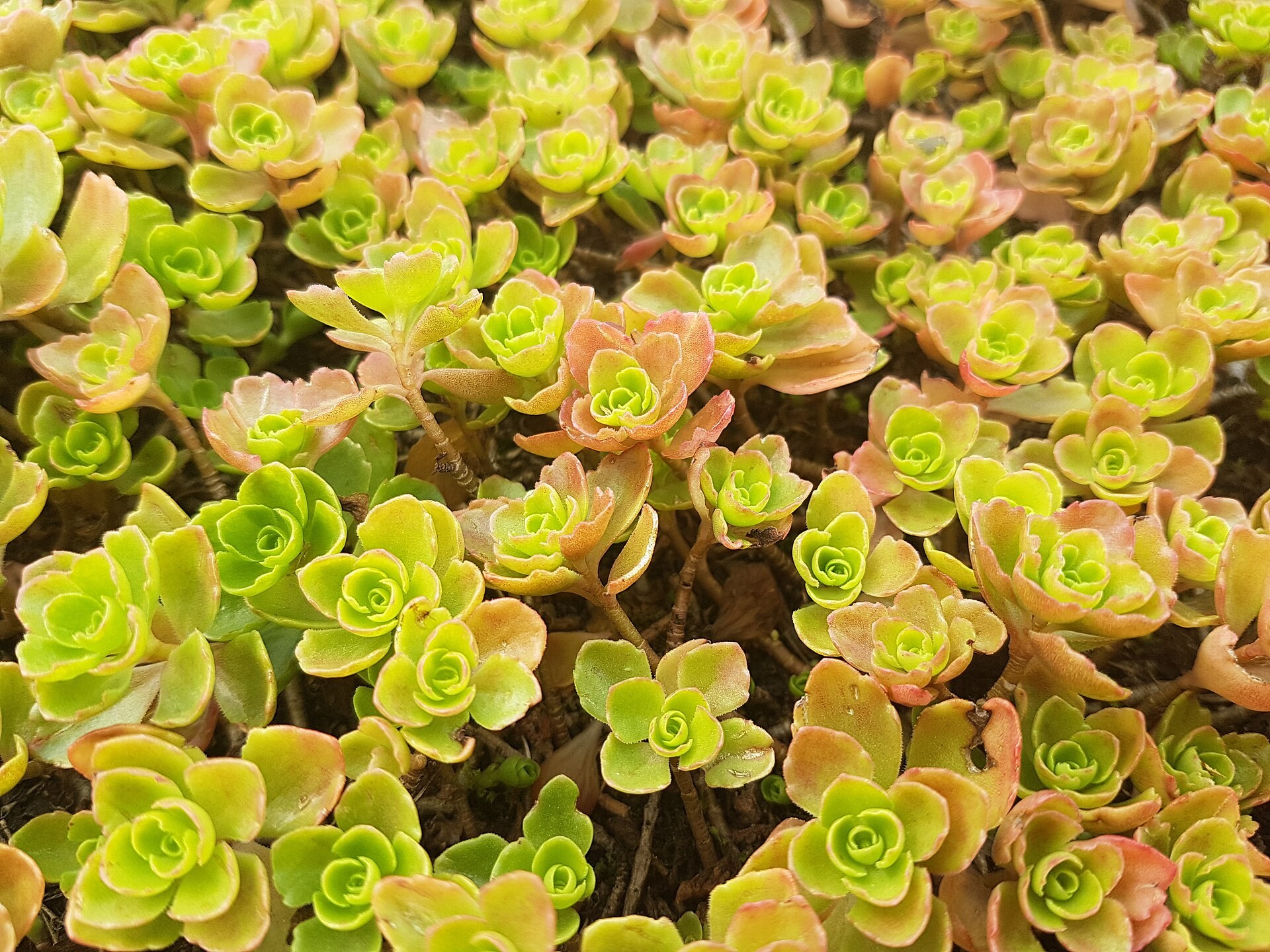
Caucasian stonecrop is a low, spreading succulent with stems that creep along the ground and root wherever they touch. It occurs naturally in the rocky subalpine meadows of Georgia, northern Iran and north-eastern Turkey, and it has escaped cultivation across Europe, where it turns up on roadsides, walls and waste ground in persistent colonies.
The stems are smooth or slightly bumpy and typically 5 to 15 cm long. Leaves are usually in opposite pairs, occasionally alternate, growing in two rows along the stem, which is where the common name two-row stonecrop comes from. They are fleshy, toothed towards the tip, and green to bronze depending on the cultivar and the season.
The name has changed. Long grown as Sedum spurium, the plant is now placed in Phedimus, and the accepted name is Phedimus spurius. The epithet spurius means false, though what it was meant to distinguish the plant from is not clear from the original description.
Science & Biotechnology
It runs the crassulacean acid metabolism pathway, the water-saving system that lets succulents open their stomata at night and fix carbon in the dark. That is why the plant survives on a wall with no soil to speak of, and why it keeps growing through a summer that kills ordinary groundcover.
Flower colour tracks leaf colour, and the relationship is consistent enough to be useful. Greener-leaved plants produce paler blooms, while those with red or purple foliage develop deeper-coloured flowers. The pigments involved are anthocyanins, and their concentration in the leaves and petals appears to be controlled by the same environmental cues. The flowers are 7 to 12 mm across, with stamens 5 to 9 mm long and red anthers, and they open from late spring into midsummer.
Establishment is by fragmentation as much as by seed. A stem broken off and dropped on gravel will root within weeks, which is how the plant colonises walls and how it spreads through a garden. That same trait makes it easy to propagate deliberately: pull a piece, press it into soil, keep it damp for a fortnight. A stem broken off and pressed into gravel will do the same thing without any help, which is the fastest way to move it around a garden. Other Crassulaceae on the list: Sedum aizoon, Sedum kamtschaticum and Sedum forsterianum.
Uses & Benefits
It is a groundcover for difficult places: dry banks, gravel, the strip between paving, green roofs and containers. Height stays under 15 cm, the mat is dense enough to suppress weeds once closed, and it takes full sun without scorching.
The flowers open in early summer in flat heads of pink or white, and they are excellent for bees at a moment when the spring flush is over and the summer perennials have not started. A patch in flower is audibly busy.
It is also one of the few plants that will grow on a green roof without irrigation, and it is used in extensive roof systems across northern Europe for exactly that reason. The shallow root run and the CAM pathway make it a natural fit. It will even take mowing at 5 cm if you want it as a lawn substitute on poor, dry ground.
It is less good in a pot. The plant needs room to expand and sulks when confined, and the dark-leaved and variegated forms grow more slowly than plain green, which makes them useful for contrast and poor for quick cover.
Growing from Seed
Sow on the surface in spring, because the seed is fine and needs light. Settle it onto moist compost with a light press of the hand and leave it uncovered, at 18 to 21 °C. Germination takes two to three weeks and is often uneven.
The seedlings are tiny and slow for the first month, and they dry out easily. Water from below, keep them in good light, and pot them on as soon as they can be handled. Plant out at 20 to 30 cm apart once they have formed a small rosette.
Once established, the plant needs almost nothing. Shear the old flower stems in late summer if you want a tidy mat, and pull out any pieces that have wandered into places they are not wanted. Divide every few years to keep the centre vigorous.
Our Take
It is not a plant that will surprise anyone, and that is the point. It covers ground, it flowers, it feeds bees and it survives drought, all with no attention. The one caution is that it spreads by fragment, so keep it away from rock gardens where small alpines are trying to establish: it will bury them. It also roots from any fragment, so keep the prunings out of the compost heap.
Related Reading
Readers interested in Caucasian Stonecrop frequently explore these as well: