


Sedum lineare Seeds | Needle Stonecrop
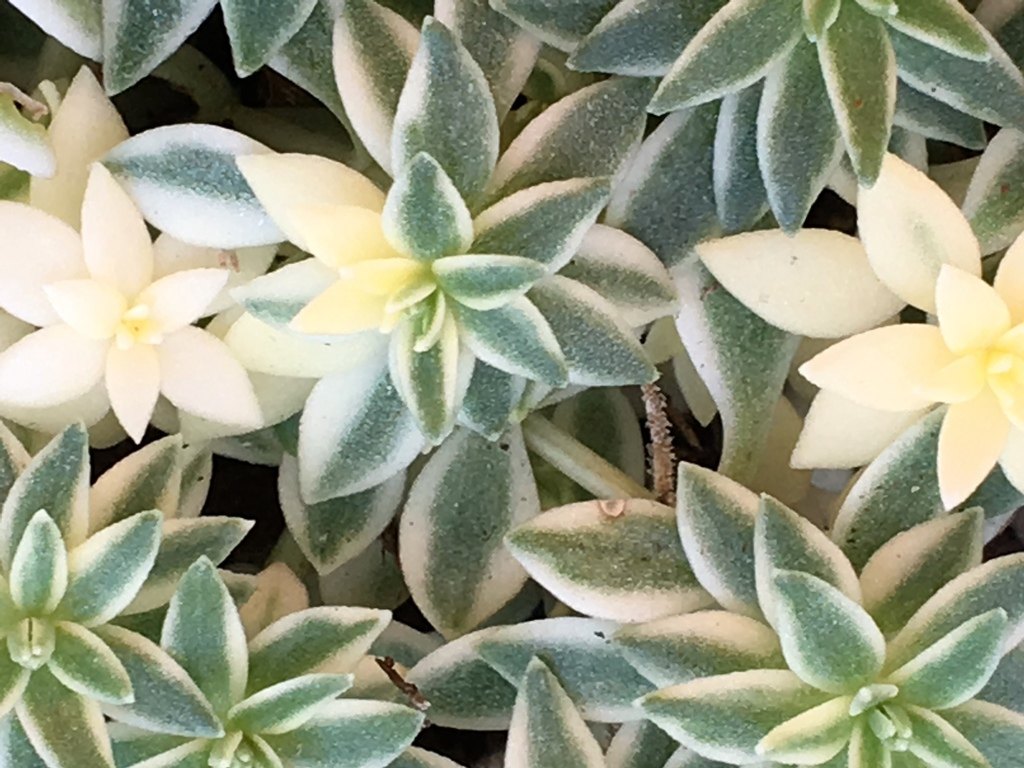
LATIN NAME: Sedum lineare
COMMON NAME: Needle Stonecrop
Plant Profile
Needle stonecrop is a succulent reduced to its essentials. Sedum lineare, a creeping perennial of ten to twenty centimetres from East Asia, runs mats of branching stems set with narrow, pale green leaves a centimetre or two long, thicker than a needle but barely wider, and opens clusters of small yellow star flowers in late spring.
Carl Peter Thunberg, the Swedish physician who botanised at the Dutch trading post in Japan in the 1770s, described the species; lineare points straight at the leaves. Its native span covers eastern and southern China from the Yangtze provinces to Guangdong and Yunnan, plus Japan, Taiwan and northern Vietnam, on rocks, banks and old walls in full sun.
In the wild and in cultivation alike it behaves as a survivor of neglect. The stems root at every node, a broken fragment regrows, and established mats shrug off drought that browns the surrounding vegetation. Its spread has followed people: it naturalised in the southeastern United States, with Georgia recording escaped populations, and it rides in garden waste everywhere it is grown.
Field records remain thin for such a widespread plant, peaking in April and May when the flowers make it conspicuous. In much of its range it is a plant of rooftops and walls rather than wild cliffs, which says more about its niche than any survey can. It shares the family with Sedum aizoon, Sedum kamtschaticum and Echeveria peacockii.
Science & Biotechnology
The leaf shape is engineering. Narrow, cylindrical leaves cut surface area and wind load, store water in proportion to volume, and shade one another as the sun moves, a package that lets the plant hold thin roof substrate where broader leaves would cook or desiccate. Combined with crassulacean acid metabolism, the family’s night-opening carbon pathway, it keeps stomatal water loss to a minimum through hot days.
That package is precisely why it became southern China’s default extensive roof-garden plant. Municipal greening programmes in Shanghai, Hangzhou and other Yangtze cities planted it by the hectare on unirrigated flat roofs, where its mats survive typhoon rain and summer drought on a few centimetres of substrate, cooling the storey below and holding dust. The horticulture is closer to civil engineering than gardening.
Reproduction matches the working-dog temperament. Stem nodes root within days on contact with moist substrate, leaf fragments strike freely, and seed is a fallback rather than the norm. Genetic variation across wild Chinese populations is real, which gives breeders something to select, but commercial stocks are overwhelmingly clones of a few tolerant lines.
Uses & Benefits
In gardens it fills the roles roofs discovered: matting ground cover over rocks, walls, joints and poor thin soil, green through winter in mild climates and bronze-tinged in frost. It takes foot traffic lightly, tolerates reflected heat from paving, and holds soil on banks too steep for ordinary perennials.
PFAF rates it hardy to zone 6, and its toxicity profile is mild: not poisonous, but large quantities upset the stomach, a theoretical rather than practical concern. It is not a culinary herb despite belonging to a family with edible members, and no traditional medicine attaches to it in the way of its Chinese relatives.
The honest limitations: flower interest is modest, the mat can thin in deep shade or permanent damp, and its roaming habit makes it a poor companion for tiny alpines it will simply overgrow. In the right niche, a hot thin strip of nothing, it is nearly unbeatable.
Growing from Seed
Sow on the surface of gritty compost in spring at eighteen to twenty degrees; the seed is dust-fine, germinates in one to three weeks, and seedlings are thread-thin for their first months. Keep barely moist and bright. For speed, most growers take stem cuttings, which root without any treatment.
Plant out after frost, fifteen to twenty centimetres apart, in sun and gritty, well-drained ground. Water only in establishment and drought. No feeding, no staking, no deadheading. In containers let it trail; in beds let it run. Its pest list is effectively aphids on lush spring growth and rot in standing water.
Seed ripens in small dry follicles and shakes out when brown; sow fresh for best rates, as viability drops with storage. A mat left alone sheds seed into every joint and cracks it finds, and cuttings torn off at weeding time are planting stock by accident.
Our Take
Our take: needle stonecrop is the most proletarian plant in the trade, and its history on Chinese rooftops is the proof that usefulness is its own beauty. For anyone with a hot, mean, impossible strip of ground, the choice is usually this or gravel.
The honest verdict: it is not a collector’s plant and will never headline anything. What it offers is permanence at near-zero cost, from seed or from a single broken stem. Plant it where ambition goes to die, and it will make that strip the easiest part of the garden.
Related Reading
If Needle Stonecrop appeals to you, these related plants are worth a look: