


Adonis amurensis Seeds | Amur Adonis
LATIN NAME: Adonis amurensis
COMMON NAME: Amur Adonis
Plant Profile
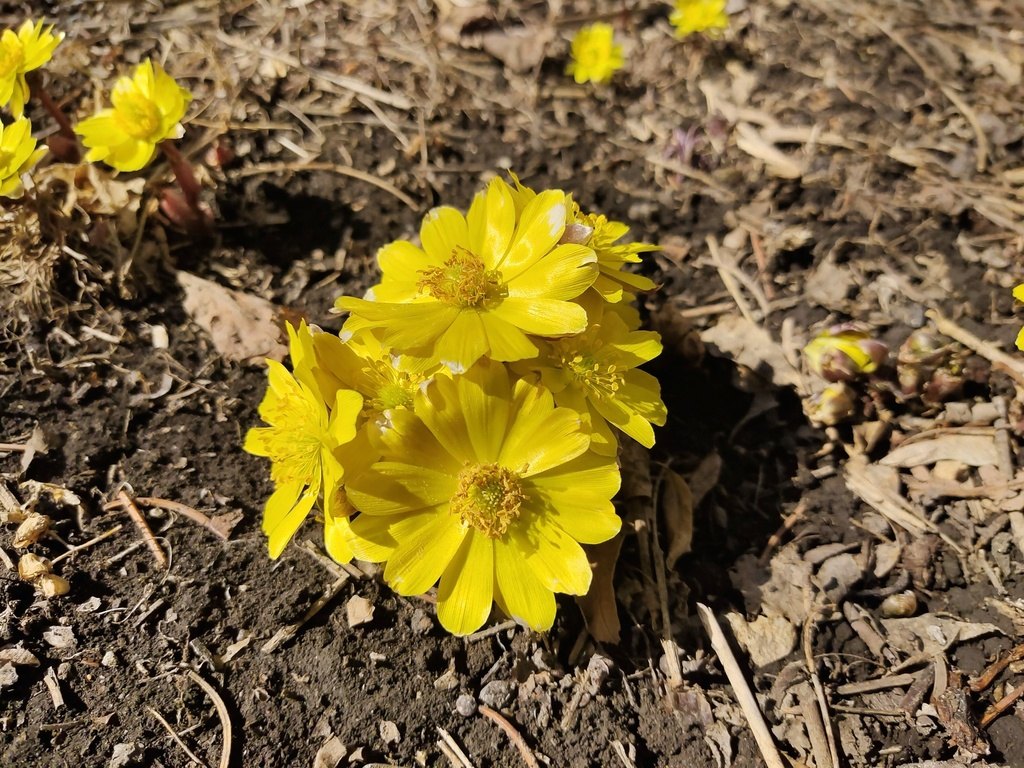
Amur adonis is the first gold of the northern spring. Adonis amurensis, a rhizomatous buttercup relative of ten to thirty centimetres, opens its four to five centimetre flowers of overlapped yellow-orange petals before a single leaf has appeared, often through snow, on wooded slopes from the Amur to Japan.
The blooms sit at ground level like dropped coins, solitary on each shoot, with a boss of short stamens at the centre. The much-divided, thread-tipped leaves come afterwards and fade by early summer, so the plant’s whole visible life is compressed into two months around the thaw. A clump three years old may carry twenty flowers at once.
In Japan it is fukujuso, the grass of fortune and longevity. Edo-period growers raised potted plants for the New Year, and the custom persists: gilded fukujuso still sell as good-luck gifts in the first weeks of January, a demand that once stripped wild colonies and pushed growers to raise their own.
Its native range runs down the Russian Far East from the Amur and Primorye through Sakhalin and the Kurils into north-east China’s Heilongjiang, Jilin and Liaoning, the Korean peninsula and the main Japanese islands. Everywhere it is a plant of mountain woods and grassy slopes, waking under the last snow.
Science & Biotechnology
The genus is a pharmacy, and not a safe one. Adonis species carry cardenolides, the same class of heart-active compounds as foxglove, and Russian pharmacology has long standardised Adonis preparations for certain heart complaints. Amur adonis contains adonitoxin among its glycosides, so every part of the plant should be treated as toxic. Symptoms in grazing animals follow the foxglove pattern, from drooling to irregular heartbeat.
Field records across its range put observation peaks in March and April, which is the species’ entire strategy: flower before the canopy closes, set seed, and disappear. The petals contain no nectar reward worth the name, and early queen bumblebees visiting at the thaw are its main pollinators.
Its seed is famously slow. The embryo is rudimentary at ripening and needs a warm, moist spell to develop, then a cold spell to sprout, so untreated seed germinates erratically across two winters. Nurseries cheat the wait with fresh seed sown immediately outdoors, letting the seasons do the sequencing. Ranunculaceae is well covered here, with Adonis dentata, Nigella sativa and Consolida regalis alongside.
Uses & Benefits
In the garden it is a collector’s spring plant for the front of a shaded bed, strongest against dark soil or rock. Clumps widen slowly from the rhizome, and established patches flower in a dense pool of gold worth the patience. It is fully hardy to USDA zone 3.
Japanese and German growers have selected doubles and deep-orange strains, and rare white forms fetch prices out of proportion to the difficulty of multiplying them, since every good clone must be built from seed. All forms keep the same habit: bloom first, foliage later, summer dormancy. Chichibu Beni, a deep orange-red form, is the best known in Japan.
There is no edible use and no folk remedy to defend. The plant’s value is entirely ornamental and seasonal, and its modesty the rest of the year is part of the design. Plant it where its April gold is seen from a window, not where summer needs filling.
Growing from Seed
Sow fresh seed as soon as it is ripe, outdoors in shade, half-covered, and leave the pot for two winters; mark it clearly, because nothing shows above ground the first year. Dry-stored seed needs one warm month at twenty degrees followed by three cold months before sowing. A thin dressing of leaf mould over the pot in autumn feeds this habit.
Seedlings emerge with the thaw of the second or third spring and take another two years to flower, so a patch is a slow asset. Keep the pot evenly moist in the growing season and dry-shaded afterwards. Never let fresh seed dry out at all; viability drops within weeks.
Divide established clumps only just after flowering, taking rhizome pieces with a bud, and replant immediately at the same depth. Moving wild-collected plants is both ecologically damaging and usually fatal, because the fine feeding roots break; everything sold as garden stock should be seed-raised or divided.
Our Take
Our take: this is a plant for gardeners who plan in years, not seasons. Nothing else blooms through snow with such weight of colour, and the patience the seed demands filters out everyone else. Start a pot this autumn and the reward is a permanent one.
The honest caveats: seed is scarce, germination is a gamble, and summer dormancy leaves a gap. Give it companions that take over the stage in May, hostas and late-emerging perennials, and the gap disappears. What remains is the earliest and arguably the best gold in the garden.
Related Reading
Continue exploring with these related plants: