


Lunaria annua Seeds | Honesty
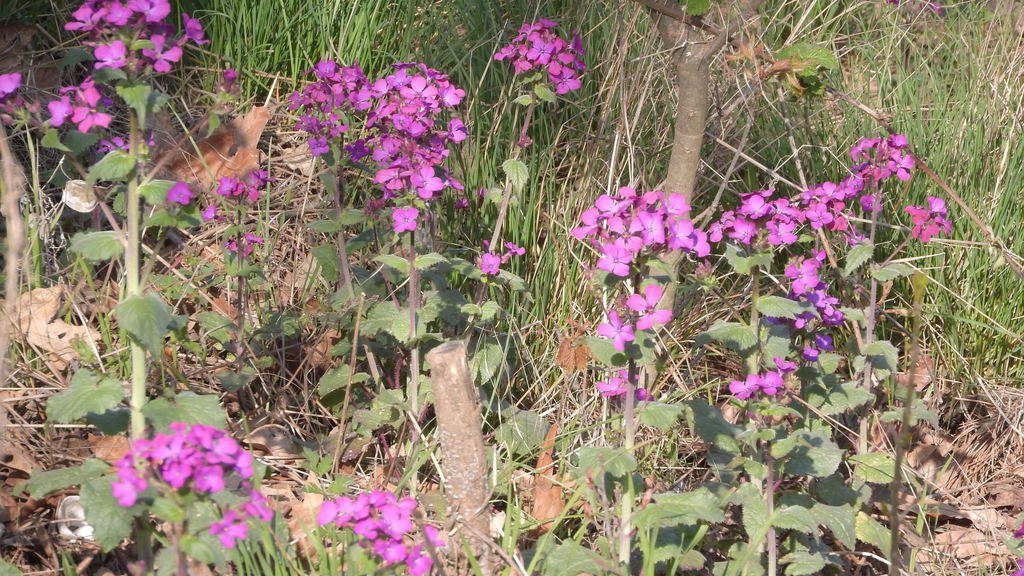
LATIN NAME: Lunaria annua
COMMON NAME: Honesty
Plant Profile
Honesty is a biennial in the cabbage family, grown for its seed pods rather than its flowers. It reaches 90 cm by 30 cm, with large, coarse, pointed oval leaves that are hairy and strongly serrated, the lower ones long-stalked and the upper ones stalkless. In spring it carries racemes of white, pink or violet flowers.
The pods are the reason it is in every cottage garden. They are flat, translucent discs 3 to 8 cm across, green turning to a pale brown, and when they are ripe the two outer valves fall away and leave a silvery membrane with the seeds attached to its rim. That membrane is what people keep.
The names all point at the same thing. Lunaria means moon-shaped; honesty, from the sixteenth century, refers to the transparency that truthfully shows what is inside; money plant, silver dollar and the French monnaie du pape refer to the coins the pods resemble. In Denmark they are Judas pennies. Near kin on the list are Iberis umbellata, Diplotaxis erucoides and Erysimum allionii, all Brassicaceae.
Science & Biotechnology
The fruit is a silicle, not a true pod: a short, flattened capsule with a central partition, which is the standard fruit of the cabbage family. The partition is the membrane that remains after the valves fall, and its silver sheen is structural rather than pigmented, produced by the way the dried tissue reflects light.
It is a biennial, which means the first year makes a rosette and the second makes flowers and dies. That fits it to a garden cycle: sow in summer, plant out in autumn, and the plant flowers the following spring while the annuals are still small. Then it self-sows and the cycle continues without you.
The plant has a long association with magic and money, which is unusual for a brassica. The earliest surviving recipe for a flying ointment, recorded by the Bavarian physician Johannes Hartlieb around 1440, includes Lunaria as the herb of the moon, to be picked on a Monday. The Victorian language of flowers gave it fascination.
Uses & Benefits
It is a dried flower, and one of the few that looks better dead than alive. Cut the stems when the pods are fully formed and the valves have begun to drop, hang them in a dark dry place, and the membranes will keep their silver for years. Bleaching them white is a matter of taste, and so is leaving the seed heads on the plant, where they look well against a dark hedge until the weather takes them.
In the garden it is a filler and a self-sower. The spring flowers are pleasant rather than spectacular, and they are useful in a white or a violet border where the plant can be allowed to seed about. It tolerates shade, which few biennials do, and it will grow under deciduous shrubs.
It is edible in the way that most brassicas are: young leaves in spring, flowers as a garnish, and a peppery taste. The roots were eaten in some places, though they are not worth the trouble. Nothing about the plant is seriously toxic, which is more than can be said for most of the cottage-garden biennials.
Growing from Seed
Sow in June or July, in situ or in a seedbed, and transplant in autumn. The seed germinates in two to three weeks at 15 to 20 °C and needs light, so press it into the surface. A spring sowing gives a plant that flowers the same year but stays small and produces poor pods.
It wants sun or part shade and any reasonable soil, and it dislikes being moved once established, because of the taproot. Plant it where it is to flower. Space the plants 30 cm apart, water them in, and leave them alone until spring.
Cut the flowering stems for drying before the valves shatter, or leave a few to seed. The plant self-sows freely in bare soil and not at all in grass or mulch, so the seed you want is the seed that lands on open ground. Pull the spent plants in July.
Our Take
It is the cheapest way to have something in the house in January. A packet of seed, a patch of bare ground and one summer will give a winter’s worth of silver discs, and the plants will go on seeding themselves in the same place for as long as the ground is disturbed.
The one thing to remember is the biennial habit. A plant that flowers this year will be dead by August, and the plants for next year are the seedlings at its feet. Leave them where they are, and do not tidy the bed until they are big enough to see.
Related Reading
If Honesty appeals to you, these related plants are worth a look: