


Coreopsis verticillata Seeds | Whorled Tickseed
LATIN NAME: Coreopsis verticillata
COMMON NAME: Whorled Tickseed
Plant Profile
Whorled tickseed, thread-leaved tickseed, pot-of-gold: the names all point at the foliage, which is reduced to threads and gives the plant the look of a green cloud rather than a herbaceous perennial. It is native to the east-central United States, from Maryland south to Georgia, with isolated populations west to Oklahoma and north into Quebec and Ontario.
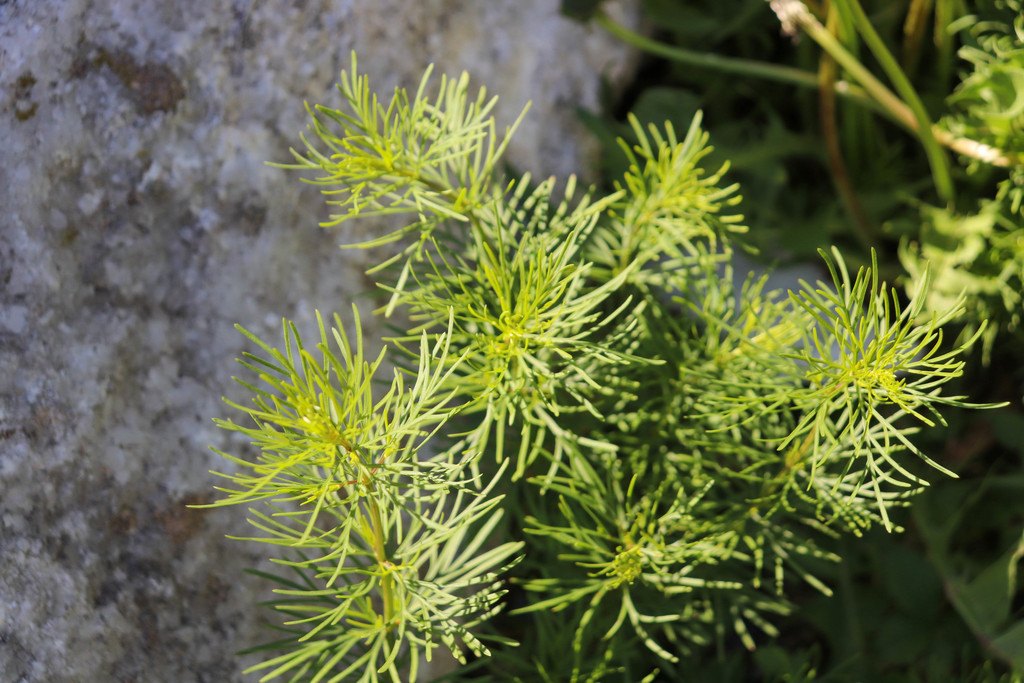
It grows 60 to 90 cm tall and about the same wide, and it exceeds that width readily because it spreads by rhizomes. The stems are wiry and dark, and the leaves are so finely divided that a plant in bud reads as a mass of green wire. The heads are up to 5 cm across, with both disc and ray florets bright yellow, produced in clusters from midsummer into autumn.
The genus has been split. The plant is now placed in Anacis, and the name Coreopsis verticillata is a synonym that will stay in catalogues for another twenty years. Anacis is smaller and less familiar, and the flowers are the same. Three more Asteraceae sit in the same catalogue: Coreopsis coreopsis, Coreopsis lanceolata and Chrysanthemum multicaule.
Science & Biotechnology
The thread-like leaves are an adaptation to heat and drought, not an aesthetic choice. A narrow leaf has a high surface-to-volume ratio, which sounds like the wrong direction until you add the boundary layer: in still air a thread loses heat quickly and does not build up the layer of stagnant humid air that a broad leaf does. The plant stays cool by being thin.
The wiry stem is the same logic in structural form. It is stiff enough to hold a head up without staking, and flexible enough to bend in wind without snapping, and it costs the plant very little material. A clump of tickseed in a gale moves as a whole rather than losing stems one at a time.
Rhizomatous spread is the third part of the strategy. On thin, dry, sandy soil the plant cannot rely on seed every year, so it clones itself outward into the gaps. That is why a single plant becomes a patch in three seasons and why the patch has a bald middle five years later, when the oldest rhizomes give up.
Uses & Benefits
It ranks among the easiest perennials in cultivation and one of the longest in flower. Full sun, poor soil, drought, heat and neglect are all tolerated, and the plant is deer resistant and relatively free of pests. For a beginner, or for a bed that gets no irrigation, it is close to foolproof.
Moonbeam is the cultivar that made the plant famous. It has pale sulphur-yellow flowers on a slightly shorter plant, and it was the Perennial Plant Association plant of the year in 1992. Demand outstripped supply in some areas badly enough that nurseries were selling unrooted cuttings to each other, which is a rare thing in a herbaceous perennial.
Zagreb is shorter and brighter, Grandiflora is taller with slightly larger flowers, and all three hold an Award of Garden Merit. All three are also sterile or nearly so, which means they flower for longer because the plant never diverts energy into seed. That is the trade: a long season bought with sterility.
Growing from Seed
Sow in late winter at 18 to 21 °C, on the surface and pressed in, because light helps. Germination is usually two to three weeks and uneven, and a month of cold and damp before sowing improves the consistency. The seed is small and the seedlings are slow for the first fortnight.
Prick out into cells as soon as they can be handled and grow on cool. Do not overfeed: a soft plant from a rich tray flops in the garden, and the whole point of the species is that it stands without help. Plant out after the last frost at 40 cm, in the poorest corner you have.
Seed will not reproduce Moonbeam, and most seedlings come somewhere between yellow and pale yellow with a range of habits. If you want the cultivar, divide in spring. If you want to see what the species does, sow it and accept the variation, which is broader than the catalogues suggest.
Our Take
It is a good plant that has been overused, and the overuse is not its fault. A row of Moonbeam along a path became a municipal cliché in the 2000s, and the reaction against it was really a reaction against repetition rather than against the plant.
Used once, in a gravel garden or at the edge of a hot border, with something dark behind it, it is excellent. Cut it back after the first flush and it will flower again in September. That second flush is the reason to grow it rather than the first, which arrives when everything else is also flowering.
Related Reading
Gardeners who grow Whorled Tickseed often pair it with these related subjects: