


Gilia capitata Seeds | Blue Thimble Flower
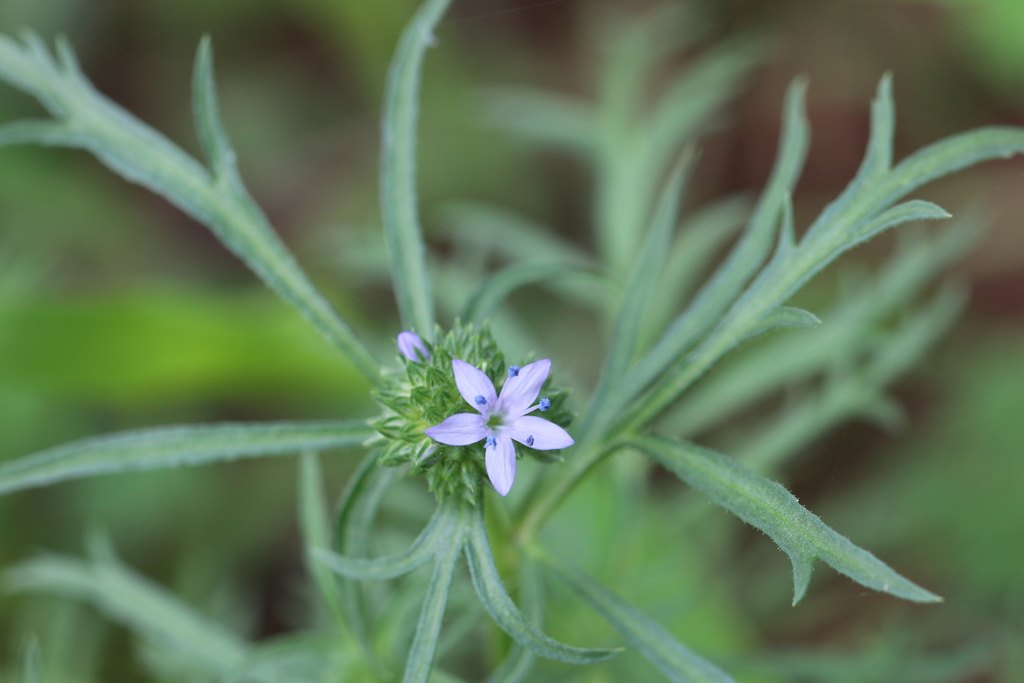
LATIN NAME: Gilia capitata
COMMON NAME: Blue Thimble Flower
Plant Profile
Blue thimble flower is a branching annual, anything from 10 to 90 cm tall, with leafy stems and fleshy herbage that often carries glandular hairs. The leaves are cut into toothed leaflets, twice divided, and the whole plant has the soft, thread-like look that runs through the phlox family.
The flowers are what give the plant its name: at the top of each branch sits a spherical head of 50 to 100 small blooms, packed so tightly that the head reads as one blue ball. Each flower opens from a narrow throat into a spreading corolla that may be white, pink, lavender or light blue, and the stamens protrude slightly from the mouth.
It is native to western North America, from Alaska south to northern Mexico, and grows in many habitats but especially in sandy or rocky soils. On the eastern side of the continent it appears as an introduction, spread by pollinator gardens, and it has done the same in a few European sites.
Science & Biotechnology
The round head is the botany lesson here. Each sphere is an inflorescence, not a flower, and the individual florets are small enough that a bee works the whole ball in one circuit. That economy is why the plant is so attractive to pollinators: a dense head of nectar-bearing florets costs the visitor less effort than the same flowers scattered along a stem.
The species is variable, and the variation has been sorted into eight subspecies. Subsp. capitata runs through the whole range; subsp. chamissonis, the dune gilia, is endemic to the sand dunes of California’s central coast and bears the brightest blue-violet flowers of the lot; subsp. tomentosa is known from only a few occurrences just north of San Francisco Bay; and two more are confined to the Sierra Nevada and its foothills.
That geography is typical of Californian annuals: a wide-ranging common species with narrowly endemic relatives at its edges. For a gardener it means that seed from a general wildflower mix will give you the common form, while a specialist supplier may offer the dune plant, which is worth having and worth keeping to itself.
Uses & Benefits
Its use is as a filler between larger plants, in a gravel bed, or in a pot of poor sand where nothing else wants to grow. The blue heads appear from late spring into summer, and they float above threadlike foliage in a way that suits dry gardens better than rich ones.
It ranks among the best annuals for bees and butterflies, and that is not a marketing line but a simple consequence of the flower structure: many small florets per head, a flat landing surface, and a shallow corolla that a short-tongued insect can enter.
It is not a plant for shade or clay. In heavy wet soil it grows a few inches, yellows, and gives up by midsummer, which frustrates people who bought it as a Californian wildflower without reading the second half of that description. Sand, gravel and full sun are the conditions, and the plant repays them with months of flower. Allied plants on the list: Gilia tricolor, Linaria vulgaris and Penstemon strictus.
Growing from Seed
Sow where it is to flower, in spring, on raked and firmed ground. The seed is small, so a scatter followed by a light rake is enough; do not bury it. Germination takes two to three weeks in warm soil, and the seedlings are thin and wispy at first, so mark the patch or you will weed it by accident.
Thin to 15 cm apart. The plants branch from the base, and a crowded patch gives tall weak stems that flop after the first rain. In a cold climate you can sow under cover in early spring and transplant, but the species dislikes root disturbance, so use modules rather than open trays.
Water until established and then leave it alone; this is a plant that thrives on neglect in the right soil. Let some heads ripen on the plant and it will sow itself, and a patch left to its own devices after two or three years usually ends up better than the one you planted.
Our Take
It is a cheap, quick, honest annual, and the blue is better than most cheap quick annuals manage: a soft powder blue that sits well beside silver foliage and orange, a rare colour to combine with, and the heads keep coming for two months if you keep the seed off.
Grow it on sand or gravel, sow it where it is to flower, and stop worrying about it. The only real mistake with this plant is kindness: rich soil and regular watering will grow you a larger, floppier, shorter-flowering version of something that was already perfect.
Related Reading
If Blue Thimble Flower appeals to you, these related plants are worth a look: