


Chrysanthemum paludosum Seeds | Mini-Marguerite
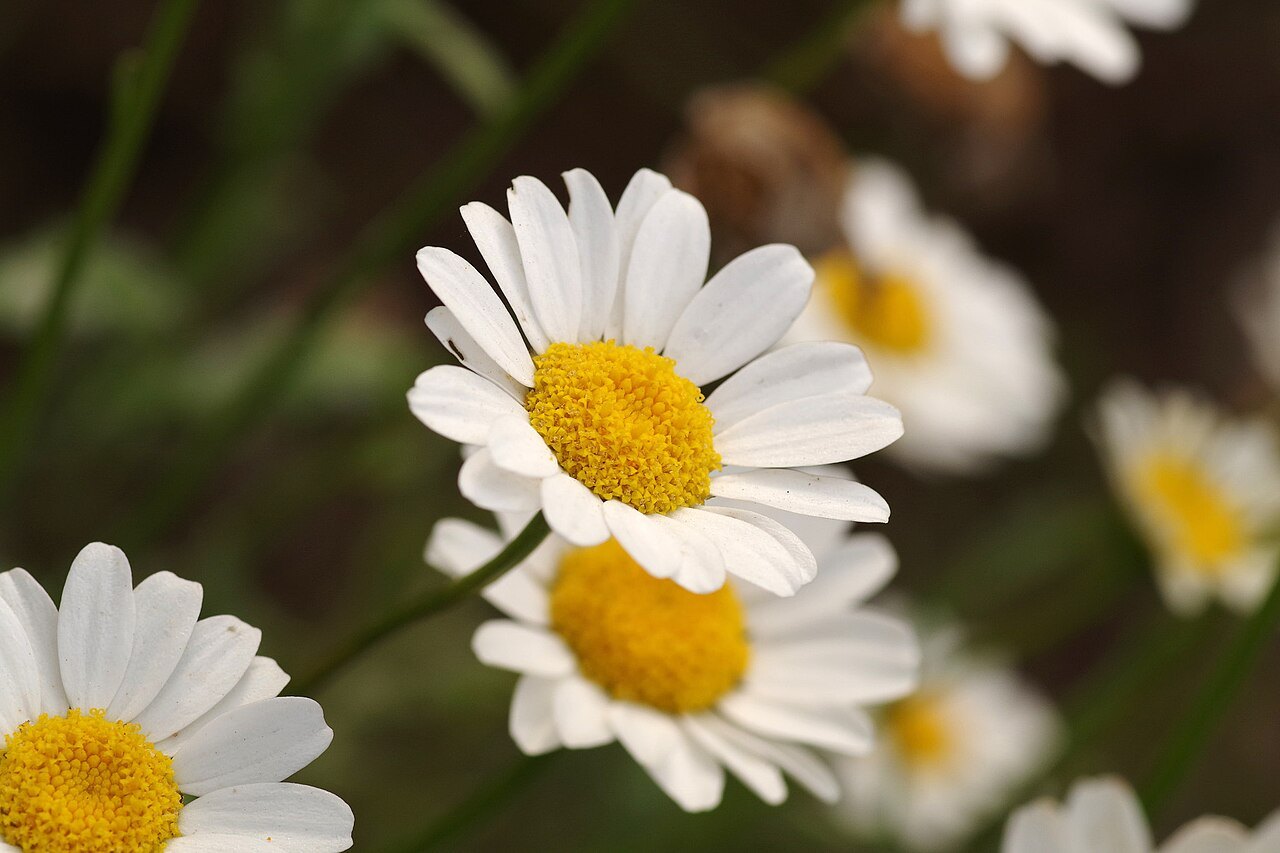
LATIN NAME: Chrysanthemum paludosum
COMMON NAME: Mini-Marguerite
Plant Profile
The creeping daisy is a small plant that behaves like a groundcover and sells like a border annual. Chrysanthemum paludosum, now listed by many authorities as Mauranthemum paludosum, is a spreading annual of fifteen to twenty-five centimetres from the western Mediterranean, with finely cut leaves and a season-long run of small white heads.
Each head is barely three centimetres across, a ring of stubby white rays around a generous gold disc, but a mature plant carries dozens open at once and keeps replacing them for months. The habit is low and widening, stems leaning outward and rooting where they touch bare soil, so seedsmen also list it as an edging plant.
Jean Poiret described it in the early eighteen-hundreds as a Chrysanthemum. Later botanists moved it to a group of annuals near the corn marigold, and recent work on fruit and bract characters raised the small genus Mauranthemum to hold it. Seed packets still say Chrysanthemum, gardeners say mini-marguerite, and every name points to the same plant.
Its home runs from southern and eastern Spain across Morocco, Algeria and Tunisia, on dry banks, fallow ground and roadside gravel within reach of the sea. From that belt it has escaped into Belgium, Germany, Italy, California and the wheat districts of southern Australia, always as a weed of open, sandy, human-trodden ground.
Science & Biotechnology
The plant is a textbook composite. The head carries two kinds of flowers, sterile white rays that act as a billboard and fertile golden discs that produce the seed, and the disc opens in rings over about a week. Ray presence is chemically controlled during bud development, so damaged buds open as all-disc, rayless heads.
Pollination is generalist and heavy. The open disc and steady pollen supply draw small bees, hoverflies and beetles from early morning, and the plant compensates for its tiny flowers with numbers, a single patch presenting hundreds of discs to the same visitor population. Field records in its home range peak from February to April, the Mediterranean spring.
The achenes are small, flat and ribbed with no plume, so dispersal is short and local, and seed falls into the same gravel it flowered on. In that respect it is a true weed strategy: hold the site year after year, germinate with the first autumn rains, and overwinter as a low rosette that tolerates light frost without complaint. The rest of the Asteraceae here runs to Chrysanthemum indicum, Chrysanthemum lavandulifolium and Coreopsis grandiflora.
Uses & Benefits
In the garden it works as a living edge. Sown thickly along a path, at the front of a bed or spilling from a wall, it forms a continuous white band that reads cleanly against any colour behind it. It ranks among the few annuals that stays under thirty centimetres all season without shearing.
For pollinator planting it is a cheap early course. In Mediterranean-climate gardens it flowers before most perennials have started, feeding the first generations of the year, and it tolerates the reflected heat of paving that stops other small annuals. It is not a cut flower; stems are too short for anything but small posies.
No kitchen or medicinal tradition attaches to it, and the aromatic foliage is best left unbrowsed. Its value is strictly visual and ecological, and the honest limitation is its brief nature: in cold-winter gardens it is an annual pure and simple, gone with the first hard freeze and renewed only from seed.
Growing from Seed
Sow on the surface at fifteen to eighteen degrees, light being helpful to germination, which takes one to two weeks. Autumn sowing in mild climates gives the strongest spring carpet; in cold regions sow under cover eight weeks before the last frost and transplant small, as it resents root disturbance.
Grow in full sun and lean, well-drained soil; richness makes soft growth that florets and rots. Water until established, then only in drought. No staking, no deadheading is strictly needed, though a trim after the first flush forces a second, and the pest list is essentially empty.
For seed, let the heads dry on the plant until the discs crumble when rubbed over a container. Clean by winnowing the light chaff away. Store cool and dry for up to three years. A patch left uncut will self-sow a full replacement generation, especially on gravel where seed finds bare contact.
Our Take
Our take: this is the plant for gardeners who want a look of effort without the effort. A three-euro packet makes ten metres of flowering edge, and its small scale suits modern gravel and low borders better than any towering annual. Sow thick; thin seedlings look sparse.
The honest caveat is its short life in cold climates and its tendency to self-sow into cracks. Neither is a defect so much as a character statement: it is a Mediterranean weed that became an ornament. Give it poor soil, sharp drainage and sun, and it returns the favour for months.
Related Reading
Continue exploring with these related plants: