


Trachymene coerulea Seeds | Blue Lace Flower
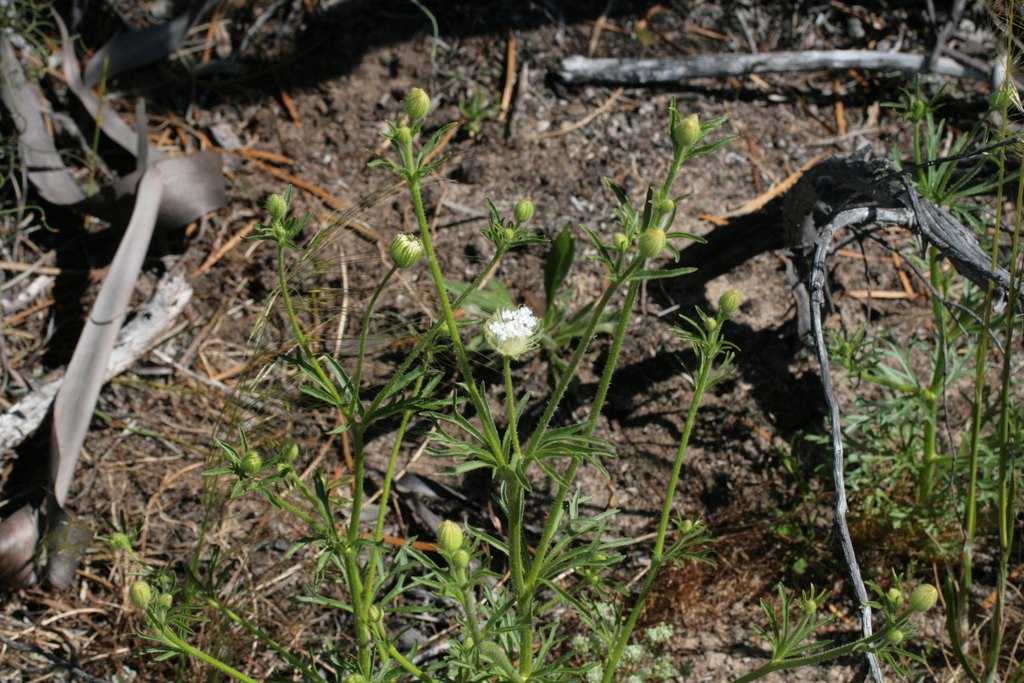
LATIN NAME: Trachymene coerulea
COMMON NAME: Blue Lace Flower
Plant Profile
Blue lace flower does exactly what the name promises. Trachymene coerulea is a herbaceous annual, occasionally short-lived perennial, from the south-west corner of Western Australia, and it carries flat heads of tiny blue florets that read from a distance as a piece of dyed lace held up against the light.
It can reach a metre and a bit in good conditions, usually less in a garden, with leaves that are fan-shaped and deeply divided into narrow segments, held mostly near the base. The stems are wiry and ribbed, and they branch near the top into the flowering framework rather than carrying a single head.
Each head is not one flower but a hundred and thirty to three hundred of them, arranged in a compound umbel that mimics the flat-topped inflorescences of the carrot family. Colours run from a clear china blue through lavender to white, and white forms turn up in wild populations often enough that collectors used to name them.
The species was described by Robert Graham in 1828 from a plant raised at Edinburgh from seed sent by Charles Fraser, the colonial botanist in New South Wales. That single introduction is the ancestor of most of the garden material, which is a narrower genetic base than the plant’s wide range in the wild would suggest.
Science & Biotechnology
Trachymene used to sit in the carrot family, and it looks as though it belongs there: compound umbels, divided leaves, a herbaceous habit. Molecular work moved it to Araliaceae, the ivy and ginseng family, which is otherwise almost entirely woody. The resemblance to a umbellifer is convergence, not descent.
The name means rough moon, from the texture of the fruit, and the fruit is the character that settles the placement. Instead of the paired mericarps of Apiaceae, Trachymene produces a small indehiscent fruit with a bristly or wrinkled surface, and the difference is visible with a hand lens in the field.
Nothing much has been published on its pollination, but the architecture is unambiguous: an open, flat platform of tiny florets presenting nectar and pollen at one plane, which is the classic generalist design. Beetles, small bees and flies all work these heads, and the plant does not appear to depend on any one of them. Allied plants on the list: Layia platyglossa, Tagetes lucida and Pericallis hybrida.
Uses & Benefits
The cut-flower trade discovered it in the 1980s and has not let go. A stem of blue lace placed among larger flowers fills the gaps that otherwise read as holes, and it does so without adding weight or colour that competes. It is the definition of a filler, and good fillers are harder to find than good focal flowers.
Aboriginal use in the south-west was medicinal rather than culinary. Mashed bulbs and leaves were rubbed on the body to relieve aches, and the vapour from crushed leaves was inhaled for headache. Both are documented uses of a plant that is otherwise not eaten, and neither has been through any modern trial that would confirm or explain them.
In the garden it is a dry-climate annual, which makes it useful in places where most cut flowers fail. It wants sun, sharp drainage and a long warm season, and it resents both overhead watering and rich soil, which produce a leafy plant with few heads and soft stems that fall over before you can cut them.
Growing from Seed
Sow where the plants are to flower. The species resents transplanting, and a direct sowing in autumn in mild climates or early spring in cold ones gives stronger plants than any amount of careful pricking out. Scatter thinly, cover lightly, and keep the surface damp until the seedlings are up.
Germination is usually ten days to three weeks at about eighteen degrees, and it is uneven enough that thinning should wait until the seedlings are clearly established. Thin to twenty-five centimetres apart; closer spacing produces tall, weak stems and heads that never reach full size.
Water until flowering begins, then ease off, because a plant kept wet at the root produces leaf at the expense of flower. Cut the stems when half the florets in a head have opened, strip the lower leaves, and stand them in deep water overnight before arranging; the heads are fragile for the first hour after cutting.
Our Take
Blue lace flower is a specialist’s plant sold to general gardeners, and the mismatch explains most of the complaints about it. Grown in a pot in rich compost it is a floppy disappointment; grown direct in poor sandy ground in full sun it ranks among the most useful annuals in the garden.
The colour is the thing that cannot be substituted. There is no other annual in the ordinary seed trade that gives that particular china blue in a flat, open head, and no dyed filler reproduces it convincingly. Grow it once for a wedding and you will grow it every year after.
Related Reading
Continue exploring with these related plants: