


Dimorphotheca pluvialis Seeds | Rain Daisy
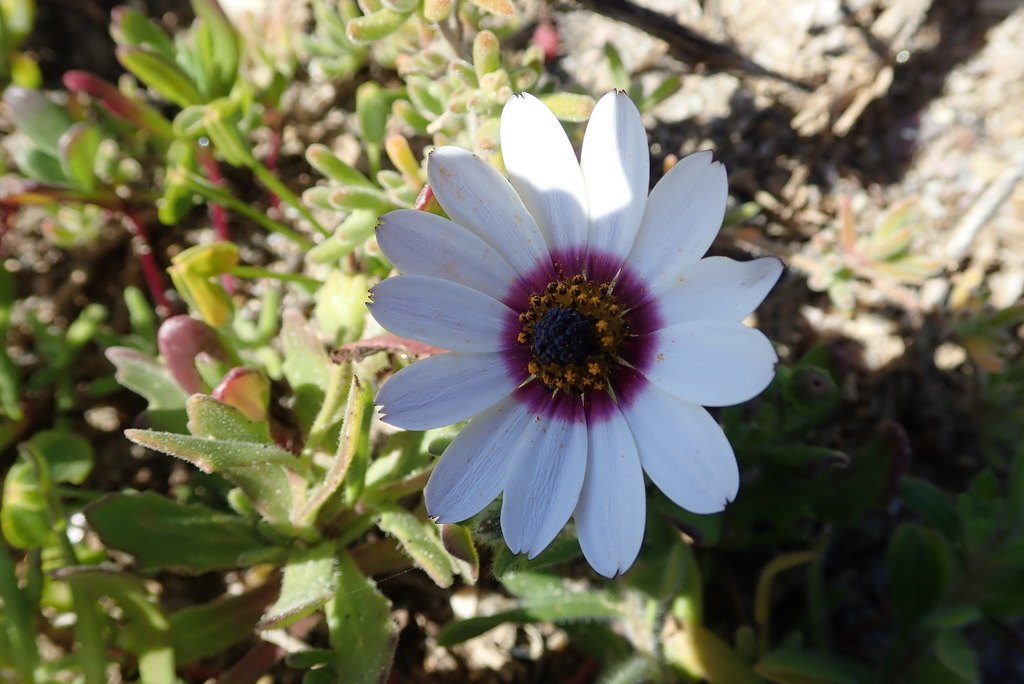
LATIN NAME: Dimorphotheca pluvialis
COMMON NAME: Rain Daisy
Plant Profile
Dimorphotheca pluvialis comes from Namaqualand and the western Cape, where it appears in sheets after a wet winter, covers the ground in spring and is gone by the time the dry summer arrives. It is an annual of the winter-rain desert, and its whole life is timed to the brief window when the ground is damp and the air is cool.
It grows 20 to 35 cm high with narrow, sometimes toothed or lobed leaves, and it keeps a neat habit without pinching. The flowers are 3 to 4 cm across, white above and deep violet beneath, with a dark blue-violet centre, and they are borne in such numbers that a sowing becomes a sheet of white with a violet underside.
The two-tone colouring is the plant’s best trick. When the flower closes, the petals fold upwards and present their purple backs, so the plant is as attractive shut as open, and on a dull day the whole sowing turns from white to lilac-grey without any flower having opened. That is the origin of the name weather prophet, which it shares with several other Cape daisies. The same family turns up again in Dimorphotheca sinuata, Achillea ptarmica and Helipterum roseum.
Science & Biotechnology
The genus Dimorphotheca has about 20 species, all southern African, and it is closely related to Osteospermum, which is the genus most of the perennial garden daisies come from. The two are separated by the shape of the fruit and by the ray florets, which in Dimorphotheca are female and fertile while in Osteospermum they are often sterile.
The violet underside of the ray is produced by anthocyanins in the lower epidermal layer, while the white upper surface is a structural colour created by air spaces in the tissue, not by a white pigment. That is why the white looks different in different lights and why the flower does not fade in the way a pigmented petal does.
The opening and closing response is a phototropic movement driven by the swelling and shrinking of cells at the base of the ray, and it is fast enough to be seen: a flower will close within twenty minutes of a cloud passing. The response protects the pollen from rain and from dew, and it is the reason the plant is a poor cut flower, since a picked stem closes and stays closed.
Uses & Benefits
This is a plant for the front of a hot border, a gravel bed or a large pot in full sun, and it is best sown in drifts rather than rows, because the effect depends on numbers. A single plant looks weedy; fifty make a sheet.
It pairs naturally with other Cape annuals, particularly the orange Dimorphotheca sinuata, the white Ursinia and the blue Felicia, all of which share the same schedule and the same appetite for poor, sandy ground. A bed of these, sown in September in a Mediterranean climate, flowers from March to May and needs no water after establishment.
In mild, dry climates it self-sows and returns in the same place year after year, which is how it behaves in the wild. In a wet climate it rots in winter and must be resown each spring. It is not edible and has no medicinal use.
Growing from Seed
Sow direct in autumn in a mild climate, or in early spring in a cold one, at 15 to 18 °C. Cover the seed lightly and keep it moist until germination, which takes 10 to 14 days. The seedlings are vigorous and need thinning to 20 cm apart; crowded plants flower poorly and rot at the base.
In a cold climate, sow indoors six weeks before the last frost and plant out after the risk has passed. The plant resents disturbance, so use deep cells and move it while small. It flowers eight to ten weeks from sowing and continues for two months.
Give it full sun and poor, sandy, well-drained soil. Rich soil produces leaf and few flowers, and wet soil kills it in winter. Leave the flowers to set seed if you want it; they do it without help, and you can shake it out where you want the next generation. In a wet autumn, lift the plants or accept that the sowing is annual.
Our Take
This is a plant for people who garden on sand and sun, and it is a waste of time for anyone else. Where it is happy, it makes a sheet of white and violet that no other annual can match for the effort, and it comes back on its own. Where it is not, it sulks, rots and disappears. The closing habit is worth growing it for alone. On a day of passing cloud the bed changes colour four or five times, which is more entertainment than most borders provide in a week.
Related Reading
Gardeners who grow Rain Daisy often pair it with these related subjects: