


Malope trifida Seeds | Mallow-wort
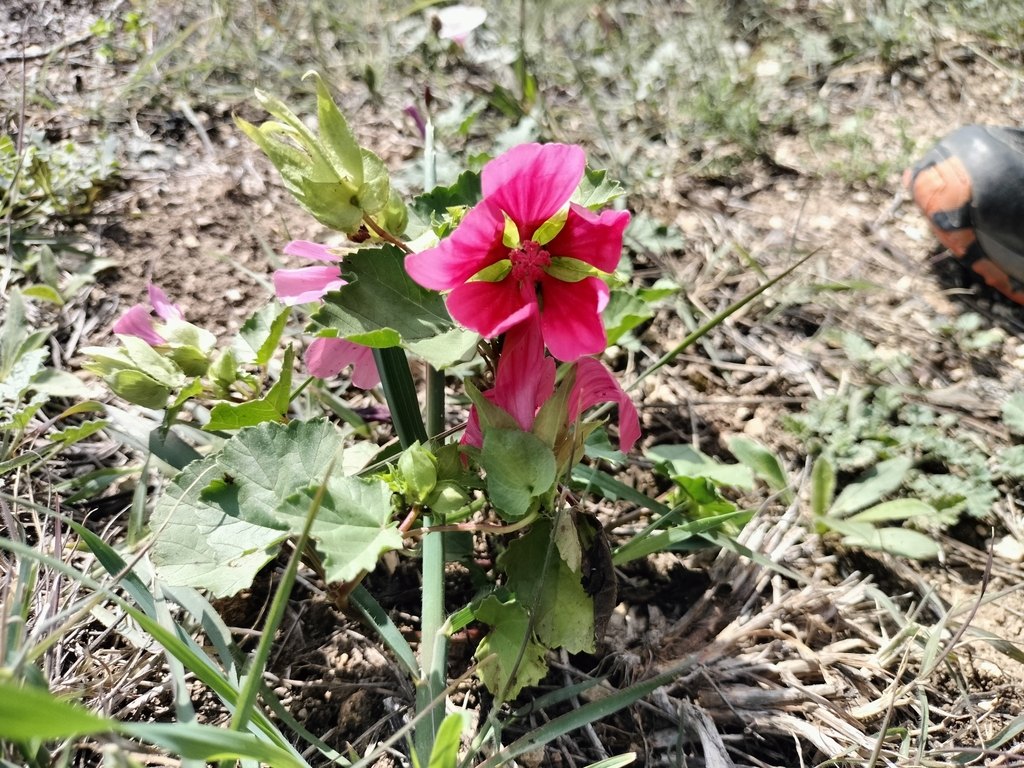
LATIN NAME: Malope trifida
COMMON NAME: Mallow-wort
Plant Profile
Mallow-wort is the quiet showpiece of the mallow family’s annual branch. Malope trifida is a hairy, upright annual of forty to sixty centimetres from Morocco, Algeria and southern Spain, bearing three-lobed leaves and wide, satiny cups of deep magenta that open in midsummer and keep coming until the first frosts.
Each flower runs five to seven centimetres across, larger than its leaves, with petals veined in a darker shade that gives the surface a shot-silk look. Like its relatives the blooms last a single day, but the plant carries them in numbers, a fresh flush opening each sunny morning through July and August. Cut stems sear in boiling water for thirty seconds to hold the day’s bloom.
The genus was drawn up by the Spanish botanist Cavanilles in the 1780s, and trifida points to the leaves cut into three lobes. Victorian catalogues knew it well under the name grandiflora and sold a crimson strain called Vulcan alongside a white form; both strains remain in the trade today.
Its home is western Mediterranean rough ground: field margins, roadsides and coastal scrub with winter rain and dry summers. Britain, France and Germany record it as an established garden escape, and it persists wherever summers are warm enough for its seed to ripen, which is exactly the climate of its origin. Three more Malvaceae sit in the same catalogue: Hibiscus rosa-sinensis, Abutilon theophrasti and Hibiscus moscheutos.
Science & Biotechnology
Under a lens the mallow family’s signature shows plainly: a central column fused from dozens of stamens, topped by a brush of styles. The petals spring from that column, and the darker veining is laid down while the bud develops, so every flower in a strain carries the same pattern.
The cups are built for bees that need an open platform rather than a tube. Pollen is shed onto the staminal column, and visiting bees brushing downward lift it to the five-parted stigmas on the next flower. On dull days the buds wait closed, so pollination is concentrated into the sunniest hours.
The fruit is a dry ring of wedge-shaped segments, each holding one seed, that breaks apart when fully ripe. In the wild the ring shatters at the season’s end; in the garden it means seed can be gathered section by section. Germination is strong and even, so the plant never needed vegetative propagation.
Uses & Benefits
It is a bedding plant from an older school: tall enough for the middle of a border, fast from seed, and unbothered by heat that wilts petunias. The Vulcan strain in deep crimson and the white form make a clean two-colour scheme that later annual breeding never quite improved.
In annual meadow mixes it plays the mallow role, filling July and August when poppies and cornflowers have finished. Its open cups serve bumblebees and honeybees alike, and its hairy leaves shrug off dry spells, making it a low-input choice for mediterranean-style plantings and sunny gravel gardens.
Mallows are an edible family, but mallow-wort itself has no recorded kitchen use and is best kept ornamental; the young leaves are harmless yet fibrous and bland. The real benefit is structural, a steady week-on-week colour load at the height of summer when many annuals fade.
Growing from Seed
Sow in spring under cover at eighteen degrees or direct after frost; seed germinates in one to two weeks with no special treatment. It forms a taproot quickly, so start it in deep cells or sow in place, because a check at transplanting costs weeks of growth.
Full sun, ordinary soil, and room to breathe. Space plants thirty centimetres apart, stake in exposed sites, and water deeply but rarely. It tolerates light drought, resists most pests, and asks only for deadheading or a hard cut in August to trigger a second flush. In hot climates a mulch keeps the root run cool through the worst of the season.
For seed, leave the fruit rings until they snap dry and crumble; each segment is one clean unit to store. Keep the strongest-flowered plants and save from several, since it is not prone to inbreeding collapse, and a home strain will hold true for years.
Our Take
Our take: mallow-wort deserves its small renaissance. Few annuals combine a day-long, dinner-plate flower with total indifference to heat, and none at this price of a seed packet. Grow it once and the satin surface sells itself. The white form beside the magenta reads clean even at dusk.
The limitations are real but manageable: it dislikes transplanting, leans in rich soil, and its single-day flowers drop messily after rain. In return it asks for almost nothing across a hot summer. For dry gardens that want colour without watering, it remains one of the soundest annual choices.
Related Reading
Gardeners who grow Mallow-wort often pair it with these related subjects: