


Ismelia carinata Seeds | Tricolor Daisy
LATIN NAME: Ismelia carinata
COMMON NAME: Tricolor Daisy
Plant Profile
The tricolor daisy is a field weed that flowered its way into the seed trade. Ismelia carinata is an upright annual of twenty to sixty centimetres from the grain fields of Morocco and Algeria, with finely cut foliage and heads of white petals ringed in maroon around a golden eye. In its home range it springs up wherever winter rains meet disturbed ground.
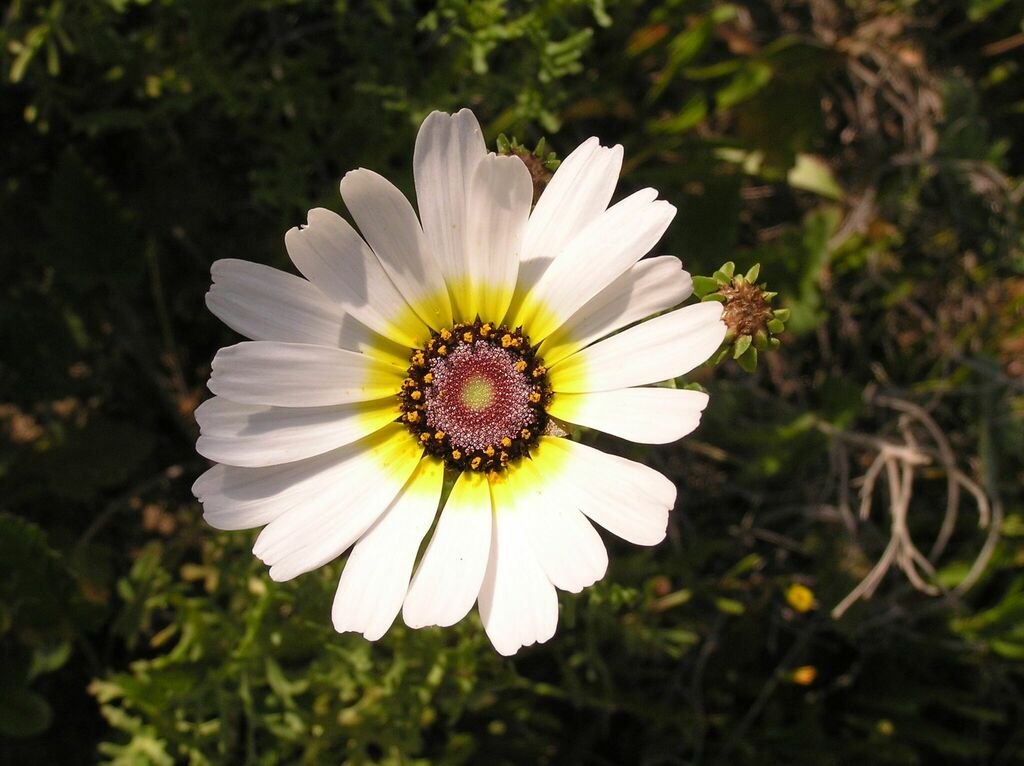
Each head carries a single whorl of broad white rays, and most plants paint a deep maroon or violet band where the petal meets the gold disc. The foliage is thread-divided and smells sharp when brushed. Heads open in bright sun and shut by evening or under heavy cloud, so whole fields seem to switch on together.
Naming has never settled. Peder Schousboe sent the plant from Morocco around 1800 and described it as a Chrysanthemum; the bipontine botanist Schultz lifted it into its own genus Ismelia in 1844; Russian treatments later folded it into Glebionis. Seed catalogues have followed the swings, selling the same plant under all three names.
In Morocco and Algeria it is an arable plant of winter-rain country: seed waits in the top layer of stubble fields, sprouts with the autumn rains, and flowers in a spring sheet that old floras described as turning whole slopes white. From there it scattered with grain and gardening into southern Europe, Asia and the Americas.
Science & Biotechnology
Botanically it sits in the daisy tribe Anthemideae, and it is the only member of its genus. The ringed ray is its signature: no close relative carries a dark band across the middle of the petal, which makes the plant easy to recognise even among hundreds of other white-flowered field composites.
The disc is packed with short tubular florets that open in rings from the edge inward. Bees work the disc for pollen while the white rays act as a landing flag. After pollination each floret sets a flat, ribbed achene with no plume, so seed falls close to the parent and builds up in the same headland year after year.
Field records from garden and roadside populations peak in February to April, matching the Mediterranean spring, and run late in cooler climates where sowings flower into summer. The sun-closing habit protects pollen from rain and night damp, a cheap insurance in a winter-wet climate that costs the plant nothing but a day’s colour. For more of the Asteraceae, the list offers Pericallis hybrida, Tithonia rotundifolia and Tanacetum coccineum.
Uses & Benefits
As a cut flower it is short-stemmed but generous, and mixes such as Court Jesters put striped, ringed and plain petals in one packet. Stems cut in the morning when the head is fully open last several days in water, though the petals bruise if bunched tightly.
In the garden it earns its place as a cheap annual meadow ingredient. Sown with cornflowers, nigella and poppies it flowers at the same height and season, feeding early bees when little else is open. Deer leave its aromatic foliage alone, which makes it useful at the edge of rural plots.
It has no kitchen tradition and is not a plant to eat; the same pungent foliage that deters deer is reason enough to keep it ornamental. What it does offer is colour that photographs poorly but stuns in person, because the maroon ring reads as black at a distance.
Growing from Seed
Sow direct after the last frost, or in autumn where winters stay mild. Cover seed barely, since a little light helps, and keep it at fifteen to twenty degrees; germination takes one to two weeks and is usually even. Thin seedlings to twenty centimetres so heads develop on sturdy stems.
It wants full sun and average, well-drained soil, and shrugs off poor sand once rooted. Water only in prolonged drought; wet feet in summer rot the fine roots. Deadheading extends flowering into late summer, though leaving the last heads to ripen lets the patch self-sow for the following year.
For seed, let the heads dry on the plant until the achenes shell freely when rubbed over a bag. Store cool and dry and sow within two years for best rates. In mild climates a single ripened patch will usually regenerate itself, thinning being the main management task rather than resowing.
Our Take
Our take: this is one of the cheapest ways to buy a spectacle. The seed is easy, the plant forgives rough soil, and nothing else in the annual border carries that maroon ring. Pair it with blue cornflowers and the white reads even brighter. Sow it thick the first year to judge the effect before you spread it further.
The one honest warning is self-sowing. In warm, dry gardens it can seed beyond its welcome into gravel and paths, and a few minutes of spring weeding is the price of admission. Treat it like the field plant it is and it will stay charming rather than invasive.
Related Reading
Readers interested in Tricolor Daisy frequently explore these as well: