


Phlomis brachyodon Seeds | Phlomis
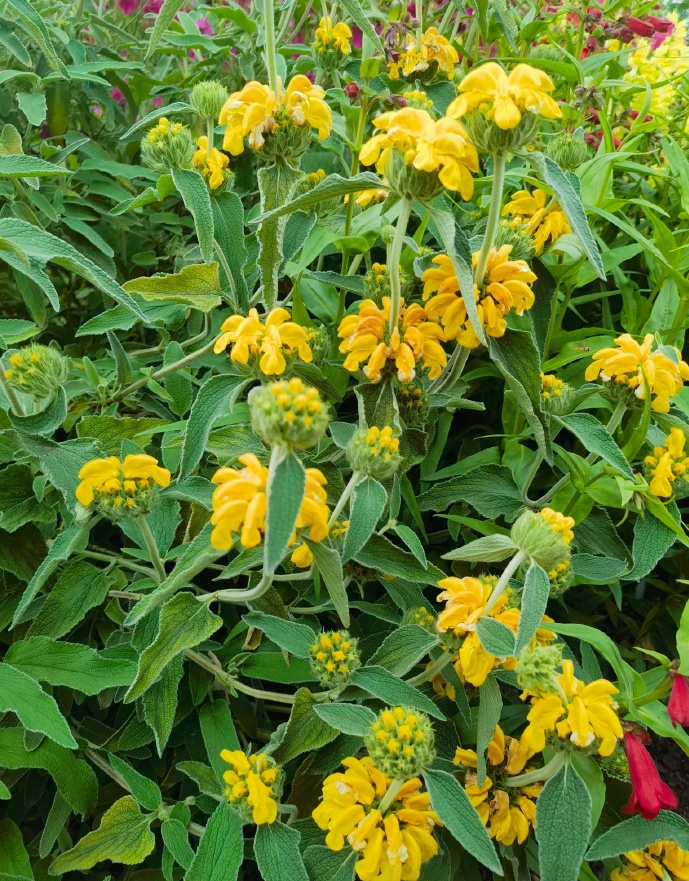
LATIN NAME: Phlomis brachyodon
COMMON NAME: Phlomis, Jerusalem Sage
Plant Profile
Phlomis brachyodon is a grey, woolly Middle Eastern sage with whorls of pale yellow flowers and a taste for stony slopes. It grows in the Levant and the mountains of southern Turkey and northern Iraq, on dry limestone and basalt slopes, in rocky scrub and at the edges of cultivated ground, between about 500 and 1,800 metres. The plant is a low evergreen shrub of 30 to 60 cm, with square stems, opposite leaves that are covered in dense white wool and edged with short teeth, and whorls of yellow, two-lipped flowers spaced up the stem in summer. The whole plant smells of resin when crushed. After flowering it keeps its shape and its grey foliage through winter, which is why it is grown in dry gardens. It is one of a group of phlomis that run from the Mediterranean to central Asia, and it is one of the toughest.
Science & Biotechnology
Phlomis brachyodon is a member of the dead-nettle family, and its woolly leaves are the main adaptation to its habitat: the hairs reflect light, trap a layer of still air against the leaf surface and reduce water loss, and they also deter insects. The flowers are borne in whorls at intervals up the stem, each with a two-lipped corolla and a tube that holds a drop of nectar at the base, which makes them accessible to long-tongued bees but not to short-tongued flies. The plant is a shrub rather than a herb, with woody bases that survive grazing and drought, and it resprouts after fire from the root crown. The fruit is a group of small nutlets that fall close to the parent, and the species spreads mainly by seed into open, stony ground. Like many Mediterranean labiates it produces aromatic oils, which are being studied for antimicrobial activity, though the plant is not a commercial source.
Uses & Benefits
The plant is grown in Mediterranean and dry gardens for its grey foliage, its yellow whorls in summer and its tolerance of drought, wind and poor soil. It is useful on a hot bank, in a gravel garden or at the edge of a terrace, where its shape holds through the year, and it combines well with cistus, lavender and stipa. It is also a good nectar plant for bees in early summer. In the Levant the leaves have been used as a poultice for wounds and the infusion as a digestive, and the dried plant is burned as a fumigant. The woody stems are used as kindling. For a garden in a wet climate it is a plant for a raised bed with sharp drainage, since it rots in winter wet. It is not a long-lived plant in rich soil, and it should not be fed or watered in summer.
Growing from Seed
Sow seed in spring at 18 to 22 degrees on the surface of a gritty mix, covering it lightly; germination takes two to four weeks and is usually good. Prick out the seedlings into small pots of loam and grit and grow them on in full light. Plant out in autumn or spring into a raised bed or a gravel garden, in full sun and sharply drained soil, with the crown slightly proud. Water only to establish, and never in summer once the plant is growing. In wet climates add grit to the planting hole and mulch with gravel, not compost. Prune lightly after flowering to keep the plant compact, and cut out damaged stems in spring. It is hardy to about minus ten in dry conditions, but it dies in wet cold.
Our Take
A grey, woolly phlomis with whorls of pale yellow flowers and a dislike of wet winters. Made for gravel and sun.
Related Reading
Gardeners who grow Phlomis often pair it with these related subjects: