


Asparagus myriocladus Seeds | Ming Fern
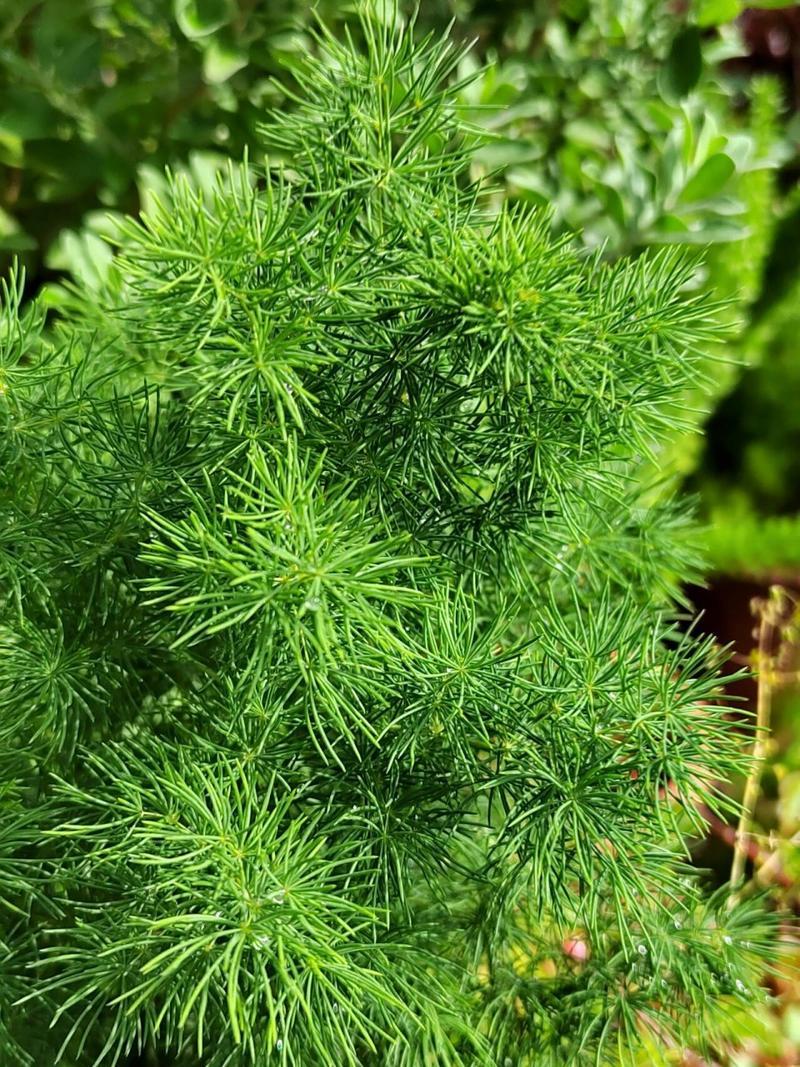
LATIN NAME: Asparagus myriocladus
COMMON NAME: Ming Fern
Plant Profile
Ming fern is a Madagascan asparagus grown for cut foliage, its tiny needle-like cladodes packed in tufts along wiry stems. In the wild it scrambles through dry thicket in the west and south of the island, where the stems lean on shrubs and the roots sit under a layer of leaf litter. In cultivation it makes a fountain of arching, almost leafless stems up to a metre long, each one clothed in tight clusters of green threads that give the plant the look of a soft conifer. The true leaves are reduced to scales at the nodes, and the green threads are modified branchlets that do the work of leaves. Small white flowers appear in ones and twos in summer, followed on female plants by small red berries. It is sold as cut foliage under several names, and the name ming fern is applied to at least three different species in the trade.
Science & Biotechnology
Asparagus myriocladus belongs to a genus of some three hundred species, most of them African, and like the edible asparagus it has abandoned ordinary leaves: photosynthesis is carried out by cladodes, which are short branchlets that have taken on the shape and function of needles. The genus sits in the Asparagaceae, alongside agave, hyacinth and yucca, a placement confirmed by molecular work after a long spell in the lily family. Most species are dioecious, so a plant is either male or female, and the red berries that follow flowering appear only on female plants. The cladodes have a thick cuticle and sunken stomata, adaptations to the dry thicket where the species grows, and they are the reason the cut stems last two weeks or more in water without wilting. The genus includes several serious weeds outside their native range, notably the bridal creeper in Australia, which spreads by underground tubers and smothers native vegetation.
Uses & Benefits
The plant is grown for floristry, where its fine green texture is used as a filler in bouquets and as a soft line in arrangements; the stems are long, clean and hold their colour well after cutting. It is also sold as a houseplant for a bright window, where it makes a graceful, low-maintenance subject that tolerates dry air better than most ferns. In warm gardens it can be used at the base of a wall or under trees, where its arching stems soften hard edges, and it is effective in a large pot on a patio. The berries are poisonous and should be kept away from children and pets, and the sap can raise a rash on sensitive skin. In its native Madagascar the plant has no recorded food use, unlike its edible relative. It has naturalised in a few frost-free places, though it has not become a serious weed.
Growing from Seed
Sow seed in spring at 20 to 25 degrees on the surface of a free-draining mix, covering it lightly; germination takes three to five weeks and is uneven. Soak the seed for a day first, since the coat is hard. Alternatively divide an old plant in spring, cutting through the crown with a knife and potting the pieces separately. Grow the seedlings in bright filtered light, in a mix of loam, leafmould and grit, and water freely in summer with a dry spell between waterings. Feed monthly in the growing season with a balanced liquid feed. The plant is tender below about five degrees, so in cool climates it lives indoors or in a conservatory, and it needs a cool, bright winter rest. Repot every second year, and cut old stems to the base in spring to encourage new ones.
Our Take
A wiry Madagascan asparagus grown for its soft green cut foliage. Tender, easy indoors, and generous with stems once established.
Related Reading
If Ming Fern appeals to you, these related plants are worth a look: