


Asparagus setaceus Seeds | Bonsai Plumosus Fern
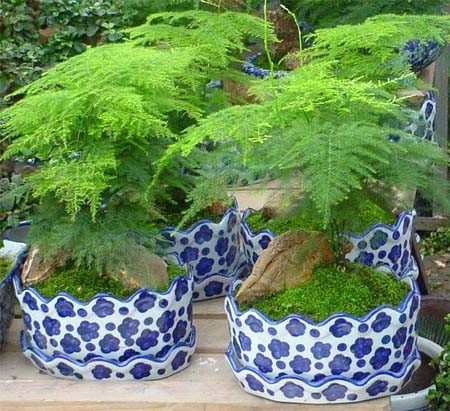
LATIN NAME: Asparagus setaceus
COMMON NAME: Bonsai Plumosus Fern
Plant Profile
Setaceus was carried from the Cape to European glasshouses in the late 1700s and soon became a Victorian parlour staple, prized because it tolerated the dim, dry air of heated rooms better than true ferns. That long history of indoor culture explains why the old seed listings pair it with bonsai and why it still turns up in conservatories and florists’ coolers worldwide.
Setaceus is easily confused with Asparagus densiflorus ‘Sprengeri’ and with Asparagus myriocladus. The reliable mark is the cladode: in setaceus they sit in whorls of three to twelve, are bristle-thin, and spread at sharp angles, whereas ‘Sprengeri’ bears longer, arching, leaf-like cladodes in looser clusters. Nurseries that label everything asparagus fern hide at least a dozen distinct species behind one lazy name.
Because seed is slow to bulk and selections are valued for form, growers multiply setaceus by shoot-tip culture on Murashige and Skoog medium, balancing benzyladenine with a trace of naphthaleneacetic acid to force branching. The species is also a useful teaching subject for in-vitro organogenesis, since cladodes regenerate readily and show clear polarity.
Trained on a small trellis or allowed to trail, setaceus reads as a miniature tree with fern fronds, which is why the old seed listings pair it with bonsai. A single pot can be shaped into a lace canopy within a couple of growing seasons, and the plant forgives heavy pruning that would ruin a true fern.
Through the warm months the plant throws its small scented flowers, a quiet bonus few growers notice because the foliage is the point. Kept bright and evenly watered, a mature specimen will also set the black berries that confirm you are growing the real species rather than a look-alike.
The black fruits are mildly toxic if eaten and the sap can irritate sensitive skin, so the plant is best kept clear of curious pets and small children even as it decorates a bright room.
Science & Biotechnology
Like many Asparagus species, the roots and shoots accumulate steroidal saponins along with flavonoid glycosides, the chemistry that gives the genus its long history in traditional tonics. Isolation work on related asparagus roots has centred on compounds such as asparagoside, and setaceus is routinely included in surveys of the genus for comparative phytochemistry.
The plant’s tidy, repeated cladode whorls make it a handy model for studying apical dominance and shade responses in a leafy crop. Researchers track how light level changes cladode angle and density, work that quietly informs how the cut-foliage trade schedules its glasshouse lighting.
Uses & Benefits
The most surprising thing about the plant sold for a century as the plumosus fern is that it has never been a fern at all. Every feathery green spray that florists wire into a bouquet is a flowering plant in the asparagus family, and the soft fronds are not leaves but flattened stems doing a leaf’s job. Asparagus setaceus earns its airy, lace-like look by a trick of morphology that no true fern can match, which is exactly why growers still reach for it when they want fern delicacy without fern fuss.
The true leaves of Asparagus setaceus are reduced to tiny brown scales at each node. What we read as foliage is a whorl of needle-fine cladodes, modified branchlets called phylloclades, that carry photosynthesis while the real stems stay thin and wiry. This is the same strategy used by edible asparagus and by Asparagus densiflorus, but setaceus carries the finest, most divided version, which is why it became the plumosus of the cut-flower trade.
Plumosus fern is the workhorse greenery of the cut-flower industry: florists strip the sprays to line a vase or build a bouquet’s airy frame, and the stems last well in water. Home growers value the same lightness in hanging baskets and on plant shelves, where the fine texture contrasts with broad-leaved houseplants.
Growing from Seed
In its native range the plant climbs through shrubs and small trees with short recurved prickles, reaching a few metres where it finds support, or spilling as a mound where it does not. Small greenish-white flowers open through the warm season and ripen into round berries that turn black, each holding a few hard seeds. The species shows clear heterophylly: juvenile plants produce sparse, broader cladodes, while mature growth is densely feathery.
Soak the seed in tepid water, then sow on a free-draining mix and cover with a thin layer of the same medium. Keep the tray warm and evenly moist; seedlings are recognised when the first wiry stem and scale leaves appear rather than by any fixed schedule. Prick out once the second set of cladodes has formed.
Use one part loam, one part coir or peat, and one part sharp sand or fine grit, held slightly acid. Water so the surface never fully dries but the pot never sits in a saucer of water, and feed lightly through the warm months with a balanced liquid fertiliser at half strength. Bright indirect light suits it best; direct midday sun scorches the cladodes.
Below about ten degrees Celsius growth stalls, so move potted plants to a sheltered bright place for winter and cut water to a sparing trickle. Watch for aphids on new growth, red spider mite under dry heat, and occasional scale; a rinse and a horticultural oil fix most outbreaks before they spread.
Our Take
If you enjoy this feathery false fern, the sturdier Asparagus densiflorus and the arching Asparagus sprengeri make forgiving companions, while Asparagus plumosus seed gives you the classic cut-flower form and Asparagus cochinchinensis covers the medicinal asparagus root side of the genus.
Related Reading
Gardeners who grow Bonsai Plumosus Fern often pair it with these related subjects: