


Tilia tuan Seeds | Tuan Linden
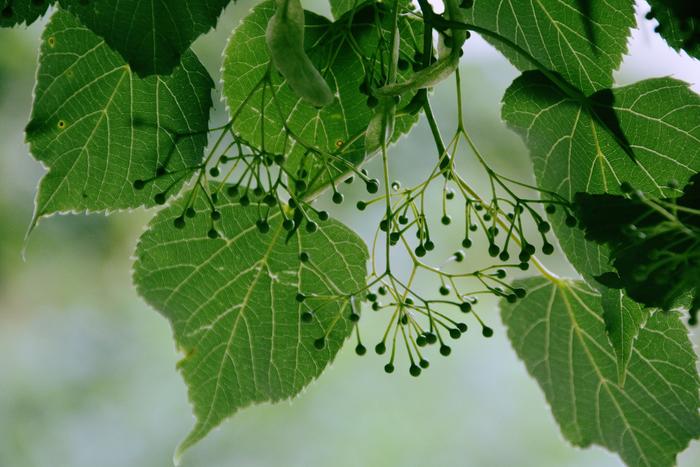
LATIN NAME: Tilia tuan
COMMON NAME: Tuan Linden
Plant Profile
Tuan linden is a Chinese lime tree of the mallow family, growing ten to twenty metres with a straight trunk, grey bark that fissures with age, and a broad crown of large, heart-shaped leaves with serrated edges and a pale underside. In early summer it hangs clusters of small, pale yellow flowers on long stalks, each cluster attached to a narrow, leaf-like bract, and the scent carries across a garden. The flowers are followed by small, woody, ridged fruits. It grows in mountain forest from Hubei and Sichuan to Yunnan and Guangxi, often on limestone, and it is one of the parents of the Chinese lindens used in forestry. Its timber is light, fine and stable, and its inner bark yields a strong fibre that was once woven into cloth and rope.
Science & Biotechnology
Tilia tuan is one of about twenty linden species in China, a country with more lindens than any other, and the group is taxonomically difficult because species hybridise readily and the key characters, mainly bract shape and fruit wall thickness, vary continuously. Molecular work has begun to sort the Chinese species into clades, and T. tuan falls with the group that has woody, ridged fruits rather than the thin-walled fruits of the European lindens. The flowers are pollinated by bees and flies, and the bract that carries the flower cluster acts as a wing, helping the fruit spin away from the tree. The species is tetraploid, like several Chinese lindens, which may contribute to its vigour. Its timber is used in China under the name duan mu for furniture, plywood and musical instruments.
Uses & Benefits
The tree is planted for shade, for timber and for honey, and its flowers are gathered for tea in parts of southwest China, in the same way as European linden flowers. The inner bark fibre is used for rope, for sandals and for coarse cloth, and the wood for furniture, drawing boards and musical instruments. In the garden it is a large shade tree for a park or a big lawn, with scented flowers in early summer and good autumn colour. It is also a useful bee forage, and a row of lindens in flower can be heard from a distance. It tolerates pruning and coppicing, and it will regrow from a cut stump, which is how it was managed for fibre in the past.
Growing from Seed
Two obstacles hold the seed back: an impermeable coat and an embryo needing cold. Soak it for a day, then mix with damp sand and keep warm for two months before three months at four degrees. Sow in spring, one centimetre deep, in a loam-based mix, and keep the pots outdoors. Germination is uneven and can take two seasons. The seedlings grow strongly and should be potted on once. Plant out in autumn into deep, moist, well-drained soil in sun or half shade. Stake for two years and protect the trunk from strimmers. Prune only to remove lower branches and dead wood, and expect flowers from the eighth year.
Our Take
A Chinese linden with scented summer flowers and useful timber. Slow from seed, then a large, generous shade tree for a park.
Related Reading
More species in the same orbit as Tuan Linden: